How to Develop Custom Private Label Products in China: From Product Concept to Mass Production
Nov 10, 2026
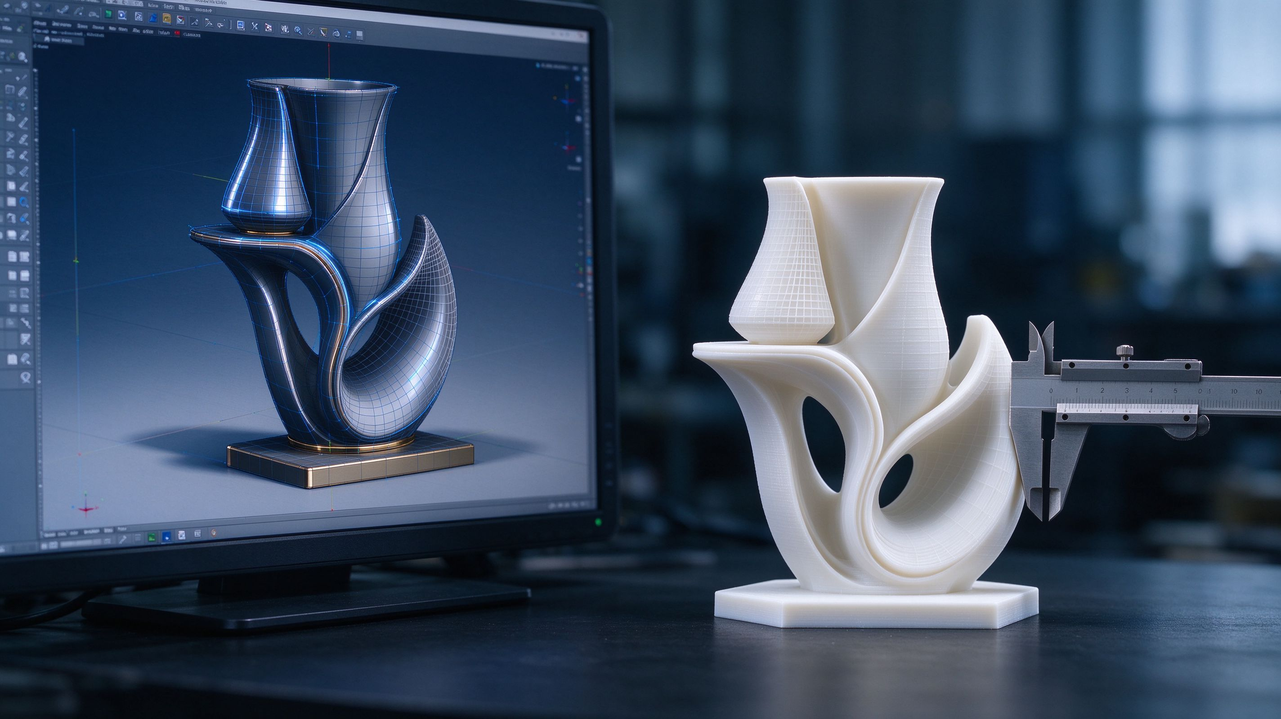
Ningbo, Zhejiang Nov 10, 2026 (Issuewire.com) - Developing a private label product in China involves much more than finding a factory and placing an order. A successful project usually requires product design, prototyping, engineering review, tooling, quality control, packaging, and production management.
For brands developing lifestyle products such as kitchenware, home storage, or personal care products, understanding the development process before production begins can help reduce design changes, tooling risks, quality problems, and delays.
So, what does the typical OEM/ODM product development process look like?
1. Define the Product Concept and Market Requirements
Every successful custom product starts with a clear product concept.
Before contacting suppliers, buyers should define the intended market, target customer, product function, approximate price range, materials, dimensions, and appearance. Market requirements can also influence details such as product capacity, handle size, colors, finishes, and packaging.
For products intended for international markets, these requirements may differ from those of products designed for the domestic market. Ergonomics, for example, can affect the dimensions and grip design of kitchen tools, cleaning products, and other handheld consumer goods.
A clear product brief gives designers and engineers a practical starting point and reduces unnecessary revisions later in the development process.
2. Develop the Product Design and 3D Model
Once the concept is defined, the next step is to turn the idea into a manufacturable design.
Design teams may begin with sketches, reference products, physical samples, or digital renderings. These concepts can then be developed into detailed 3D models that define the product's dimensions, components, materials, and assembly structure.
At this stage, designers should consider both appearance and manufacturability.
For example, wall thickness, snap-fit structures, draft angles, component connections, and surface finishes can all affect how easily a product can be manufactured. A design that looks good on screen may still require significant modification before it can be produced efficiently.
For brands developing products for different markets, ergonomic adjustments may also be necessary. Handle dimensions, grip spans, button positions, and operating angles can be reviewed before physical prototypes are produced.
3. Build and Test Functional Prototypes
A digital model is not enough to determine whether a product will work as intended.
Functional prototyping allows buyers and engineering teams to evaluate dimensions, mechanical movement, grip, fit, appearance, and usability before investing in production tooling.
Depending on the product, prototypes can be produced using technologies such as 3D printing, selective laser sintering, vacuum casting, or CNC machining.
For some custom lifestyle products, functional prototypes can be developed within 7-10 days. The exact development time depends on the product structure and project requirements.
Physical testing is particularly important for variables that are difficult to evaluate digitally, such as tactile feel, surface texture, grip comfort, cosmetic appearance, and the interaction between different components.
Testing these details before tooling can prevent costly changes later.
4. Conduct a DFM and Tooling Review
Before a production mold is manufactured, the product design should go through a Design for Manufacturing (DFM) review.
DFM examines whether the design can be manufactured consistently and efficiently at production scale.
Typical considerations include:
Wall thickness and transitions
Draft angles
Injection flow
Gating locations
Cooling channels
Parting lines
Undercuts
Snap-fit tolerances
Component consolidation
For injection-molded products, these details can have a direct impact on tooling cost, production efficiency, product appearance, and dimensional consistency.
A DFM review is therefore more than a technical formality. It is an opportunity to identify potential manufacturing problems before steel is cut.
For example, simplifying unnecessary undercuts or combining components where appropriate can reduce tooling complexity and maintenance requirements.
5. Test the Mold and First Production Samples
After the product design and tooling have been approved, the mold can be manufactured and tested.
Initial trial runs allow engineers to evaluate factors such as mold temperature, injection pressure, cycle time, dimensional accuracy, and surface quality.
First-article inspections can then be used to compare production samples against approved engineering drawings and critical-to-quality dimensions.
If problems are discovered during these trials, adjustments can be made before the project moves into full-scale production.
This stage is especially important for private label products because a design may be approved visually while still having functional or dimensional issues that only become apparent during actual manufacturing.
6. Manage Mass Production and Quality Control
Once the tooling and samples have been approved, the project can move into mass production.
Quality control should not begin only when the finished goods are ready to ship. A structured process can include incoming quality control, during-production inspections, and final random inspections.
During production, inspectors can monitor product consistency while manufacturing is underway. This makes it possible to identify problems before an entire production run is completed.
Final inspections can evaluate factors such as:
Product dimensions
Appearance and finish
Functional performance
Drop resistance
Packaging condition
Quantity and labeling
For projects using AQL sampling, AQL Level II can be applied as part of the final random inspection process, with Major 2.5 and Minor 4.0 sampling levels used in the referenced production workflow.
The specific inspection requirements should always be agreed upon according to the buyer's product specifications and quality standards.
7. Develop Packaging and Compliance Documentation
Packaging should also be considered as part of product development rather than treated as an afterthought.
Private label products may require custom display boxes, inner trays, master cartons, labels, and other packaging components. Packaging should protect the product during transportation while also meeting the brand's retail requirements.
For products sold in international markets, buyers may also need relevant regulatory and compliance documentation.
Depending on the product and destination market, documentation may include requirements related to FDA 21 CFR, LFGB, CE, RoHS, or REACH. The applicable requirements depend on the product category and target market, so buyers should confirm them before production begins.
How Long Does Private Label Product Development Take?
The development timeline varies depending on product complexity, tooling requirements, testing, and production volume.
For some lifestyle products, functional prototypes can be developed within 7-10 days. A broader development roadmap may take around 90 days from initial concept through tooling and mass production, depending on the project.
The most important point is that product development should be treated as a series of stages rather than a single factory order.
Concept definition, design, prototyping, DFM, toolin, sample approval, quality control, and production each require their own review points.
What Is the Difference Between OEM and ODM?
OEM and ODM are both commonly used for private label product development, but they generally involve different starting points.
With OEM development, the buyer typically provides a more defined product concept, design, specifications, or existing product requirements, while the manufacturing partner helps turn those requirements into a production-ready product.
ODM generally involves greater support from the supplier or development partner in product design, engineering, and customization.
For brands without an internal product development team, an ODM partner can provide additional support during concept development and engineering. For brands with established designs, an OEM model may be more appropriate.
The right approach depends on how much of the product design and development the buyer wants to control internally.
What Should Buyers Check Before Mass Production?
Before approving mass production, buyers should confirm several key areas:
1. The final product dimensions and specifications
2. Prototype performance and functionality
3. Approved materials and finishes
4. Tooling and mold quality
5. Critical-to-quality dimensions
6. Packaging specifications
7. Required quality inspection standards
8. Applicable compliance documentation
A clear approval process helps prevent disagreements between buyers, designers, engineers, and manufacturers once production has started.
Working With an OEM/ODM Product Development Partner
Developing a custom private label product can require coordination between designers, engineers, tooling suppliers, manufacturers, quality inspectors, and packaging teams.
For companies that do not have these resources in-house, working with an experienced OEM/ODM development partner can simplify project management.
Union Source https://www.unionsourceb2b.com/, established in 2005, provides OEM and ODM product development services for lifestyle consumer goods, including kitchenware, home decor, personal care products, small appliances, festive supplies, party supplies, underwear, etc. Its development workflow includes product design, 3D modeling, functional prototyping, DFM review, tooling, production quality control, and packaging integration.
The company states that its development team includes industrial designers and tooling engineers, with functional prototypes available in 7-10 days for applicable projects and a broader production roadmap of approximately 90 days depending on project requirements.
For brands planning a custom product from concept through mass production, the key is not simply finding a factory. It is building a development process in which design, engineering, quality, tooling, and production are reviewed at the right stages.
Media Contact
Union Source Co., Ltd.
+86 13967800390
21F, NO. 288 Guanghua RD. Ningbo National Hi-Tech Zone, Ningbo, China 315048
Source :Union Source Co., Ltd.
This article was originally published by IssueWire. Read the original article here.
More News

Top court schedules another deliberation for ex-PM's martial law trial, raising likelihood of release
The Supreme Court on Tuesday scheduled another deliberation session on former Prime Minister Han Duck-soo's appeal on insurrection charges, raising the likelihood of his release when his detention period runs out next week. The top court said it would hold the second deliberation round on Han's appeal on Nov. 19, a day before his six-month detention period expires over his role in former President Yoon Suk Yeol's failed martial law bid. Given the schedule, Han, who was sentenced to 15 years in prison by an appellate court, is likely to be released when his detention period runs out as it can no longer be extended. Supreme Court proceedings for Han's appeal have been drawn out after the court referred the case to its full bench in August, citing the public's high interest and its historical importance. A Seoul district court sentenced Han to a 23-year prison term in January after convicting him of multiple charges, including playing a key role in an insurrection under Yoon's short-lived declaration of martial law on Dec. 3, 2024. An appeals court reduced his sentence to 15 years in May aft

PPP urges Lee to veto special counsel bill on alleged fabricated indictments
The main opposition People Power Party (PPP) on Tuesday called on President Lee Jae Myung to veto a recently passed bill on a special counsel investigation into alleged fabricated indictments targeting Lee and others. The PPP made the appeal as they held a general meeting of its lawmakers outside the presidential office, slamming the bill as a measure aimed at canceling all indictments against Lee. "The special counsel bill marks the final step in a project to free Lee Jae Myung from prison," PPP leader Jang Dong-hyeok said. "It is a jailbreak bill designed to get Lee, who should be behind bars, out of jail." The legislation calls for appointing an independent counsel to investigate suspicions the prosecution under former President Yoon Suk Yeol fabricated evidence or induced false testimonies to build cases against then opposition leader Lee and others. "We must resume all trials and make Lee face the judiciary's judgment before his crimes are wiped away," Jang added. Rep. Jeong Jeom-sig, the party's floor leader, also warned, "The project to free Lee from prison will only lead to an ear

Lee says Korea will continue cooperation with US administration
President Lee Jae Myung said Tuesday that Korea will continue to closely cooperate with the U.S. administration following the recent U.S. midterm elections, while also seeking to expand bipartisan support in Congress for issues related to the country and the alliance. Lee made the remarks at a Cabinet meeting after the opposition Democratic Party in the United States won control of both the Senate and the House of Representatives in last week's midterm elections. "After the U.S. midterm elections, many changes are expected to take place in the external environment," the Korean president said, instructing officials to prepare thoroughly for any possible changes. "Utmost attention should be paid to minimizing negative effects from external uncertainties on the domestic economy." "More important than anything would be strengthening and expanding the foundation for cooperation and trust between the two countries from the mutually beneficial perspective," Lee added, calling for efforts to ensure the implementation of bilateral diplomatic and security agreements. The president, in particular,

Sogang University team develops new strategy for designing high-performance optical materials
A joint research team at Sogang University has developed a new strategy for designing optical materials that enable efficient wavelength conversion by effectively arranging three different optically active components within a single crystal. The university said Monday that the findings were published last month in the Journal of the American Chemical Society, an internationally renowned chemistry journal. The research team was led by Ok Kang-min, a professor in the Department of Chemistry, and Jang Joon-ik, a professor in the Department of Physics. Zeng Wei, a postdoctoral researcher in the Department of Chemistry, served as the study’s first author, while Ok and Jang were co-corresponding authors. Nonlinear optical materials enable the conversion of laser light into light of different wavelengths. They are used in a wide range of applications, including high-performance lasers, precision optical measurements, optical communications and advanced photonic technologies. However, achieving superior optical performance requires more than simply combining components that respond strongly to

Military drone crashes in Gimpo; no civilian damage reported: Army
A small military drone operated by an Army unit crashed in a park in Gimpo, just west of Seoul, on Tuesday morning, with an investigation under way to determine the exact cause, the Army said. No civilian damage was reported. The unmanned vehicle hit the ground following a suspected communication failure during training and was later retrieved, the Army said in a notice to media. "No casualties or civilian damage have been reported, other than the damage to the aircraft itself," Army spokesperson Capt. Bae Seok-jin said in a press briefing. "The military is currently investigating the exact circumstances and cause of the incident." Bae dismissed speculation connecting the crash to North Korea, saying it occurred during training. Gimpo city officials earlier said military authorities were examining the object to determine whether it may be linked to North Korea.

Chungnam National University holds anti-corruption, integrity pledge ceremony
Chungnam National University held an anti-corruption and integrity pledge ceremony at its Daejeon campus on Friday. University President Kim Jeong-kyoum and more than 100 faculty and staff members attended the event, according to the university. It was organized to raise awareness of integrity among university members and promote a fair and transparent organizational culture. At the ceremony, participating faculty and staff members pledged to abide by laws and principles, carry out their duties with integrity, put the public interest first, prevent corruption and strengthen public trust. They also pledged to take the lead in promoting a culture of integrity in public service. “Integrity is an important value that all university members should uphold in their daily work and everyday lives,” Kim said. “I hope everyone will continue to work together to build a transparent and fair Chungnam National University that earns the trust of its members and the local community through open and accountable administration.” Following the pledge ceremony, faculty and staff members took part in a h

LG Innotek wins CES Innovation Award with automotive lighting module
LG Innotek said Tuesday that its next-generation automotive lighting module, Nexlide C+, has won a CES 2027 Innovation Award, marking the third consecutive year that its Nexlide series has received the recognition. Nexlide is LG Innotek's flexible automotive lighting brand which uses the company’s own optical design, light distribution technologies and advanced materials to enable various lighting designs in a thinner profile. LG Innotek holds more than 700 patents related to surface lighting technology. Nexlide C+ won the recognition with its capability to display two or more three-dimensional images through a single lighting module. For example, the same module can show diagonal patterns when viewed from the left and vertical patterns when viewed from the right, creating different visual effects depending on the viewing angle. The technology can be used in various parts of a vehicle, including taillights, front grille lighting and interior ambient lighting. Nexlide C+ is also less than 3 millimeters thick, allowing it to fit into narrow spaces inside vehicles. LG Innotek said it is t

Shinsegae Q3 net income soars 146.4% to $88.5 mil.
Shinsegae, the operator of Korea's major department store chain, on Tuesday reported its third-quarter net profit of 119 billion won ($88.5 million), a 146.4 percent jump from a year earlier. The retailer said in a regulatory filing that operating profit for the July-September period increased 64.7 percent on-year to 164.3 billion won. Revenue also inched up 1.2 percent to 1.65 trillion won. The earnings exceeded market expectations. The average estimate of net profit by analysts stood at 84.5 billion won, according to a survey by Yonhap Infomax, the financial data firm of Yonhap News Agency.

Genesis GV90 sets sights on BMW, Mercedes-Benz in full-size luxury SUV market
Genesis is stepping up competition in the full-size luxury SUV market with the full-electric GV90, taking aim at German rivals — BMW and Mercedes-Benz — as it seeks to carve out a bigger share of the lucrative high-end segment. The brand unveiled on Tuesday pricing for the GV90, its first full-size flagship SUV, starting at 139.5 million won ($103,000) in Korea. This places the vehicle in a similar price range to the BMW X7 and Mercedes-Benz GLS, positioning Genesis to compete directly for buyers who have traditionally favored German luxury SUVs. The launch represents a significant test for Genesis, which has spent years building its reputation as a premium brand, but has yet to establish the same level of recognition as BMW and Mercedes-Benz in the upper reaches of the luxury market. The GV90 sets itself apart from its rivals with an all-electric powertrain, along with a focus on rear-seat comfort and advanced technology. It uses a 123.5-kilowatt-hour battery, the largest among Hyundai Motor Group's electric vehicles (EVs), and can travel up to 500 kilometers on a single charge. The

TV businesses of Samsung, LG face mounting pressure from rising LCD panel prices
Samsung Electronics and LG Electronics are expected to face growing pressure on their TV businesses, as rising prices of Chinese-made LCD panels drive up production costs, particularly for low- and mid-range TVs. According to market tracker Omdia, the cash cost of a 65-inch LCD TV open cell is projected to rise from $112 in 2025 to $116.80 this year and $124.55 in 2027, as higher component and material prices increase manufacturing costs. An open cell refers to an LCD panel before the backlight and other components are assembled into a complete display module. Omdia noted that three Chinese panel makers — CSOT, HKC and BOE — sent official letters to their clients outlining plans to raise prices for some panels starting in September or the fourth quarter. According to another market tracker, TrendForce, LCD panel prices have remained flat, with 55-inch and 65-inch panels holding steady at $123 and $173, respectively, in October and November. However, Omdia expects LCD TV panel makers to successfully raise prices in December as “rising costs approach a tipping point.” LG Electronic

IWF Korea mentors North Jeolla startups on global expansion
The International Women's Forum Korea (IWF Korea) held one-on-one mentoring sessions for local startups in North Jeolla Province on Saturday to help them evaluate their business strategies and prepare for overseas expansion. IWF Korea said Tuesday that it hosted the "Local Startup Value-Up: Local to Global" mentoring program in Jeonju, North Jeolla Province. The program was organized as part of the 2026 J-Startup Festa and held in conjunction with the 11th Startup Jeonbuk Entrepreneurship Expo in Jeonju's Hanok Village. It was jointly sponsored by the Ministry of SMEs and Startups, North Jeolla Province and the city of Jeonju, with the Jeonbuk Center for Creative Economy and Innovation, the Jeonbuk Business Agency, investment firm Krypton and IWF Korea participating in its organization. The initiative aimed to help local startups leverage regional assets and brands, strengthen their competitiveness as they grow and expand into overseas markets. “Startups based in regional communities can pursue growth with global markets in mind from the very beginning," said Kim Ji-won, organizing co

Samsung supports 1,000 startups, helping attract $1.6 bil. in investment
Samsung Electronics said Tuesday it has supported 1,000 startups, helping attract a cumulative 2.2 trillion won ($1.6 billion) in investment. Notably, the Korean tech giant selects promising entrepreneurs and startups for its C-Lab initiative, choosing 30 companies this year, the company said. Of the selected startups, 15 are currently conducting technology verification projects with Samsung Electronics, with the company seeking to identify further opportunities for business collaborations. Twelve of the startups are based outside the Seoul metropolitan area, Samsung said. Samsung has operated regional C-Lab hubs in the central city of Daegu and the southwestern city of Gwangju since 2023 to foster regional economic development. At an event held Tuesday at its R&D center in southern Seoul, representatives from six startups took the stage to share their growth stories and examples of business collaboration. One of the startups was Config Intelligence, a two-year-old startup, is developing data technologies to train and deploy artificial intelligence (AI) systems for robots. The company has a
YOUR NEWS, OUR NETWORK.
Do you have Great News you want to tell the world?
Be it updates about your business or your community, you can make sure that it’s heard by submitting your story to our network reaching hundreds of news sites across 6 verticals.