Trending News
Recent News
Evaluation criteria revised to better assess universities' internationalization
The Korea Times has revised the evaluation criteria for its University Rankings 2027 to provide a more comprehensive and rigorous assessment of the internationalization of Korean universities. This year’s evaluation expanded its coverage from 54 universities last year to 60, while increasing the total score from 190 points across 18 indicators to 200 points across 19 indicators. Notably, The Korea Times introduced a new indicator measuring the proportion of full-time international faculty. It also changed the calculation method for the academic retention rate of international students, focusing the measure on degree-seeking students, and refined the evaluation period for research performance. The new international faculty indicator, worth 10 points, is designed to strengthen the assessment of internationalization in the education and research environment, marking the biggest change in this year’s rankings. Accordingly, the education category’s score increased from 60 points to 70 points. The category now consists of seven indicators, including the ratio of degree-seeking internationa
New indicators sharpen focus on quality over quantity in university globalization
Academics and industry observers said revision to The Korea Times University Rankings 2027 represent a meaningful step forward, with updated indicators that offer a more comprehensive measure of university internationalization. This year’s revisions placed greater emphasis on faculty diversity, student success and sustained research collaboration. Shin Jang-sup, a professor of economics at the National University of Singapore, said the overall framework has improved from last year, highlighting the addition of an indicator measuring the proportion of international full-time faculty, as well as changes to the international student retention indicator. “Including the international student retention rate is a very desirable change,” Shin said. “It strengthens the rankings’ focus on evaluating universities from the perspective of international students.” Seo Myeong-seok, managing director of the Korea Advancing Schools Foundation, also emphasized that the revisions have strengthened the overall framework. He pointed to the introduction of the international full-time faculty ratio,
Universities need to do more to support international students
Internationalization is no longer an option for Korean universities but a necessity for their survival, as the nation’s higher education system faces an unprecedented structural transformation. Yet The Korea Times University Rankings 2027 reveal a stark reality: Korean universities still have a long way to go to achieve full-fledged internationalization. Universities have met the basic requirements for internationalization. But investment in faculty recruitment and student support has failed to keep pace with the increasing number of international students, while graduate outcomes remain weak. The Korea Times launched the university rankings last year to assess the level of internationalization among domestic universities. This year’s rankings covered 60 universities using 19 indicators in four categories: education, research, student support and graduate outcomes. Universities were assessed on a 200-point scale, with 70 points allocated to education, 50 points to research, 40 points to student support and 40 points to graduate outcomes. The education category saw the strongest overall
Top Korean universities hold firm as new contenders gain ground
Korea University retained the top spot in The Korea Times University Rankings 2027 for the second consecutive year, as the country’s leading universities largely held their ground while Sejong University emerged as the biggest mover in the top 10. First launched last year, The Korea Times University Rankings aim to look beyond the number of international students to assess how well universities are building the broader ecosystem needed for globalization. This year’s results suggest that while Korean universities have made progress in attracting and managing international students, many still lag in areas such as international faculty, financial support and post-graduation outcomes. The disparity was evident across the four evaluation areas. Universities performed strongest in education, while scores were lower in student support and lowest in graduate outcomes, underscoring the challenge of building an environment that supports international students not only upon arrival but throughout their studies and beyond graduation. Korea University topped the rankings with 149.52 points out o
Regional universities excel in student support category
Seoul-based universities dominate the top 30 of The Korea Times University Rankings 2027. Their dominance is, however, less evident in the student support category, where regional universities are investing more in helping international students find jobs and settle after graduation. Among the 60 universities evaluated nationwide, 18 of the 24 universities in Seoul made the top 30, reaffirming the capital’s long-standing dominance in internationalization. Five of nine schools in Gyeonggi Province and Incheon are included in the list, while four of 13 universities in metropolitan cities outside the capital region made the cut. Only three of the 14 universities in provincial areas made the top 30, showing that they still lag well behind major universities in Seoul and other metropolitan areas. Those figures indicate that internationalization capabilities remain concentrated in the capital region. The education, research and graduate outcomes categories showed a consistent regional pattern, with Seoul scoring highest, followed by Gyeonggi and Incheon, metropolitan cities outside the capita
Regional, smaller universities challenge hierarchy as globalization paths diverge
Some universities outside Seoul and the capital region demonstrated strong international competitiveness in specific areas in The Korea Times University Rankings 2027, despite the dominance of the country’s top-tier schools in the overall standings. This indicates that universities are strengthening their international capabilities in different ways across areas such as student recruitment, educational environments, international research, student support and graduate outcomes. Korea University, Seoul National University and Yonsei University — the country’s three leading institutions collectively known as “SKY” — held the top three spots in the overall top 30. However, regional and smaller universities including Handong Global University, Incheon National University, Woosong University and Kyungsung University performed strongly in categories such as education, student support and graduate outcomes. Handong Global University, based in Pohang, North Gyeongsang Province, stood out by ranking second in student support behind only Seoul National University, despite placing 23rd
New metrics reshuffle top 30 university rankings, expose globalization gaps
The top 30 of The Korea Times University Rankings 2027 remained largely stable — 28 of last year's 30 universities held their places — but beneath that continuity, a revised methodology reshaped individual positions and exposed widening gaps in the quality and depth of internationalization at Korean universities. Seoul-based private universities dominated the top 30, though seven universities outside the capital region also made the cut. They included regional flagship national universities — Pusan, Kyungpook, Jeonbuk and Chungnam — as well as private institutions known for their internationalization efforts, such as Woosong, Handong Global and Yeungnam universities. Yeungnam University and Kookmin University were the only newcomers, climbing three and four spots from 32nd and 34th last year to 29th and 30th, respectively. Yeungnam's rise was driven largely by its strong performance in international research. The private university in Gyeongsan, North Gyeongsang Province, ranked ninth among the 60 institutions in the research category with 30.95 points, placing first in the shar
Seoul's Jongno 3-ga rises to world's coolest neighborhood
Seoul’s Jongno 3-ga has gone from cool to coolest, taking the No. 1 spot on Time Out’s list of the world’s coolest neighborhoods in 2026 after ranking third five years ago. The historic downtown neighborhood was praised for its mix of old Seoul and new energy, from late-night food stalls, or "pocha," to independent businesses and traditional Korean houses, or "hanok." Time Out said Jongno 3-ga has only grown cooler since its previous appearance, citing the rise of late-evening outdoor dining, independent businesses and shops. The neighborhood’s appeal increasingly stretches across generations. Today, younger crowds are flocking to the area, drawn by its affordable food and relaxed, open-air atmosphere. "Jongno 3-ga thrives as a social intersection," Time Out wrote, describing a neighborhood where different generations and communities have long crossed paths. Nearby Ikseon-dong has become a magnet for cafes and boutiques tucked into century-old hanok, while Seosulla-gil offers another side of the neighborhood, with craft workshops, jewelry studios and bars. The ranking has put Jongn
Gov't to closely monitor energy price volatility, vows diversification
The finance minister on Friday vowed to make diplomatic efforts and diversify import sources to address recent energy price volatility amid geopolitical uncertainties in the Middle East. Finance Minister Koo Yun-cheol made the remarks during a meeting of economy-related ministers in the central city of Sejong, pointing out that global oil prices have recently risen sharply amid geopolitical tensions. "The government intends to remain vigilant and maintain an emergency response system to stably manage the supply of energy sources and their prices," Koo said during the meeting. Koo added that the energy supply is expected to remain stable for the time being due to the government's proactive diplomatic efforts, diversification of import sources and a strategic swap of oil reserves. "We will operate a monitoring team with the oil refining industry to check the supply of crude oil on a daily basis and take necessary measures promptly," the finance minister said. During the meeting, the government said the country will extend its fuel tax cut scheme by another two months through November to eas
Lee set for press conference amid falling approval ratings
President Lee Jae Myung was set to hold a press conference Friday to address pending issues in an apparent attempt to resuscitate his approval ratings that have fallen to their lowest level amid controversies surrounding government policies. The press conference, to be held under the slogan of "people's wishes and lives will be more closely heeded," is scheduled to run for 90 minutes from 10:30 a.m. It will mark the seventh press conference by the president since he took office in June 2025 but a rare one, given that most of his previous pressers were held in and around special occasions, such as the first year anniversary of his administration. The event, announced three days earlier, comes after Lee saw his approval ratings decline to the lowest levels in the mid-30 percent range in recent weeks, especially among young voters. During the conference, Lee is expected to face media questions about his and his ruling party's push for a constitutional revision, as well as issues involving his suspended trials. The president and the ruling Democratic Party have been calling for a constitution
Korea to extend fuel tax cut through November amid price burdens
Korea will extend its fuel tax cut scheme by another two months through November to ease price burdens on the public amid protracted tensions in the Middle East, the finance ministry said Friday. The Ministry of Finance and Economy said the decision was made during an economy-related ministers' meeting chaired by Finance Minister Koo Yun-cheol, citing the need to ease the public's burden from fuel costs. Under the measure, the current tax reductions of 15 percent for gasoline and 25 percent for diesel and butane, originally set to expire at the end of this month, will remain in place through the end of November. "We have decided to maintain the current tax cut scheme, considering the country's capacity to address a possible increase in oil price volatility," the finance ministry said in a release. The country has decided to maintain larger tax cuts for diesel, which is essential for industrial and logistics activities, and butane, which is widely used as fuel for small trucks, it added.
Lee says he has 'no intention whatsoever' of seeking reelection
President Lee Jae Myung said Friday that he has “no intention whatsoever” of seeking reelection, drawing a clear line between his push for a constitutional amendment allowing presidents to serve consecutive terms and his own political future. “Under the Constitution, it is impossible for me to seek reelection through a constitutional amendment and I have repeatedly made clear through various channels that I have never even considered seeking reelection,” Lee said during a press conference. He described demands that he pledge not to seek another term as a “political offensive” aimed at creating the impression that he had considered reelection before abandoning the idea. “Nevertheless, I want to make it absolutely clear once again on this occasion,” Lee said. “I have no intention whatsoever of seeking reelection.” Lee has advocated constitutional revision to introduce a system allowing presidents to serve consecutive terms, saying it would help ensure policy continuity and stability in state affairs.
Lee's approval rating falls to new low of 37%: poll
President Lee Jae Myung's approval rating dropped to 37 percent, hitting a new low for the fourth consecutive week since he took office in June last year, a poll showed Friday. The survey, conducted by Gallup Korea from Tuesday through Thursday on 1,002 people aged 18 and older, showed that the positive assessment of Lee's performance fell 1 percentage point from the previous week. His disapproval rating rose 5 percentage points to 56 percent, exceeding his approval rating by 19 percentage points and marking the highest level since his inauguration. Among those who negatively assessed Lee's performance, 20 percent cited his real estate policies, followed by personnel appointments at 16 percent, and economic and livelihood issues at 9 percent. The pollster noted that real estate issues have topped the list of reasons for negative assessments since late July, while personnel appointments came second following the recent Cabinet nominations. Lee's nominations for justice minister and gender equality minister have faced backlash in recent weeks, with both nominees embroiled in controversies o
Top court upholds 4-year prison term for ex-soldier for selling military secrets to China
The Supreme Court has upheld a lower court's four-year prison sentence for a former Army soldier who was indicted for leaking military secrets, including materials related to joint South Korea-U.S. military exercises, to China, judicial officials said Friday. The top court also confirmed a 20 million-won ($14,500) fine and the forfeiture of 19.07 million won for the former soldier, whose identity was withheld, in a ruling last month, saying there was no error in the lower court's ruling. The defendant allegedly met a Chinese national, whom he had gotten to know through social media, in Beijing in August 2024 while serving as an Army sergeant. The Chinese national, who claimed to be an official from a Chinese intelligence agency, asked him to provide classified military information, and the defendant accepted the request. The defendant then provided military secrets, including materials related to joint South Korea-U.S. exercises, the U.N. Command and South Korean military drills, on seven occasions through February 2025 in exchange for approximately 17.26 million won. Investigators foun
Court to hold arrest warrant hearings for 8 petrochemical executives over alleged price-fixing
A Seoul court was set to hold hearings Friday to decide whether to issue arrest warrants for eight current and former executives of domestic petrochemical companies suspected of fixing prices of products for several years, resulting in massive illicit profits for their companies. The Seoul Central District Court was scheduled to hold the arrest warrant hearings for the eight individuals, including Kim Yoo-shin, CEO of OCI, and Jang Young-soo, former CEO of PKC, accused of violating the fair trade law. The court's decision is expected to be made as early as later in the day. Prosecutors suspect that seven companies — LG Chem, Hanwha Solutions, Aekyung Chemical, OCI, Lotte Fine Chemical, PKC and Unid — colluded for several years to raise prices for eight petrochemical products, including polyvinyl chloride (PVC), plasticizers, caustic soda and hydrochloric acid. The companies are suspected of making illicit profits totaling several trillions of won by taking advantage of supply disruptions in naphtha caused by the Middle East conflict. PVC, primarily made from naphtha, is a synthetic pl
Lee designates town in southwestern county as special disaster zone
President Lee Jae Myung has designated a town in the southwestern county of Yeonggwang as a special disaster zone eligible for government support after torrential rains battered the region, a presidential spokesperson said Friday. The designation of the town of Baeksu late Thursday came after heavy rains pounded the area from late August to early September, enabling government financial support for post-disaster rebuilding, delayed payment of taxes and discounted utility fees, presidential spokesperson Kang Yu-jung said. The government will promptly finalize rebuilding plans to help residents in the affected area return to normal as soon as possible, Kang added.
Cases of treatment, counseling for teen gambling jump over 40% in 2025
The number of teenagers who received treatment or counseling for gambling problems surged by more than 40 percent last year, data showed Friday. A total of 5,838 individuals aged 19 and under received counseling or treatment for gambling issues in 2025, marking a 40.9 percent increase from a year earlier, according to the data provided by the National Gambling Control Commission to Rep. Lim Oh-kyeong of the ruling Democratic Party of Korea. By category, those who had problems due to illegal online gambling accounted for the largest share at 57.7 percent, the data showed. A total of 24,474 teenagers were classified as a high-risk group last year, but only 1,235 of them were referred to the Korea Problem Gambling Agency, a state agency that provides prevention, counseling and rehabilitation services for people with gambling problems, the lawmaker said, citing the data. "We must comprehensively overhaul the performance management system of our prevention policies to ensure protection for teenagers," said Lim.
N. Korea nuclear tests reactivated dormant faults: study
Repeated nuclear tests at North Korea’s Punggye-ri site appear to have reactivated dormant faults beneath Mount Mantap, triggering more than 1,000 earthquakes in the area, a new study has found. A research team led by Kim Kwang-hee, a professor of geological sciences at Pusan National University, analyzed seismic data collected in South Korea and northeastern China over 17 years, from 2008 to May 2025. The study, conducted jointly with researchers from several Chinese institutions, was published Friday in the international journal Science. The research found that repeated underground nuclear explosions progressively damaged the shallow crust and altered stress on nearby faults, causing previously quiet fault zones to become active. Historical earthquake records showed no seismic activity around Mount Mantap before North Korea began nuclear testing at the Punggye-ri site in 2006. About 60 earthquakes were detected between 2006 and the sixth nuclear test in 2017, with seismic activity gradually increasing after the third test in 2013. The most dramatic change came after the sixth and mos
Lee rules out Korean troop deployment in Iran war
President Lee Jae Myung said Friday that Korea will not deploy troops or military assets in a way that would involve the country in the ongoing war involving Iran, reaffirming Seoul’s principle of noninvolvement. “There will be no deployment that involves or intervenes in the war. I can state that clearly,” Lee said during a press conference. “We will not make such a troop deployment or dispatch military assets. We have upheld that principle so far and it will remain unchanged.” Lee said, however, that Korea needs to undertake “minimum activities” to protect its commercial vessels, crude oil shipping routes and the lives and safety of its citizens, as other countries are doing. He acknowledged concerns that the boundary between such protective activities and involvement in the conflict could become blurred. Lee noted the government is considering strengthening the activities of the Cheonghae Unit, which is already deployed in waters near the Strait of Hormuz to respond to threats to ships, shipping routes and Korean nationals. But he stressed that Korea would not send comba
Korea-Central Asia Summit exposes limits of bloc diplomacy
Seoul hosted the inaugural Korea-Central Asia Summit last Wednesday, with 74 bilateral agreements and MOUs signed and one unified “Seoul Declaration” given. This diplomatic gathering marked the first time all five Central Asian states — Kazakhstan, Uzbekistan, Kyrgyzstan, Tajikistan and Turkmenistan — met in Korea, following a similar format to the United States’ “C5+1” initiative, last held in 2025. The summit represents a significant elevation in relations between Korea and Central Asia. Korea first recognized the Central Asian states’ independence from the Soviet Union in 1992, and has been a consistent source of foreign direct investment (FDI) since. At the end of last year, South Korea contributed $6.4 billion in FDI to the region. An all head-of-state level gathering signals a new era of relations. The region’s ties to Korea extend beyond the political to the personal as well. Central Asia is home to nearly a third of a million ethnic Koreans deported to the region in 1937 by Joseph Stalin, then leader of the Soviet Union. Today, around 100,000 of their descenda
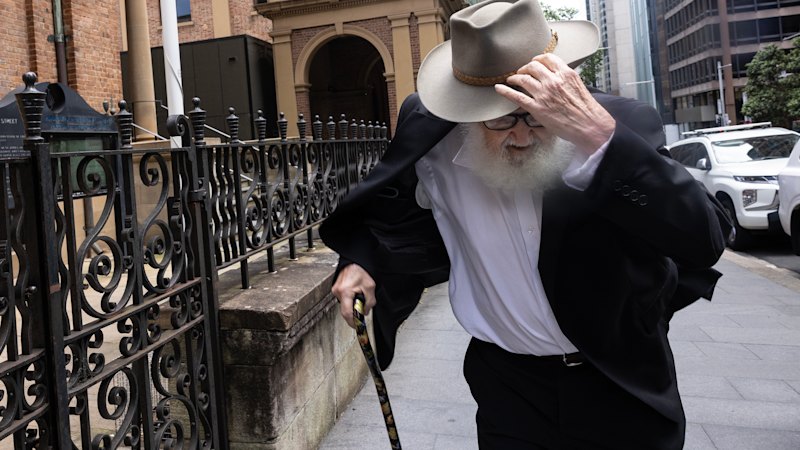
Elderly man repeatedly stabbed wife of 60 years to death, judge finds
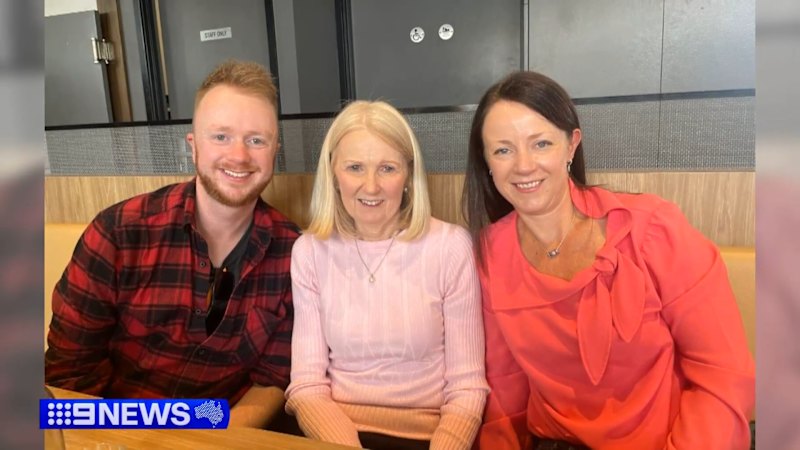
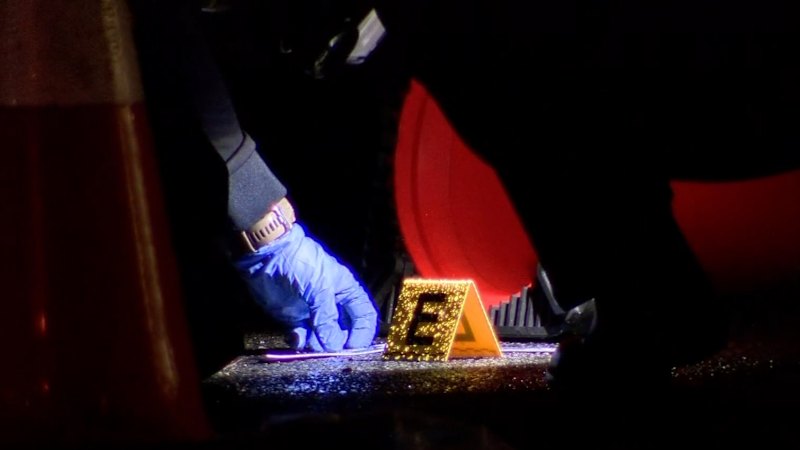
He killed the 78-year-old at their Gordon home in June 2024.
Sorrento Beach closed, swimmer missing after suspected shark attack
Calls to emergency services were made around 10.15am, at the same time as reports of a large shark at Sorrento Beach.
Aurum nails high-grade gold outside 3.22Moz Côte d’Ivoire resource
Aurum Resources has hit bonanza gold grades up to 51.38g/t outside its 3.22-million-ounce Boundiali resource in West Africa, pointing to further resource growth.
‘Brutal’, ‘Chilling’: Sydney woman who dismembered husband could be released in one year
Nirmeen Noufl has been sentenced after pleading guilty to manslaughter on the basis her husband was abusive and had attacked her.
Ngong Ping 360 cable car opens in Hong Kong after typhoon delay - SCMP archive
This article was first published on September 18, 2006. Breezy launch is on the cards By Dennis Eng The Ngong Ping 360 cable car will open today in one of the windiest months of the year, according to the Hong Kong Observatory. Windy conditions with gusts reaching 90km/h occur on 5.5 days for a total of 52 hours in September on average, according to measurements taken at Ngong Ping between 2002 and last year. June, July and August are typically the windiest months. The Observatory’s forecast...
The forces turning Australia's inflation fears into a reality
While growth in the Australian economy is slowing, the RBA governor said, the bank's concerns about inflation are materialising.
Secrecy over Olympic rowing course fuels south-east rower backlash
The Crisafulli government has not released a key report clearing Rockhampton’s Olympic rowing venue, triggering anger from south-east Queensland rowers.
Secrecy over Olympic rowing course fuels south-east rower backlash
The Crisafulli government has not released a key report clearing Rockhampton’s Olympic rowing venue, triggering anger from south-east Queensland rowers.
Japan's war memory: Remembering pain, forgetting responsibility
The divergence within Japanese society regarding the nature of the war and historical responsibility appears on the surface as a split in historical narratives. But in essence, it concerns whether post-war Japan can maintain its identity as a peaceful nation through a genuine consciousness of reflection.
Authorities aim to launch revamped Huanggang Port on October 12
Hong Kong’s redeveloped Huanggang Port could begin operations as early as October 12, allowing cross-border travellers to complete Hong Kong and mainland Chinese immigration procedures in a single inspection under a new joint clearance system. The South China Morning Post learned on Friday that authorities were targeting the date for the launch, although that would depend on the facility’s operational readiness. Launching on October 12 would meet the government’s target of starting operations in...
All Press
YOUR NEWS, OUR NETWORK.
Do you have Great News you want to tell the world?
Be it updates about your business or your community, you can make sure that it’s heard by submitting your story to our network reaching hundreds of news sites across 6 verticals.