KEPCO to keep electricity rates frozen for Q4 despite higher costs
State-run Korea Electric Power Corp. (KEPCO) said Monday it will keep electricity rates unchanged in the fourth quarter despite higher raw material prices and its financial difficulties. The adjusted fuel cost, a key component of electricity rates, will remain at the maximum level of 5 won per kilowatt-hour (kWh) for the October-December period, KEPCO said. KEPCO has kept the adjusted fuel cost at 5 won per kWh for 18 consecutive quarters since the third quarter of 2022. The adjusted fuel cost is set before each quarter within a range of plus or minus 5 won per kWh, based on energy prices, including coal and liquefied natural gas (LNG), over the previous three months. KEPCO said rates were due to rise by 7.3 won per kWh in the fourth quarter under the fuel cost adjustment formula. The decision to freeze rates is expected to further weigh on the company's finances. The company's financial difficulties began after it continued to supply electricity at prices below production costs as global energy prices surged between 2021 and 2023 following Russia's invasion of Ukraine. KEPCO and its power
Read full articleMORE NEWS

KRICT researchers develop cathode technology for high-capacity batteries
A research team at the Korea Research Institute of Chemical Technology (KRICT) has developed a new cathode technology that could help batteries store more energy without increasing their size or weight, the institute said Monday. The team, led by senior researchers Moon San and Suk Jung-don, developed a new dry thick cathode technology that improves the movement of lithium ions inside electrodes. The research was featured as the cover article of the international academic journal Exploration in August, with post-master's researcher Eun Hye-ji as the first author. The technology uses graphitic carbon nitride as an additive in dry cathodes for the first time, helping the electrolyte penetrate deeper into the electrode and reducing the energy required for lithium ions to enter the cathode material. One way to produce high-energy-density batteries is to make electrodes thicker, as this allows more active material to be packed into the same area. However, as electrodes become thicker, lithium ions have more difficulty moving through them, preventing the battery from fully utilizing the energ

China tests first practical submarine solar power plant at 10 metres depth in the open sea
In a breakthrough that could power the future of underwater operations, Chinese scientists have built and tested the world’s first submarine solar farm, successfully operating a perovskite-based photovoltaic system at a depth of 10 metres (33 feet) in the open sea. The submerged array charged batteries and powered a LED panel, proving that solar energy can be harvested even in the dim, blue-green twilight of the ocean. The achievement by a team from Yunnan University, published on September 11,...

Driver allegedly caught in stormwater drain after road rage report leads to police chase
He allegedly sped through a red light and drove on footpaths.
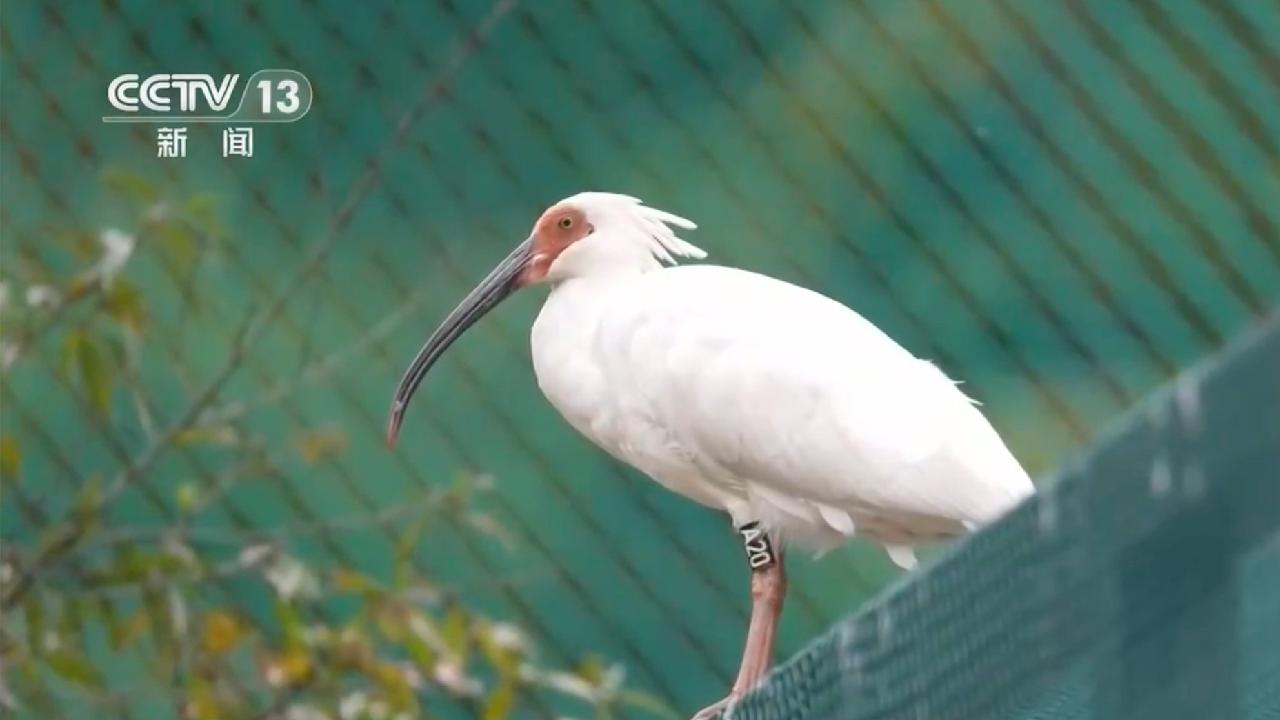
Crested ibises take flight in China's westernmost rewilding effort
Crested ibises take flight in China's westernmost rewilding effort

The plan to transfer Ashes Gabba torment to new Brisbane ground
“It’s about [making] sure that we can continue to inflict pain on those who come to this country.”

61% vs. 26%: The number behind the real US-China AI divide
61% vs. 26%: The number behind the real US-China AI divide

Coorparoo Bowlo given new life, bought by hospitality group
After fears a developer would buy the club, Bowls Queensland has sold it to someone wanting to keep it open.

China, US hold economic and trade consultations in New York
China, US hold economic and trade consultations in New York

Migration to keep Australia growing as population turning point approaches
Australia faces major demographic, economic and technological changes, the latest Intergenerational Report has forecast.

3 stray mongrels captured after cyclist dies in suspected dog attack
Hong Kong authorities have captured three stray mongrels near a road in Yuen Long after a female cyclist was suspected of having died in a fatal dog attack in the area. The Agriculture, Fisheries and Conservation Department (AFCD) said on Monday that it had worked alongside police to capture three stray dogs near Pok Wai South Road on Sunday evening. But the AFCD sidestepped a question on whether some of the recent suspected attacks in the New Territories were linked to land resumption...

As the US weighs restrictions on cloud computing, how will China’s AI sector adapt?
When Chinese artificial intelligence developers want to train their next-generation frontier models, they all face the same daunting wall: they cannot legally buy the world’s most powerful AI chips. However, the country’s tech giants and start-ups have still managed to quietly keep pace with global rivals. Their secret is an elusive workaround: moving heavy training workloads across borders through the cloud. By setting up proxy entities in foreign jurisdictions, domestic firms have for years...