How students are picking vocational and trade subjects to boost their ATAR
Year 11 student Seth Bolt skirted general subjects he feared could bore him, and his ATAR has only thanked him, mum Tanya said.
Read full articleMORE NEWS
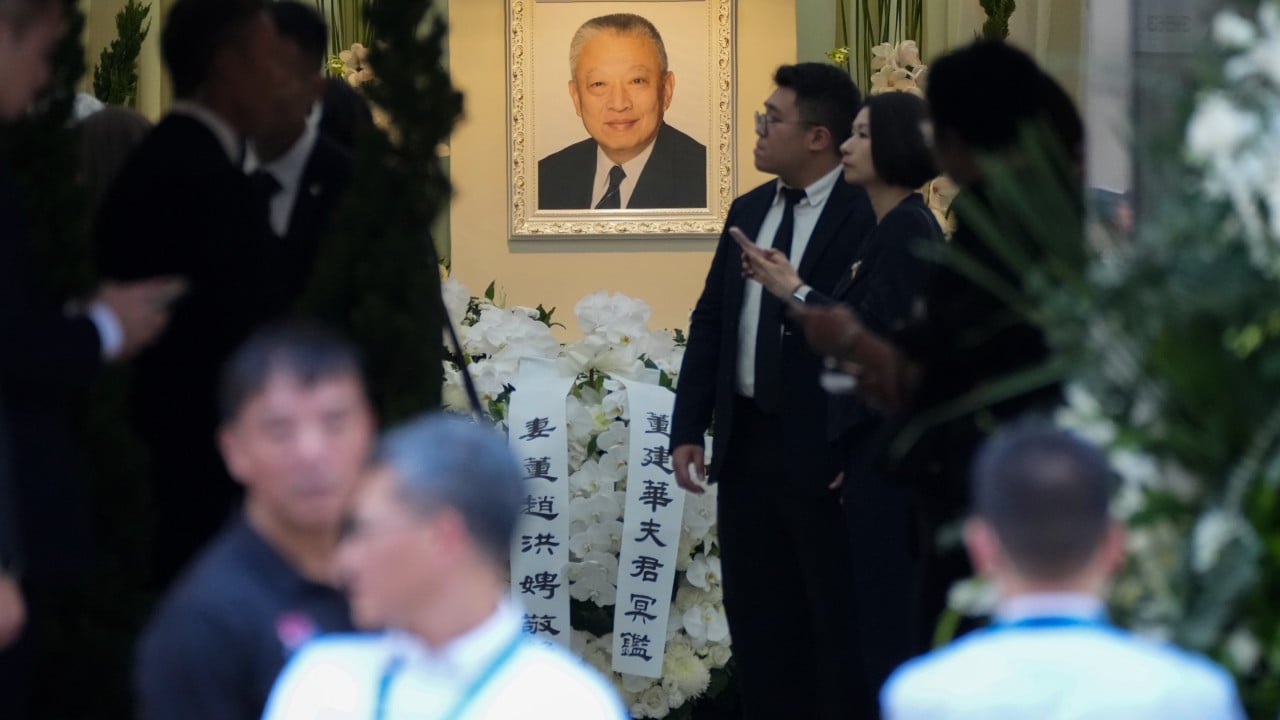
Hong Kong’s political, business elite pay final respects to Tung Chee-hwa
Hong Kong’s political and business elite bade a solemn farewell to Tung Chee-hwa, the city’s first chief executive, at a vigil on Saturday, as Beijing leaders sent wreaths ahead of his state funeral and members of the public streamed into community centres to sign condolence books. Hundreds of wreaths lined the pavement at the Hong Kong Funeral Home in North Point, spilling into a nearby playground, while inside the hall the mood was hushed as top officials, former politicians and business...
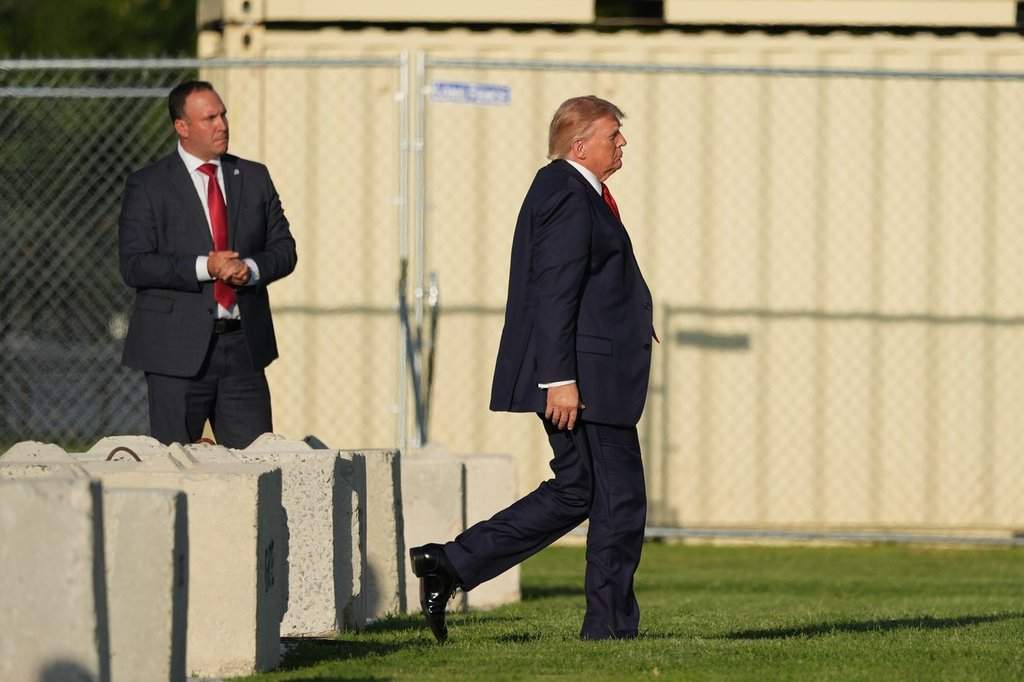
After Trump ban, MS NOW and CNN say their journalists were denied access to White House
Two major news networks' journalists said they were denied access to the White House on Saturday morning.

Coupang turns to Taiwan as key hub for global growth
Taiwan has emerged as a key strategic hub for Coupang’s global growth, as the company brings fast delivery to more regions and develops AI-powered logistics technologies. Taiwan is a relatively new market for the New York Stock Exchange-listed company, which began expanding into the country in October 2022. The move came after the e-commerce giant established a strong presence in Korea, where it has operated since 2010. In just a few years, Coupang connected more than 300,000 sellers on its platform in Korea, the United States, China, Japan and Hong Kong with consumers in the Taiwanese market. Coupang recently completed its fourth fulfillment center in Taiwan, which opened in April. Located in the Bausan Guanyin Logistics Park in Taoyuan City in northwestern Taiwan, the facility was designed to accelerate exports, particularly from U.S. businesses, to the Taiwanese market. “By removing traditional barriers such as complex logistics, long shipping times and high costs, we made it easier for U.S. companies to expand internationally," the company said in a statement released after the

Who helped Samsung become chip giant
Through the 1980s, Japan pushed the United States — the birthplace and longtime leader of the semiconductor industry — out of the world memory chip market, and the damage ran deep enough that Intel gave up DRAM, the short-term memory that holds a computer's working data. American chipmakers came to believe Japan could not be beaten in memory chips, and Washington and the industry began looking for ways to counter it. Two questions followed: how to contain Japan, and where to find a viable challenger to it. The country that emerged as a memory chip powerhouse in the 1990s was Korea, and Intel had a hand in how Korea overtook Japan to dominate the world market. Chip business nearly dropped "Hey, drop it." Samsung Group founder Lee Byung-chul shook his head in disbelief while he sat through a report on the semiconductor company his son had bought. The son was Lee Kun-hee, former Samsung chairman. Lee, then a director at Samsung's broadcasting branch TBC, had acquired Hankook Semiconductor in 1974 after the chipmaker went bankrupt due to financial strain. Hankook Semiconductor, an early Ko

Korean Air faces mounting mileage-related liability
Korean Air is facing a growing mileage-related liability as it moves to integrate its mileage program with that of Asiana Airlines, with higher redemption requirements adding pressure on the combined carrier’s ticket sales and profitability. Last week, the Fair Trade Commission (FTC) approved the airlines’ mileage integration plan, requiring Korean Air to provide more opportunities for customers to use their accumulated miles. Under the plan, Asiana miles will remain separately available for 10 years after the merger. As of the end of June, Korean Air’s consolidated mileage-related deferred revenue stood at 4.07 trillion won ($2.94 billion), including 3.12 trillion won for Korean Air and 946.3 billion won for Asiana, according to the companies’ interim reports. The amount represents the value allocated to unused miles that have yet to be redeemed and is recorded as a liability until the related services are provided. The figure does not represent conventional debt that Korean Air must repay in cash. Rather, it reflects future service obligations. When customers redeem their mile
![[WEEKENDER] K-defense exports enter new phase](https://newsimg.koreatimes.co.kr/2026/09/08/1f1e24e0-65a5-4e93-9881-e7eb54e7e78f.jpeg)
[WEEKENDER] K-defense exports enter new phase
Korea’s defense industry stands at a critical crossroads, as its export boom gives way to a new phase in which major overseas buyers are demanding local production and supply chains in their own markets. From K9 self-propelled howitzers and K2 battle tanks to Chunmoo multiple rocket launchers and air defense systems, Korean-made weapons have rapidly expanded their presence across Europe and other regions. The export boom has transformed the defense industry from a largely domestic-oriented sector into one of Korea’s emerging global growth engines. But the next stage may prove more challenging. Korean defense firms can no longer rely solely on their traditional strengths of competitive prices, fast delivery and proven manufacturing capabilities. As major customers increasingly demand technology transfers, local production and participation in their own defense industries, Korean companies are pushed to become not just arms exporters, but long-term industrial partners. That shift could determine whether the current K-defense boom develops into a sustainable global business or remains a t
![[WEEKENDER] What are Korea's flagship K-defense exports?](https://newsimg.koreatimes.co.kr/2026/09/10/a4002ffe-dba9-4db9-93d9-c16c82194cc4.jpeg)
[WEEKENDER] What are Korea's flagship K-defense exports?
Korea has emerged as a major player in the global defense market, with its domestically developed weapons systems gaining traction for their competitive prices, advanced technology and fast delivery. From artillery and tanks to fighter jets and missile defense systems, Korean defense companies are expanding their global footprint and reshaping the country’s position in the international arms industry. K9 Thunder The K9 Thunder is Korea’s flagship self-propelled howitzer and one of the country’s most successful defense export items. Designed to provide mobile, long-range artillery fire support for ground forces, the 155-millimeter system can rapidly move, fire and relocate, making it well-suited to modern, highly mobile battlefields. The K9 is now used or being introduced by a growing list of countries, including Poland, Australia, Egypt, India, Norway, Finland, Estonia and Turkey. Poland has emerged as its largest export customer under a major deal to reinforce its artillery capabilities in the wake of Russia’s invasion of Ukraine. Redback IFV The Redback is Hanwha Aerospace’s nex
![[TEST DRIVE] Renault Filante blends commanding size with agile drive](https://newsimg.koreatimes.co.kr/2026/09/10/8c617c5a-b0f2-47a3-9fc4-65ffdc84498a.jpeg)
[TEST DRIVE] Renault Filante blends commanding size with agile drive
Renault Korea’s flagship crossover, the Filante, looks imposing at first glance, but feels surprisingly agile behind the wheel. Its planted ride, refined cabin and better-than-expected fuel economy give the large crossover a distinctive mix of comfort and driving appeal. The Filante was driven for about 400 kilometers on a round trip between Seoul and Daejeon, covering a mix of urban roads and highways. Across the route, the crossover delivered a stable ride and impressive fuel efficiency, making a strong overall impression. The Filante shares some of its design cues with Renault Korea’s popular Grand Koleos SUV, but carries a more upscale and sportier character. Measuring 4,915 millimeters in length and 1,635 millimeters in height, it has a substantial presence. Yet its low, flowing roofline and floating rear spoiler give the large body a sleeker profile, blending elements of a sedan and an SUV. The difference becomes more apparent once the car gets moving. The Filante’s driving character can be summed up in one word: planted. Its E-Tech hybrid powertrain combines a 1.5-liter turbo

Woman under probe for allegedly eavesdropping on singer Cha Eun-woo
A woman is being investigated on suspicion of eavesdropping on singer-actor Cha Eun-woo by installing a recording device under a cafe table last month, police said Friday. The woman in her 50s was caught by police on Aug. 30 while removing the device from the cafe in Seoul's Yongsan Ward where Cha was meeting with an acquaintance, according to the Yongsan Police Station. She allegedly used the same method twice last month to eavesdrop on Cha's conversations. Police are reportedly determining whether she had any accomplices and how she got hold of the device by conducting a forensic analysis of her phone, among other measures.

Toxic humidifier survivors face daily struggles, discrimination
"I want to take my shirt off and exercise like my friends do, too!" Lim Jae-i, 80, cannot forget her grandson's anguished cry years ago. Lee Hyun-seo, 25, was exposed to humidifier disinfectant — an antibacterial liquid added to humidifier water — while still in the womb and was born prematurely. He cycled in and out of hospitals with nontuberculous lung disease, a chronic lung condition unrelated to tuberculosis, and he almost never complained. Then adolescence arrived and he reached a breaking point. Facing a mirror, he saw a chest left concave by years of drug treatment and labored breathing and a body that remained thin. He realized that his life would never resemble those of his peers. The infants who bore the brunt of Korea's humidifier disinfectant disaster have reached young adulthood. A 2025 Ministry of Climate, Energy and Environment survey of victims drew 1,213 responses, 321 (26.5 percent) of which came from victims in their 20s or younger. A tragedy the public still associates primarily with infant fatalities now runs through its survivors as an unfinished daily grind o

Cheong Wa Dae says Lee's 'no war intervention' remark not a rejection of Trump's Hormuz request
Cheong Wa Dae said Saturday that President Lee Jae Myung's remarks ruling out troop dispatches that could involve the country in a war were not a refusal of U.S. President Donald Trump's request for Seoul to send forces to the strategic Strait of Hormuz. The presidential office clarified the position after the New York Times reported that Lee's comments at a press conference Friday amounted to a rejection of Trump's appeal for Seoul's military cooperation in the Middle East. "Lee did not turn down Trump's request for Korea's cooperation on Middle East-related issues during yesterday's press conference," a presidential official told reporters on condition of anonymity. "The government has been reviewing practical ways to contribute in close communication with the international community, including the United States, in order to protect our citizens and safeguard national interests." Seoul will continue to examine concrete options under its stated principle of not intervening in a war or combat, the official added. On Friday, Lee said during the nationally televised press conference that "

Kim withdraws as justice minister nominee
Justice minister nominee Kim Seung-won withdrew his nomination on Saturday following allegations concerning his involvement in a COVID-19 treatment and approval of its clinical trials. “After much deliberation, I decided to step down as the nominee for justice minister. I apologize for failing to live up to your expectations,” Kim said during a press conference at the National Assembly. The move comes after a parliamentary committee adopted his confirmation hearing report Thursday amid objections from the main opposition People Power Party over the allegations. Kim, a two-term lawmaker of the ruling Democratic Party of Korea (DPK), served as a judge at the Jeonju District Court and the Suwon District Court before joining the presidential office under the liberal Moon Jae-in administration, where he worked in the office of political affairs. He was elected to the 21st National Assembly in 2020 and later served as DPK's legal affairs committee chief.