Worldwide Industrial Floor Coatings Market Set to Register 7.2% CAGR to 2024
Dec 12, 2018
Market Study Report adds global Industrial Liquid Coatings market report studies the industry based on one or more segments covering key players, types, applications, products, technology, end-users, and regions for historical data as well as provides forecasts for next few years.

Selbyville, Delaware - December 12, 2018 /MarketersMedia/ —
Historical data from 2013 is provided for Industrial Liquid Coatings market along with estimates and forecasts to 2024 based on segmentation of Industrial Liquid Coatings industry by Product, by Component, By Flooring companies and regions. Previous years’ data offers fact-based information on trends and growth graph while the forecasts aim to show an outlook of Industrial Liquid Coatings market for the next few years keeping in mind the advancements happening in the sector.
Industrial floors coatings market is highly fragmented in nature due to the huge presence of small manufacturing companies. Key companies include BASF, Sherwin Williams, PPG Industries, Axalta Coating System, Kansai Paints, Asian Paints, Tambour, AkzoNobel, Roto Polymers & Chemicals, Nora Systems, Sika AG, RPM International Inc, ArmorPoxy, CPC Floor Coatings, Florock Polymer Flooring Systems, Dow Chemicals, Grand Polycoats, Michelman Inc, The Lubrizol Corporation, Plexi-Chemie Inc.
Request a sample of this premium report at: https://www.marketstudyreport.com/request-a-sample/496347/
Asia Pacific market captured more than 38% revenue share in 2017 and likely to observe over 8% CAGR up to 2024. Global manufacturing industry is mainly concentrated in Asian countries, particularly in China, Japan & South Korea. Regional growth was credited to China and Japan together contributed for over 30% of the global manufacturing output. For instance, in 2017, the Government of India announced the allocation of INR 6,000 crores for the establishment of 42 mega food parks to reduce food wastage, offering lucrative opportunities to the industrial floor coatings players in the region.
Concrete segment generated more than USD 3 billion revenue share in 2017. Growing awareness on minimizing the maintenance cost has led to wider acceptance of concrete ground layering products in the market. Manufacturing ground endures constant abuse from mechanical, chemical and weather elements need superior protection. Major factor such as durability, high tensile strength, and lower cost when compared to other materials will augment industrial floor coatings industry growth.
Epoxy market was accounted over USD 1.6 billion in 2017. The product is extensively used on flooring surfaces of manufacturing facilities, food & beverage plants and warehouses. The self-leveling layers that contribute to the protection and filling hairline crack on floors augmenting product demand. Superior properties, such as exceptional adhesion, high resistance to chemicals & solvents, and flexibility, are among the major factors propelling product profile.
Request a discount on standard prices of this premium report at: https://www.marketstudyreport.com/check-for-discount/496347/
Food processing segment is anticipated to experience over 7.6% CAGR from 2018 to 2024. Higher adoption of coatings to ensure effective operations in the food processing plants is projected to boost the industry growth. In addition, measures are taken to ensure optimum hygiene and safety in processing plants strong supporting product landscape. Increasing investments in the food industry to tackle issues relating to food shortage and food wastage will augment the industrial floor coatings market demand.
Table of Content:
Chapter 1. Methodology and Scope
Chapter 2. Executive Summary
Chapter 3. Industrial Liquid Coatings Industry Insights
Chapter 4. Industrial Liquid Coatings Market, Product
Chapter 5. Industrial Liquid Coatings Market, By Component
Chapter 6 Industrial Floor Coatings Market, By Flooring Material
Chapter 7. Industrial Liquid Coatings Market, By Application
Chapter 8 Industrial Floor Coatings Market, By Region
Chapter 9 Company Profiles
For More Details on this Report At: https://www.marketstudyreport.com/reports/industrial-floor-coatings-market
Related Report:
Global Industrial Floor Coatings Market 2018 by Manufacturers, Regions, Type and Application, Forecast to 2023
Industrial floor coating is a clear, liquid substance applied on the floor, which hardens when dried to offer walking surface. It also provides aesthetic appeal and offers anti-skid and abrasion resistance. In 2017, the manufacturing sector accounted for a larger share in the industrial floor coating market. This dominant market position is attributed to the exponential growth of the manufacturing industry globally. With the increase in manufacturing activities, the number of production plants have also increased, which has created an opportunity for the application of industrial floor coating in these facilities. In 2017, the Asia-Pacific region accounted for the largest share and is projected to grow at the fastest rate in the industrial floor coating market from 2018 to 2023. Markets in developing countries such as India, China, South Korea, Brazil, and countries in the Middle East are projected to grow at higher rates from 2016 to 2021, owing to the rapid industrialization and commercialization in these countries.
About Us:
Marketstudyreport.com allows you to manage and control all corporate research purchases to consolidate billing and vendor management. You can eliminate duplicate purchases and customize your content and license management.
Contact Info:
Name: Arun Hegde
Email: Send Email
Organization: Market Study Report
Address: 4 North Main Street, Selbyville, Delaware 19975 USA
Phone: 1-302-273-0910
Website: https://www.marketstudyreport.com
Source URL: https://marketersmedia.com/worldwide-industrial-floor-coatings-market-set-to-register-72-cagr-to-2024/458142
Source: MarketersMedia
Release ID: 458142
More News

Korea's rice production falls for 5th year in 2026 amid changing diets
Korea's rice output declined for the fifth consecutive year in 2026 amid changing dietary habits, data showed Friday, with the cultivation area also reaching a new low. Rice production decreased 0.9 percent year-on-year to 3.5 million tons this year, according to data compiled by the Ministry of Data and Statistics. It marked the fourth-lowest level since the government began compiling the data in 1965. The combined area of rice paddies in the country fell 1.1 percent year-on-year to 670,000 hectares, the smallest on record. Despite the decline in overall production, output per 1,000 square meters increased 0.2 percent year-on-year to 524 kilograms this year, according to the ministry. Rice remains a staple food in Korea, but consumption has steadily fallen in recent decades amid shifts in dietary preferences. The decrease in production also came amid the government's efforts to manage output while encouraging farmers to switch to other crops. By region, South Jeolla Province and Gwangju together produced 736,000 tons of rice, followed by South Chungcheong Province with 681,000 tons and Nor

Defense ministry conducting poll on military cadets over proposed academy integration
The defense ministry said Friday it is surveying military cadets on the proposal to integrate the Army, Air Force and Navy academies as the government seeks to revise the plan amid pushback from alumni groups and key stakeholders. The online survey, running from Friday through Tuesday, will poll 2,350 cadets across all four class years, excluding about 143 naval cadets set to be deployed for rotational training, a ministry official told reporters. The ministry is pushing to merge the three institutions into a unified military academy, but the plan has drawn fierce opposition from cadets and alumni who say it could erode the distinct identity and specialized capabilities of each armed service. The ministry is now reportedly weighing the option of relocating the military academy of the Army out of Seoul as planned while retaining the two others, a move seen as backtracking from its original merger plan. "The survey aims to evaluate the current military academies and collect cadets' opinions as part of broader efforts to gather input from various sectors to refine the plan for establishing

Former presidential security official named new KOICA chief
Oh Hyun-joo, former third deputy director of the presidential National Security Office, has been named to head the Korea International Cooperation Agency (KOICA), the foreign ministry said Friday. Oh will formally take office on Monday to lead the agency, which is affiliated with the foreign ministry and responsible for the government's official development assistance (ODA) programs. After entering the foreign service in 1994, Oh held various posts in development cooperation and multilateral diplomacy, including deputy chief of mission at South Korea's U.N. mission. She became South Korea's first female ambassador to the Holy See in January 2023 and was appointed third deputy director of the National Security Office in June last year. "Oh is expected to actively realize KOICA's vision of becoming a leading global development cooperation agency that pursues universal values and shared national interests, while strengthening its role as an integrated platform for South Korea's grant aid programs," the ministry said in a statement. The KOICA president serves a three-year term and is selected

Lee pledges capital market reform to address stock undervaluation
President Lee Jae Myung on Friday reiterated his commitment to capital market reform, pledging to address what he has called "undervaluation" of Korean stocks by boosting market confidence and cracking down on market irregularities. Lee made the pledge during a policy discussion on the capital market held at the Korea Exchange, which brought together experts, corporate representatives and government officials. "Normalizing the capital market is our government's unwavering policy direction and commitment," the president said. The president described the undervaluation of Korean stocks as an "unreasonable abnormality," reaffirming his administration's commitment to reforming the capital market and the broader financial market to boost investor confidence. Lee's remarks came amid significant volatility in Korea's stock market in recent months, with the benchmark Korea Composite Stock Price Index (KOSPI) trading in the mid-5,000-point range on Friday, after reaching an all-time closing high of 9,114.55 points in late June. The president cited investor confidence as the most important value in

Gov't vows zero tolerance against cheating with AI glasses
The government promised Friday to exercise zero tolerance against cheating using artificial intelligence (AI) glasses in next week's nationwide college entrance exam after suspicions of such cheating arose over an unrealistic score in this year's certified tax accountant exam. The suspicions emerged following revelations that the highest scorer in the tax accountant exam received a near-perfect score, missing only one question out of the 160 on the first-round test, earning 397.5 points out of a possible 400, a score many test-takers view as unrealistic. That has raised concerns that AI cheating can be used in the College Scholastic Ability Test (CSAT), set for Thursday. "The government views cheating using AI smart glasses as a serious issue that infringes upon fair opportunities for students who have worked diligently, and takes people's concerns regarding this matter very seriously," the Office for Government Policy Coordination said in a statement. "The government will take a zero-tolerance approach toward any cheating that compromises the fairness of examinations and will make sure

Conversion of credit card points to cash vouchers to be allowed starting May
Credit card users will be able to convert their dormant reward points into regional cash vouchers starting May next year, officials said Friday, as part of efforts to boost consumption and breathe vitality into local economies, The government announced the measure after President Lee Jae Myung instructed officials in late June to allow the conversion of "various hidden or dormant points into local currency to boost consumer vitality and revitalize traditional markets and neighborhood shops," officials said. The Office for Government Policy Coordination under the prime minister's office has since worked with the interior ministry, the Financial Services Commission and the Korea Financial Telecommunications and Clearings Institute to come up with details, officials said. Credit card points will be the first to be allowed for the conversion. Accumulated card points amount to 2.1 trillion won ($1.57 billion) and such points already have well-established systems for conversion into cash, officials said. Once the conversion service begins in May, card users can use "account info" or "regional c

Trump told Huang to fight for his job after affair scandals: Report
President Trump called outgoing Nvidia CEO Jensen Huang and told him to fight for his job ahead of his resignation, The New York Times reported on Thursday, citing two people briefed on the conversation. Huang resigned as CEO of one of the world’s most valuable companies after reports emerged of multiple extramarital affairs, including one...

Beau Lamarre-Condon trial live updates: Former NSW Police officer, alleged double murderer’s cross-examination continues; grilled by Crown over texts to Jesse Baird
The accused killer faces further cross-examination in his criminal trial in Sydney on Friday.

The Microsoft outage is part of a growing trend. This is how to prepare for further disruption
A Microsoft outage is disrupting work for people around the world but some businesses are better prepared than others.

Can you please find me a job?
Abbey Faulkner asks Prime Minister Anthony Albanese a question on the ABC TV show The Assembly.

Big Build royal commission LIVE updates: Rail Projects official says Allan’s office told them to handle CFMEU dispute or they ‘can’t have more work’
Follow our live coverage as the first week of witness examinations comes to an end and the commission keeps its microscope on the $110 million Gap Road level crossing removal.
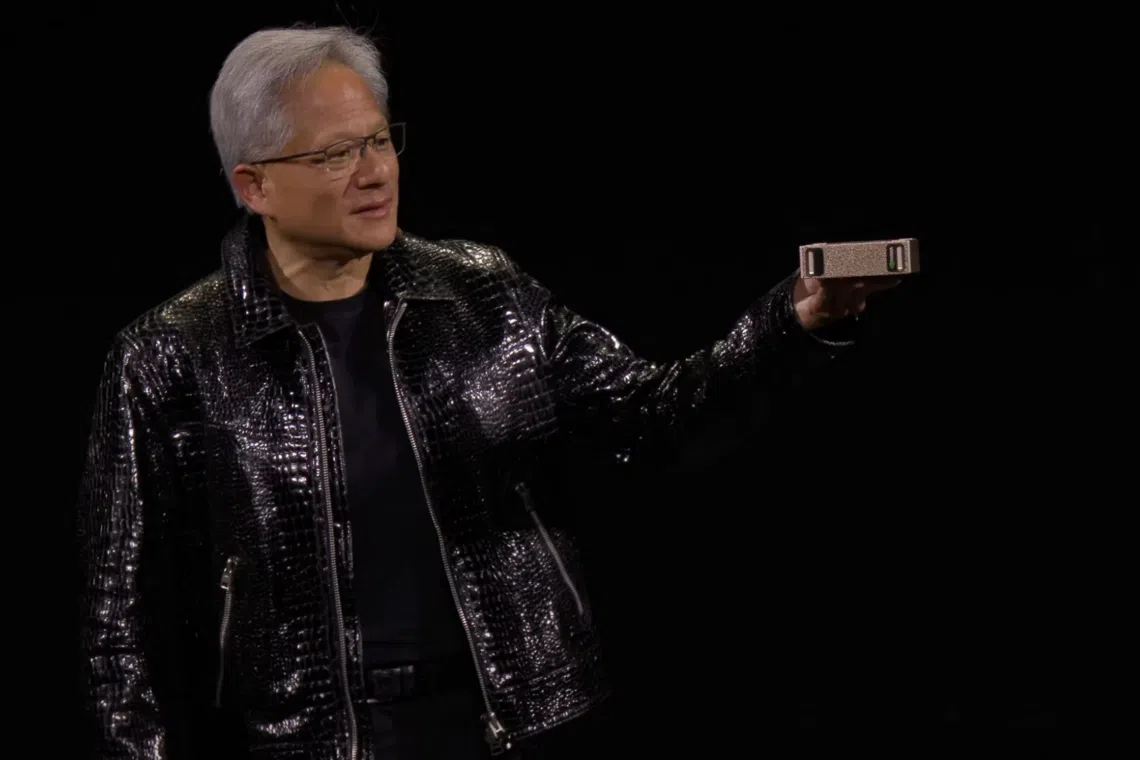
Jensen Huang has resigned as NVIDIA’s CEO amid affairs scandal
Colette Kress, the company’s chief financial officer, will take over as interim CEO.
YOUR NEWS, OUR NETWORK.
Do you have Great News you want to tell the world?
Be it updates about your business or your community, you can make sure that it’s heard by submitting your story to our network reaching hundreds of news sites across 6 verticals.