Veyns Prepares to Launch Palm Vein Authentication Readers, Payment Terminals and Developer Tools.
Nov 21, 2026
Veyns is developing palm vein readers, payment terminals and software tools for biometric authentication, and the company is preparing to launch by the end of Q4 2026.
BVI, British Virgin Islands, November 21, 2026 -- Veyns is preparing to launch its palm vein authentication technology by the end of Q4 2026. The company is building compact palm vein readers, payment terminals and software tools intended to bring biometric authentication into everyday digital and physical environments. It sees applications across payments, account access, digital wallets, secure buildings, loyalty programs, ticketing and enterprise authorization.
The technology is designed to identify a person through the vascular pattern and liveness beneath the skin of the hand. The idea is that identity should not depend on something a person remembers, something they carry or something another company stores on their behalf. It should begin with the person.
There is a strange contradiction at the heart of modern technology. The world has become faster, smarter and more connected, yet proving identity has somehow become more complicated. A typical person now moves through a maze of passwords, PINs, authentication apps, recovery emails, security questions and one time codes just to access the services they use every day. Veyns thinks that system is reaching the end of its useful life.
Eventually, its ambitions go much further. Veyns believes the same identity layer could form the basis for reusable KYC, portable credentials, digital identity and other systems that currently require people to repeatedly prove who they are to different organizations.
The company is entering the market at an unusual moment. Artificial intelligence is rapidly changing the economics of impersonation. Voices can be cloned. Images can be generated. Documents can be manipulated. Password databases continue to be compromised, while phishing attacks have become increasingly difficult for ordinary users to identify.
In that environment, confirming that a real person is physically present, and that the person is actually who they claim to be, is becoming a much bigger problem. Palm vein technology relies on patterns beneath the skin rather than visible features alone. Veyns is also building around liveness verification, allowing a system to determine that it is interacting with a living person rather than simply a copied representation.
The company’s broader argument is that authentication should eventually become almost invisible. Instead of opening an app, searching for a code and typing six digits into another screen, a person could simply present their hand. Instead of carrying an access card, the individual becomes the credential. Instead of remembering a password, identity itself becomes the authorization.
Other forms of authentication have become normal quickly. Contactless payments once felt novel. Facial recognition on a phone did too. Today, both happen with barely any thought.

Veyns first edition: POS machine and Bio signature disk.
The team at Veyns strongly believe that palm vein based identity could follow a similar path. A central part of its strategy is that the hardware is not the final product.
The company is developing SDKs and APIs that would allow businesses and developers to build their own applications around the technology. That opens the possibility of Veyns becoming an infrastructure layer rather than simply another hardware based company. For Veyns, that infrastructure could begin with payments and access, then expand into financial services, identity verification and eventually areas such as travel, government services and digital credentials.
Any identity technology has to earn trust, particularly when it sits between people and some of the most sensitive systems they use. Privacy, interoperability and security will matter as much as convenience.
Veyns is approaching that problem differently from traditional biometric systems. The company says it does not store raw biometric data or images of a user’s palm vein pattern. Instead, the scan is converted into mathematical vectors, which are then transformed using cryptographic hashing to create a secure representation used for verification.
Rather than building a central database of biometric images, Veyns is designing its infrastructure so that the original biological information is not retained in a form that can simply be viewed, copied or reconstructed. As identity becomes increasingly digital, the question is no longer only whether a system can recognize someone accurately. It is whether it can do so without creating another valuable repository of deeply personal data.
Veyns is betting that the future of biometric identity will depend not just on better recognition, but on better privacy methods and the efficiency behind it. The company sees the opportunity as a change in expectations, in which typing passwords, carrying access cards and repeatedly uploading identification documents come to be seen as unnecessary friction left over from an earlier version of the internet.
The company is still early and is preparing to launch by the end of Q4 2026.
About Veyns
Veyns Inc. develops palm vein authentication hardware, including the Bio signature disk and the Palm Vein POS terminal, along with open SDKs, APIs and developer tools for apps, wallets, payments and access. The company says palm vein data is converted into a secure encrypted template and is not stored as a raw biometric image.
Contact Info:
Name: Marvin
Email: Send Email
Organization: Veyns
Website: https://veyns.io
Release ID: 89210254
If there are any deficiencies, problems, or concerns regarding the information presented in this press release that require attention or if you need assistance with a press release takedown, we encourage you to notify us without delay at [email protected] (it is important to note that this email is the authorized channel for such matters, sending multiple emails to multiple addresses does not necessarily help expedite your request). Our diligent team is committed to promptly addressing your concerns within 8 hours and taking necessary actions to rectify any identified issues or facilitate the removal process. Providing accurate and trustworthy information is of utmost importance.
More News

Why a slow-paced show about broken friendships is China’s antidote to AI fatigue
A slow-paced Chinese reality show about fractured friendships has proved an unexpected cultural phenomenon, sparking a nationwide reckoning over huorengan – the messy, unscripted sense of being alive – as AI companions and algorithm-driven microdramas flourish. The show’s emotional power is distilled in a viral scene when two women who barely spoke to each other for seven years sit across a small wooden table. One of them, singer Xu Fei, unfolds a handwritten letter and begins to read it aloud....

FBI looking into possible breach of its crime database: Report
The Federal Bureau of Investigation (FBI) is looking into a potential breach of its nationwide criminal information database, a second breach in recent months coming on the heels of nationwide technology outages. The agency’s National Crime Information Center, which is used to connect federal, state and local authorities for nationwide information, was breached by apparent...

Superquiz, Sunday, November 22
Trivia buffs, test your knowledge with today’s interactive superquiz.

How China showcased the ‘Shenzhen miracle’ in Apec cooperation push
The just-concluded Apec summit in Shenzhen showcased China’s role as a regional leader, state news agency Xinhua said on Saturday, casting the city’s rapid rise as a model for an “Asia-Pacific miracle” under Chinese guidance. In an article detailing Chinese President Xi Jinping’s activities at the November 18-19 event, Xinhua noted how China’s three stints as annual summit host charted the nation’s progression from “integrating into” and “developing” the Asia-Pacific to actively “leading” the...

China unveils space mining road map with a big move on the moon within 4 years
China should test making water or oxygen on the moon no later than 2030, according to the chief designer of its lunar programme, as the country’s race with the US to settle there heats up. In a paper to be published in the Journal of Deep Space Exploration, physicist Wu Weiren and his team said China needed to prove at least one key technology, such as extracting ice or pulling oxygen from the dusty ground, during its next robotic Chang’e mission or planned crewed landing. Their road map then...

Aussie debutant takes a screamer
Lachlan Shaw dives to take a superb outfield catch off the bowling of Ben Dwarshuis.
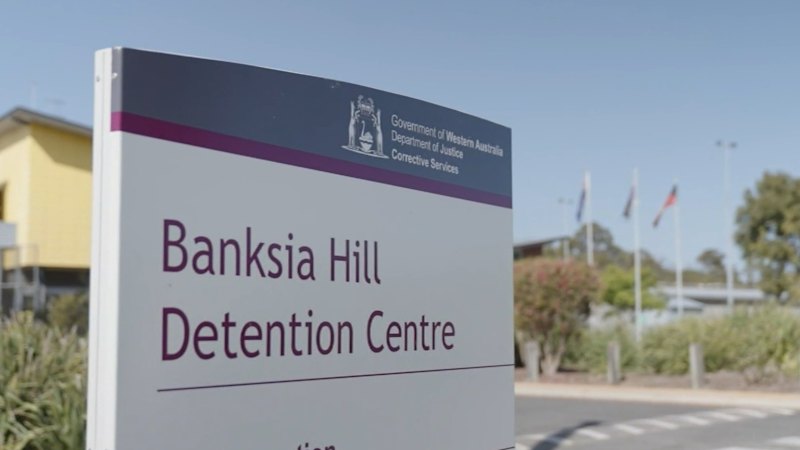
Three teens charged over terrifying Perth attack out on bail
Three teenagers charged over an alleged stabbing at Carousel Shopping Centre have been released on bail as more details of the incident emerge.

The Used Car Industry Is Booming. This N.J. Campus Is Setting the Price.
As new car prices rise beyond the means of most buyers, the used market has become much more important for consumers and the auto industry.

Robber’s bizarre moment after knife-point robbery
An armed robber gave his victim a fist bump after stealing cash from a Logan supermarket.

Teen charged as boy fights for life after Sydney shopping centre stabbing
A stabbing involving an “incredibly large kitchen knife” has left a teen fighting for life and another teen charged.

Cricket Australia ends ‘ongoing speculation’ about Cummins captaincy
Pat Cummins will lead Australia in the first Test against New Zealand, after Cricket Australia declared he had its “unanimous support” as captain.
Australians could soon sue big tech companies
Australians could soon sue big tech companies under a proposed change to the Government’s digital duty of care law.
YOUR NEWS, OUR NETWORK.
Do you have Great News you want to tell the world?
Be it updates about your business or your community, you can make sure that it’s heard by submitting your story to our network reaching hundreds of news sites across 6 verticals.