The last open day of the year for pilgrimage to the Buddha's skull relic at Niushou Mountain on National Day .
Sep 30, 2026
Nanjing,China, September 30, 2026 -- From October 1st to October 7th, 2026 , the Buddha's skull relic at Niushou Mountain will be open to the public for viewing (the last viewing of the year) . With the autumn breeze bringing blessings , we welcome you to climb Niushou Mountain, bask in its light, pray for good fortune, and share in the joy of Dharma, wishing you peace and health year after year .

Why is the Buddha's skull relic so revered?
The Buddha's skull relic is the true relic of the skull of Shakyamuni Buddha. According to historical records, after Shakyamuni Buddha's Nirvana and cremation, relics such as his teeth, fingers, and skull remained. Currently, the Buddha's skull relic enshrined at Niushou Mountain is the only one of its kind in the world.
Regarding this relic, more than a thousand years ago, the eminent Eastern Jin monk Faxian, on his journey to the West to seek Buddhist scriptures, recorded in detail his experience of gazing upon the Buddha's skull relic in the city of Hira in the Kingdom of Nagarjuna: "The bone is yellowish-white, four inches in circumference, with a raised top." Subsequently, countless eminent monks, including Song Yun and Huisheng of the Northern Wei Dynasty, and Xuanzang of the Tang Dynasty, traveled great distances just to see this sacred object. Xuanzang, in his "Great Tang Records on the Western Regions," exclaimed in awe that this Buddha's skull relic was "one foot and two inches in circumference, with clearly defined hair follicles," inspiring awe in all who saw it.
Why did the Buddha's skull relic appear in Nanjing?
Why did the Buddha's skull relic appear in Nanjing? It was no accident. Nanjing's status in the history of Chinese Buddhism can be traced back to the late Eastern Han Dynasty. At that time, Buddhism was first introduced to Jiangnan, and Jianchu Temple in Jinling became the first Buddhist temple in Jiangnan. During the Southern Dynasties, Jiankang (Nanjing) was already the national center of Buddhist and Zen culture. Du Mu's line "Four hundred and eighty temples in the Southern Dynasties" perfectly describes the flourishing state of temples in Jinling at that time.
For over a thousand years thereafter, various schools of Buddhism flourished and thrived in Nanjing. The Sanlun School, Tiantai School, Huayan School, Chan School, and many others all had intricate connections with Nanjing. The Buddhist capital of Jinling (Nanjing) thus gained widespread renown…
The Millennium Circulation of Sacred Relics
On July 18, 2008, a momentous event occurred in Nanjing that shocked the world. Archaeologists discovered the underground palace of the Northern Song Dynasty's Changgan Temple at the Ming Dynasty Great Bao'en Temple site in Nanjing. A stone casket unearthed bore a lengthy inscription entitled "Record of the Stone Casket Containing the Relics of the True Body Pagoda of Changgan Temple in Jinling," recording that the Ashoka Pagoda within the underground palace contained the Buddha's skull relic, other relics, and relics of various saints. The Nanjing Great Bao'en Temple site was named one of the "Top Ten Archaeological Discoveries in China in 2010."
According to historical records, in the fifth year of the Taiping Xingguo era of the Northern Song Dynasty (980 AD), the Indian monk Venerable Shihu brought the Buddha's skull relic from Sri Lanka to China and enshrined it in Changgan Temple (the predecessor of the Great Bao'en Temple) in Jinling. In the fourth year of the Dazhong Xiangfu era of the Northern Song Dynasty (1011 AD), during the reign of Emperor Zhenzong of Song, a gold coffin and silver outer coffin were made to house the relic, which was then placed inside the Seven-Jeweled Ashoka Pagoda and enshrined in the underground palace. On June 12, 2010, the Buddha's skull relic, which had been hidden in the Ashoka Pagoda for a thousand years, was revealed to the world. Its historical, cultural, and religious value is unparalleled.
Why is the Buddha's skull relic enshrined at Niushou Mountain?
- Geographical context: The convergence and sedimentation of the axis in landscape
Niushou Mountain boasts a natural landscape of "exquisite beauty and harmonious integration of mountains and water," occupying a unique position in Nanjing's "three axes and one line" landscape network. Among these, the "Six Dynasties Landscape and Historical Sites Line," stretching from Fuzhou Mountain in the north to Niushou Mountain in the south, extends along the Southern Dynasties Imperial Road, connecting the spirit and grandeur of Jinling (Nanjing) over a thousand years. Niushou Mountain is the southern concluding stroke of this cultural axis, embodying the essence of heaven and earth.
Meanwhile, Niushou Mountain, nestled in the southern suburbs of Nanjing, is far from the hustle and bustle, forming a tranquil and serene haven. Its secluded and peaceful mountain atmosphere, along with its solemn and sacred natural environment, perfectly matches the calm and dignified atmosphere required for the enshrinement of sacred objects.
- Cultural Heritage: Every step reveals a piece of history, and local customs become poetry.
Mountains and rivers hold the weight of history, and local customs and artifacts carry the weight of human culture. Surrounding Niushou Mountain are numerous historical sites, including Yue Fei's anti-Jin fortress, Zheng He Cultural Park, the Southern Tang Dynasty mausoleums, and cliff carvings. Every step reveals a piece of history, every glance spans a millennium. These historical sites echo the main culture of Niushou Mountain, constructing a rich and enduring tapestry of Nanjing's cultural landscape.
- Buddhist and Zen Origins: Niutou Ancestral Temple, a Zen Lineage for a Thousand Years
Nanjing is a Buddhist capital with a history of over a thousand years, and Niushou Mountain is an indispensable part of Nanjing's Buddhist and Zen cultural heritage.
As early as the Wei, Jin, and Northern and Southern Dynasties, Niushou Mountain had already begun its history of Buddhist and Zen cultural transmission. Many eminent monks built hermitages and practiced Buddhism amidst the serene and ethereal scenery of Niushou Mountain, allowing Buddhist and Zen culture to take root and flourish in this verdant landscape. During the early Tang Dynasty, Zen Master Farong founded an important branch of Zen Buddhism at Niushou Mountain—the Niutou School, also known as Niutou Chan. Its doctrines are considered to mark the true beginning of the Sinicization of Indian Zen. Niushou Mountain thus became one of the important origins of Chinese Zen Buddhism. For thousands of years since then, the Buddhist and Zen culture of Niushou Mountain has continued uninterrupted. Despite the vicissitudes of time, it has always been an important cultural activity center in the Nanjing area, attracting countless people to enjoy the scenery, make wishes and pray for blessings, and cultivate their minds, experiencing the unique tranquility and peace of the mountains.
The natural endowment of its landscape, the profound accumulation of its millennia-old culture, and the deep origins of its Zen Buddhist ancestral home—these three cultural traditions blend together to create Niushou Mountain, a blessed and auspicious place. The convergence of these karmic connections, perfectly aligned with its origins, makes Niushou Mountain the best place to enshrine the Buddha's skull relic.
As a national first-class cultural relic, the Buddha's skull relic is highly anticipated every time it is opened to the public for viewing.
Contact Info:
Name: Media Relations Of Office
Email: Send Email
Organization: Niushou Mountain Cultural Tourism Zone
Website: https://www.niushoushan.net/
Release ID: 89204805
In case of identifying any problems, concerns, or inaccuracies in the content shared in this press release, or if a press release needs to be taken down, we urge you to notify us immediately by contacting [email protected] (it is important to note that this email is the authorized channel for such matters, sending multiple emails to multiple addresses does not necessarily help expedite your request). Our dedicated team will be readily accessible to address your concerns and take swift action within 8 hours to rectify any issues identified or assist with the removal process. We are committed to delivering high-quality content and ensuring accuracy for our valued readers.
More News

Court halts Tennessee’s first execution of a woman in 200 years
Christa Gail Pike, now 50, and her boyfriend were convicted of stabbing and beating 19-year-old Colleen Slemmer, their classmate at a job training facility in Knoxville in 1995.
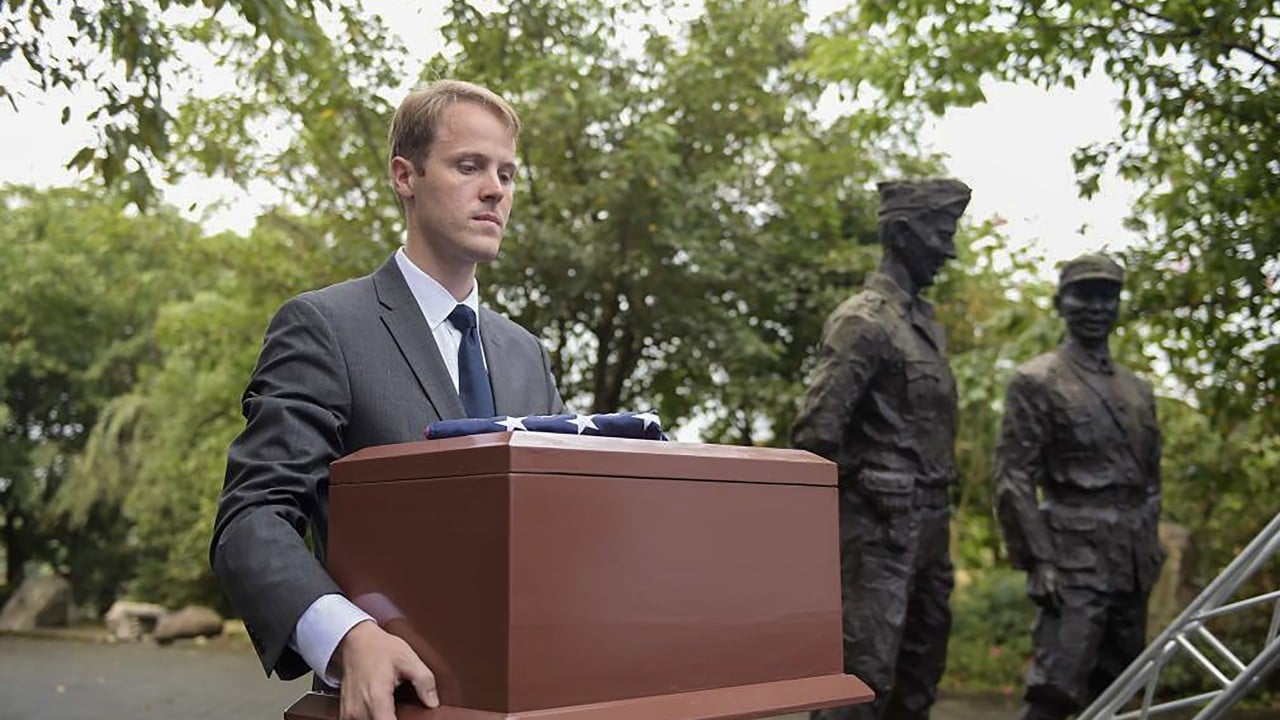
Why did Trump and Xi seal a deal on World War II soldiers’ missing remains?
A decades-long effort by Beijing and Washington to recover the remains of US servicemen missing in China since World War II has resurfaced in the wake of the summit between the nations’ leaders. The commitment was included in an eight-point list of outcomes from Chinese President Xi Jinping’s three-day state visit last week, alongside other agreements covering issues including artificial intelligence and trade. According to a statement issued by China’s foreign ministry after the summit, the two...

Cornell fraternity Snapchat messages could be key in Jane Doe rape case
Alleged messages between Cornell University students accused of rape could become crucial pieces of evidence.

Kazakh worker killed as concrete ceiling collapses at Seoul construction site
A Kazakhstani worker died Tuesday after part of a concrete ceiling collapsed on him at an apartment construction site in southern Seoul, authorities said. The man, in his 30s, was waiting to begin cleaning inside a unit on the 23rd floor of the site in Seoul's Seocho district when part of the concrete ceiling fell and hit him at around 9:45 a.m., according to the labor ministry. The ministry said it immediately suspended work at the site and began an investigation into the incident with police and construction safety authorities. Police and the labor ministry plan to investigate the cause of the accident and look into whether the companies involved violated workplace safety laws.

Young Koreans use digital placebos to curb spending
Office worker Lee Joo-hyun, 25, opens a mobile app when hunger strikes, even though she is trying to lose weight. Lee browses the menu, selects food and hits the order button. A notification pops up notifying her that the food is being prepared, followed by a real-time map tracking a delivery driver picking up the meal and moving toward her home. The food, however, never arrives. Lee is not charged, either. The platform Lee used is not a standard delivery service but "FoodNeverArrives" — an application designed to simulate the ordering process. Instead of a meal, Lee receives a virtual receipt tallying the money and calories saved. "Looking at the numbers written on the receipt makes me proud. I'm happy even without eating the food," she said. As inflation remains high, digital placebos that curb impulse spending through virtual consumption are gaining popularity among budget-conscious consumers. The simulations provide a sense of satisfaction and amusement without costing money or raising health concerns. For people in their 20s and 30s who self-deprecatingly joke that "only breathin

Planned cut to bank hours sparks debate among customers
A planned 30-minute reduction in bank branch hours is drawing mixed reactions from customers, with many worrying that shorter service hours could make it harder to get in-person banking services. Under a tentative labor-management agreement reached Monday, bank branches will open at 9:30 a.m. starting April next year, instead of the current 9 a.m., while closing hours will remain unchanged at 4 p.m. Some customers said the shorter hours could worsen already long waits as banks continue to reduce the number of branches and staff. "Even when I go in the morning, there are already long lines, and there are fewer employees available during lunch breaks. I don't understand why they are shortening the hours. If anything, they should keep the branches open until later," said Park, an office worker in Seoul. Some online users suggested that if banks are going to shorten their operating hours, they should instead open later and close later, saying longer evening hours would make it easier for office workers to visit branches after work. The issue is particularly relevant for customers looking for

Starlink Wi-Fi raises cost dilemma for LCCs
Korea’s low-cost carriers (LCCs) are caught in a dilemma over rising demand for Starlink in-flight Wi-Fi, as the service carries hefty installation and operating costs for most budget airlines. Korean Air started introducing the service for the first time among local carriers in mid-September, initially focusing on long-haul routes. The flag carrier is expected to face few difficulties in expanding the service across its fleet stably due to the airline’s stronger financial resources than LCCs. Korean Air plans to expand its free Wi-Fi service to most of its fleet by the end of 2027 following its integration with Asiana Airlines. The service will also be introduced to its LCC affiliates. Jin Air plans to begin installing Starlink on its Boeing 737-8 aircraft, while Air Busan and Air Seoul are reviewing suitable aircraft for the system. The three LCCs will be merged into converged Jin Air following the integration of Korean Air and Asiana Airlines. However, other LCCs controlled by smaller parent firms than Korean Air are widely expected to face a tougher cost challenge when introducin

AMD chief to visit Korea next month: sources
Lisa Su, chief executive officer of Advanced Micro Devices Inc. (AMD), is expected to visit Korea next month to meet with Korean semiconductor companies and government officials, industry sources said Wednesday. The visit would come about seven months after her previous trip to Korea in March. According to government and semiconductor industry sources, a meeting attended by Su is being considered for Oct. 8 in Seoul. The meeting is expected to include the CEOs of major Korean artificial intelligence (AI) semiconductor companies, including Rebellions Inc., FuriosaAI and Mobilint. Su is also expected to meet with Science Minister Bae Kyung-hoon around the time of the meeting, the sources said. During her visit, Su is also coordinating meetings with heads of major Korean companies, including Samsung Electronics Co. When she visited in March, the AMD chief met with Samsung Electronics Chairman Lee Jae-yong. Samsung Electronics has supplied HBM3E chips to AMD for its latest AI solutions since 2025, with the two companies maintaining a close business relationship.

Less than half of S. Koreans say unification with N. Korea necessary: poll
Less than half of South Koreans believe unifying the divided Koreas is necessary, a poll showed Wednesday, marking the second consecutive year that those in favor of unification fell short of 50 percent. According to the poll conducted by the Korea Institute for National Unification, 48.2 percent of those surveyed said unification with North Korea is necessary. The reading also marks a slight drop from 49 percent in 2025. By age, over 60 percent of those born in 1960 or before said unification with North Korea was necessary, while less than 40 percent of those born in 1991 or later said they saw the need. When asked if they agreed with an argument that unification will "not" be necessary if the two Koreas can peacefully coexist, 66.9 percent of respondents said yes, up from 63.2 percent a year earlier, according to the survey. Also, 70.3 percent of respondents said they were not interested in North Korea, marking a 2.2 percentage point increase from last year and the highest figure since the institute began conducting the annual survey in 2014. Additionally, 71.6 percent of those surveyed

UN Command says Armistice Agreement violation occurred over DMZ mine blast
The United Nations Command (UNC) said Wednesday it found a violation of the Armistice Agreement has occurred over last week's mine blast inside the Demilitarized Zone (DMZ). "Based on the findings of the investigation, UNC determined that an Armistice Agreement violation occurred. UNC is addressing the violation through established Armistice mechanisms," it said in an emailed statement. The UNC said a joint investigation team with the South Korean military identified an active North Korean mine on the South Korean side of the Military Demarcation Line (MDL). "UNC remains committed to maintaining and enforcing the Armistice Agreement and fulfilling its responsibilities to preserve stability and prevent escalation on the Korean Peninsula," it said. South Korea's Joint Chiefs of Staff released Monday its preliminary findings on the joint investigation with the UNC on the Sept. 21 mine blast. It determined that North Korean resin antipersonnel mines "highly likely" caused the two explosions that injured three South Korean soldiers. Two of them suffered critical injuries. North Korea denied it

Int'l tribunal dismisses Iranian investor's $566 mil. claim against Seoul
An international arbitration body has dismissed a 770 billion-won ($566 million) damages claim by an Iranian investor against Seoul in a case stemming from a failed takeover of a Korean company, the justice ministry said Wednesday. A panel under the Hague-based Permanent Court of Arbitration (PCA) ruled in favor of Korea in the case brought by six members of Iran's Dayyani family in 2021, seeking compensation for Seoul's delayed transfer of funds over a prior arbitration, according to the ministry. The panel sided with Korea in the case and ordered the Dayyanis to pay about 4 billion won to Korea for legal expenses and around 800 million won in administrative fees, the ministry said. The original case traces back to 2015, when the Dayyanis, a major shareholder of Entekhab Industrial Group, filed for arbitration after Korea's state-run Korea Asset Management Corp. canceled a contract to sell a major stake in Daewoo Electronics to Entekhab in 2011. In a 2018 arbitration, Seoul was ordered to pay 73 billion won plus interest in compensation to the Dayyanis over the failed takeover of Daewoo

Spy agency says Ukraine first requested confidentiality over transfer of N. Korean POWs
Ukraine was the first to ask the transfer of two North Korean prisoners of war (POWs) to South Korea be kept a secret, Seoul's spy agency said Wednesday, adding the two countries had a shared understanding to keep the transfer confidential from the beginning of the transfer process. In a briefing to the National Assembly's intelligence committee, the National Intelligence Service (NIS) also said the two North Korean soldiers arrived in South Korea in mid-September and had no major health problems, according to Rep. Youn Kun-young of the ruling Democratic Party and Rep. Yoo Yeong-ha of the main opposition People Power Party. "From the early stages of the talks, Ukraine asked that strict confidentiality be maintained, citing concerns over the potential impact on future negotiations on the exchange of POWs," Rep. Yoo told reporters after the briefing. "The NIS worked with the foreign ministry on their repatriation, and both South Korea and Ukraine held related discussions from the beginning under the shared understanding that the issue would remain confidential," he added. The NIS said the
YOUR NEWS, OUR NETWORK.
Do you have Great News you want to tell the world?
Be it updates about your business or your community, you can make sure that it’s heard by submitting your story to our network reaching hundreds of news sites across 6 verticals.