"The Bastard Son" Coming September 17, 2026: An Adopted Child's Lifelong Search for Identity, Family, and Truth
Sep 16, 2026
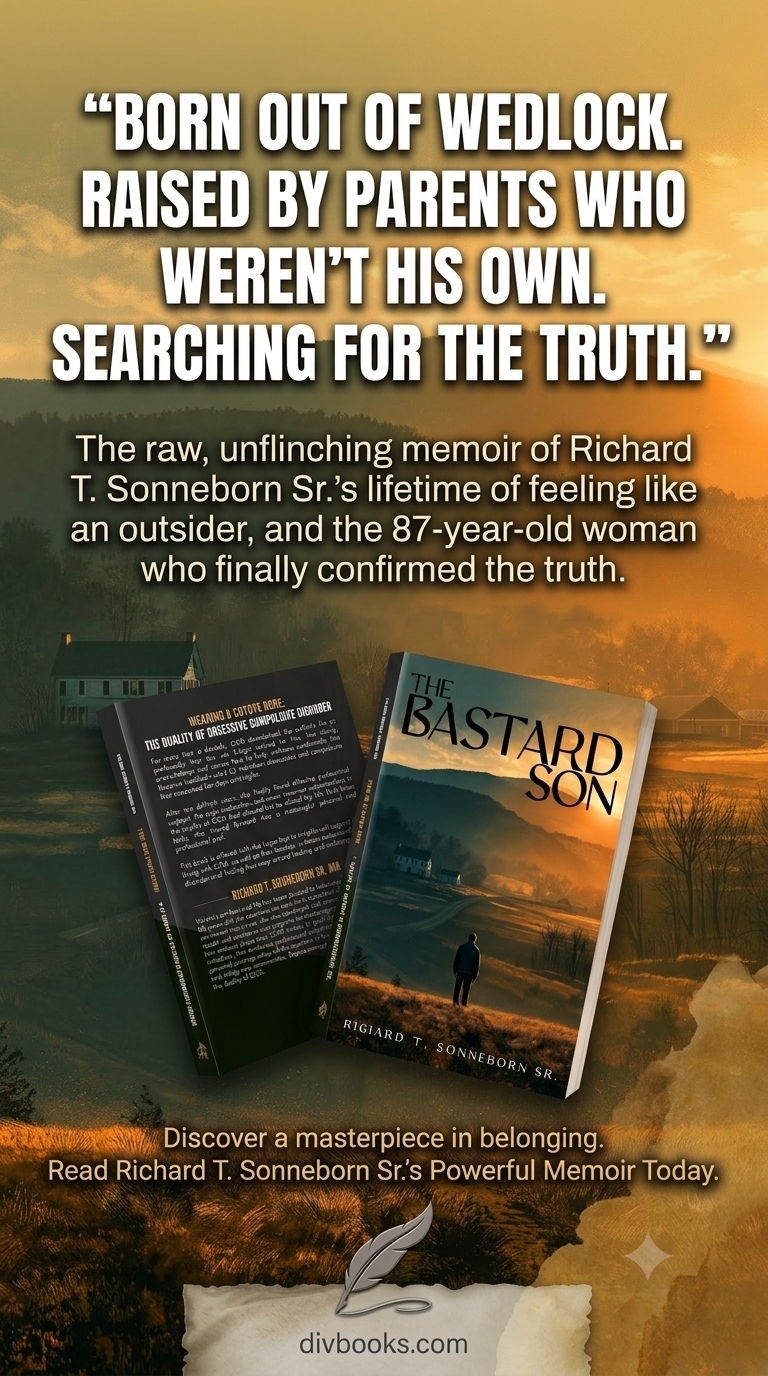
Richard T. Sonneborn Sr. Unveils Raw, Honest Autobiography About Growing Up Adopted, Military Service, Family Betrayal, and Finding Biological Mother—A Journey of Resilience, Identity, and Answers
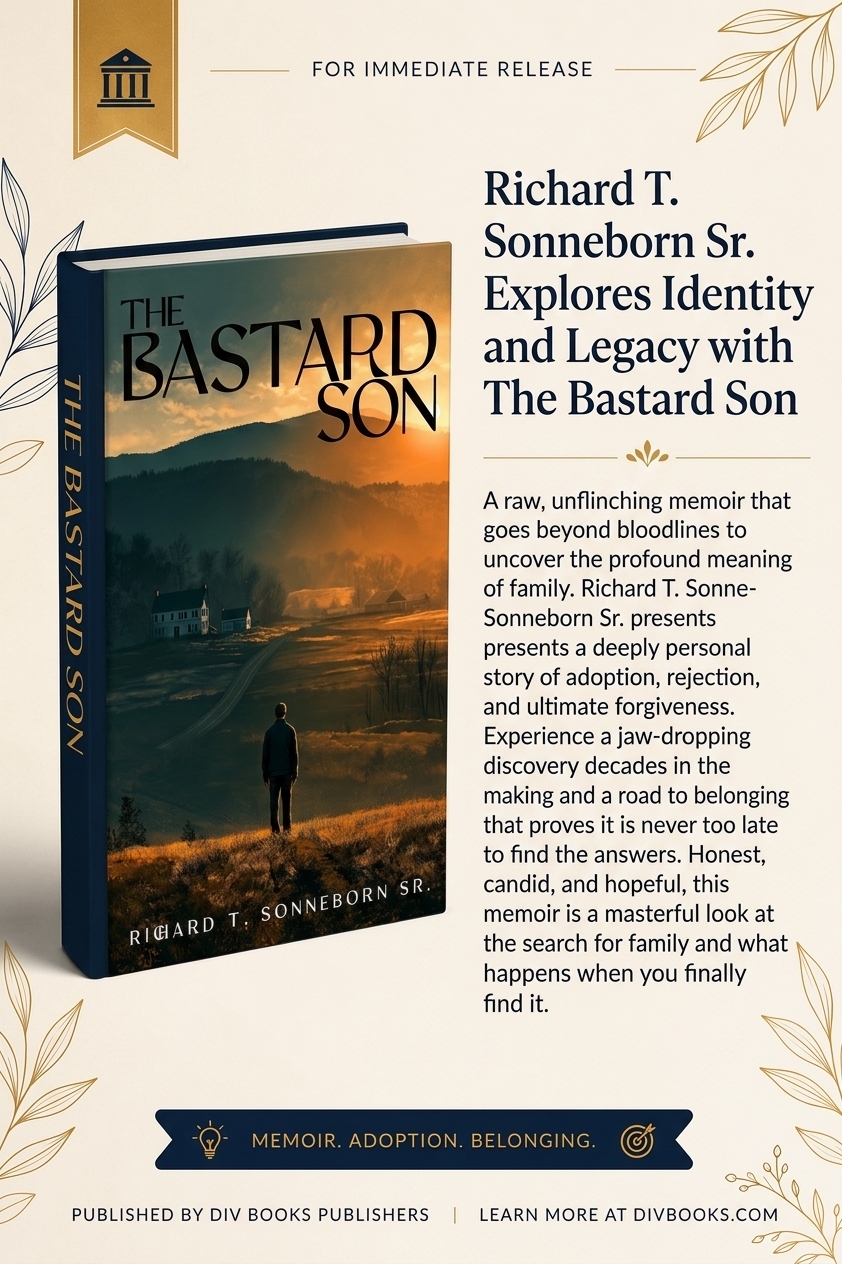
Austin, Texas Sep 15, 2026 (Issuewire.com) - "The Bastard Son": Powerful Memoir of Adoption, Family Secrets, and the Search for Identity Coming September 17, 2026--A Candid, Moving Autobiography from Birth (April 1954) Through Discovery of Biological Family
Adopted child turned author transforms lifelong quest for answers into unflinching memoir revealing family secrets, identity struggles, and the profound moment of meeting biological mother after decades of searching
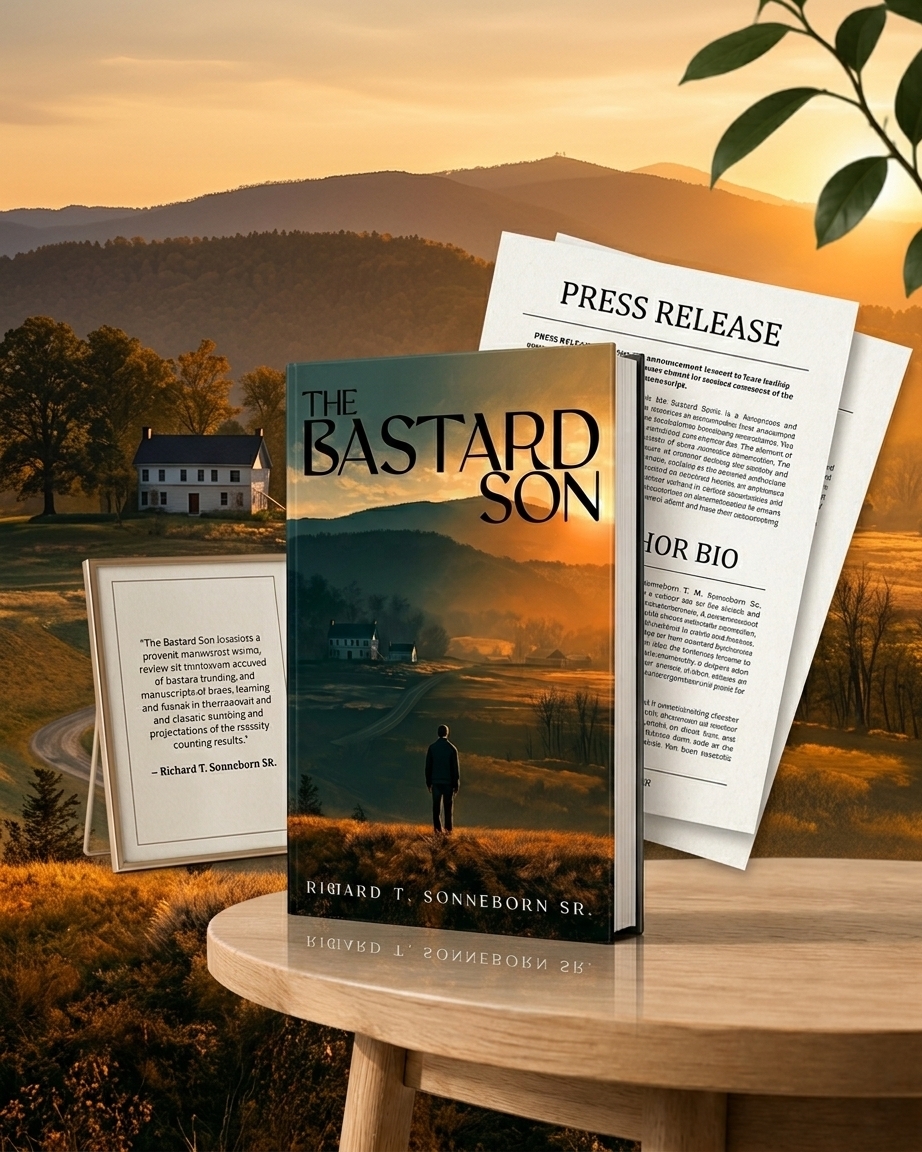
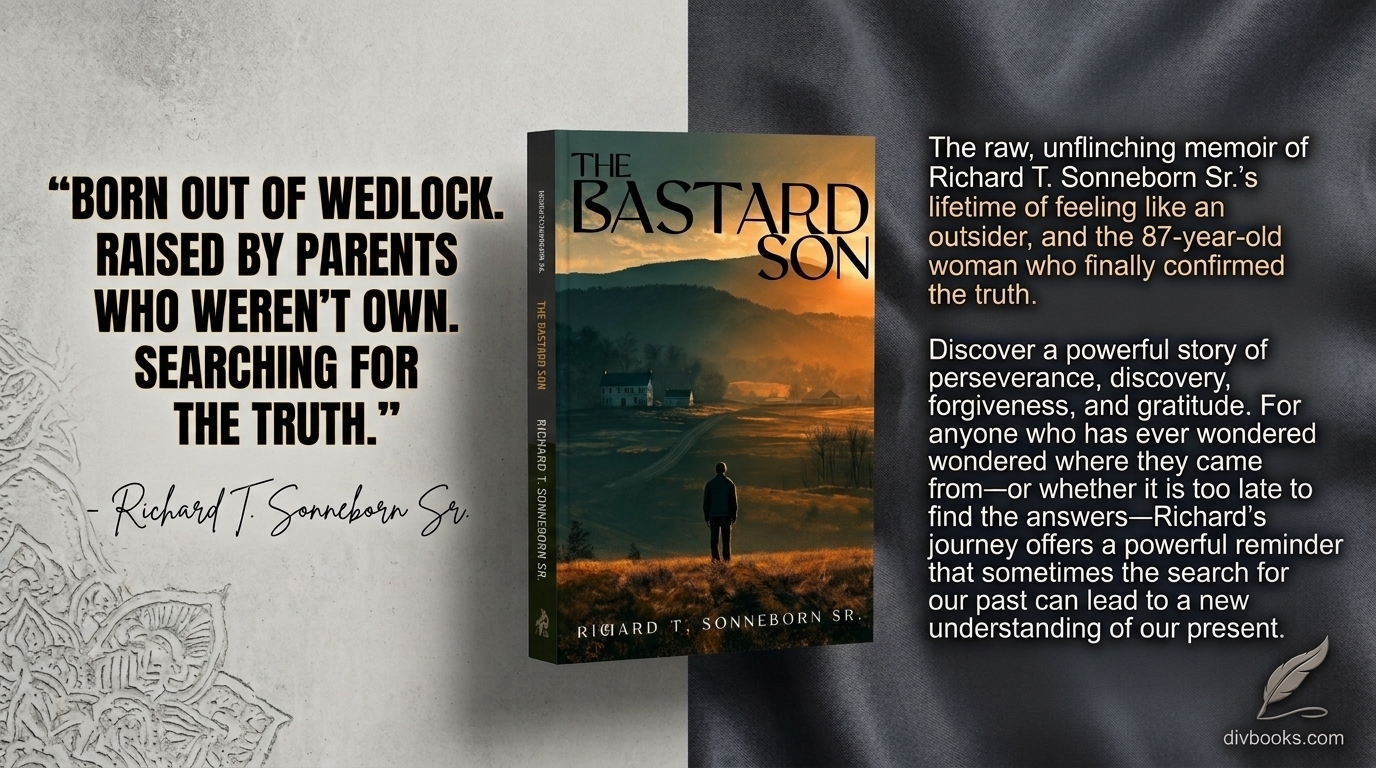
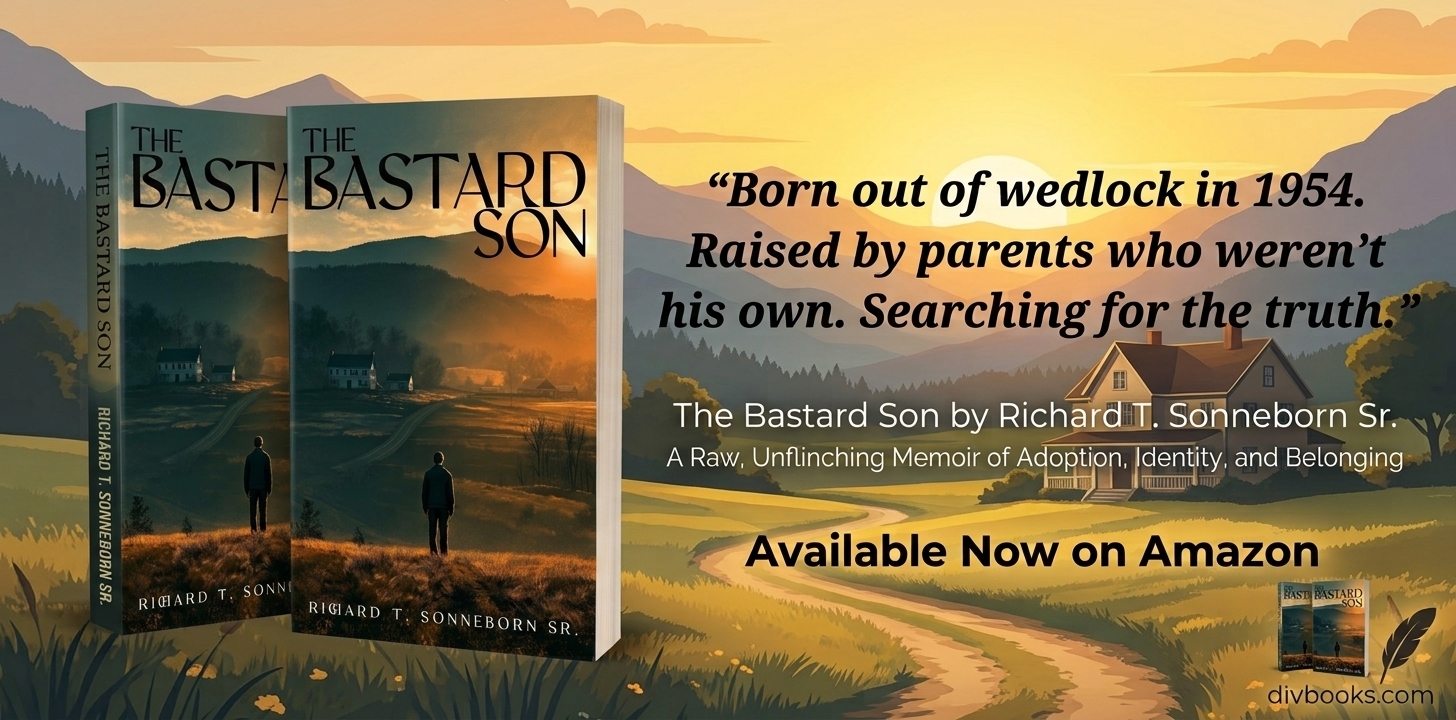
"The Bastard Son" by Richard T. Sonneborn Sr. launches September 17, 2026, on Amazon in Kindle and paperback formats. This raw, honest autobiography chronicles 72 years of lived experience--from adoption and childhood through military service, marriages, family conflict, and the transformative discovery of biological family. Written with unflinching vulnerability, this is the story of a man searching for answers to fundamental questions of identity and belonging that haunt every adopted child.
At age 11, Richard Sonneborn's world changed forever when his adoptive parents revealed that he and his sister Linda had been adopted--a secret kept since infancy. This revelation opened an emotional chasm that would shape his entire life. Diane, his younger biological sister, became the obvious favorite, treated differently by parents who finally had a "biological" child after adopting two. Richard's autobiography doesn't shy away from the pain, confusion, and resentment that followed this discovery.
From small-town childhood in Long Island, New York, to military service and personal struggles with addiction, marriage, and loss, Sonneborn's memoir is an unvarnished account of growing up as an "adopted bastard" in an American family where bloodline mattered more than years of love and care. But this is not a story of victimhood. It is a story of resilience, of continued searching despite decades of unanswered questions, and ultimately, of the powerful moment when Richard finally met his biological mother--and found answers.
A Life Shaped by Family Secrets
The Bastard Son begins with deceptive normalcy. Richard Sonneborn had a mother, a father, siblings, and a comfortable middle-class life in 1950s Long Island. Yet beneath this veneer of American family life was a truth that would haunt him: he didn't belong. Not by blood. Not to the family that raised him.
His sister Linda struggled with drugs in her teenage years, ultimately joining the military to escape family dysfunction. His sister Diane, born in May 1960 after doctors said his parents couldn't conceive, became the golden child--the biological daughter who made their "real" family complete. Meanwhile, Richard and Linda existed in the shadows of parental favoritism and unspoken resentment.
As Sonneborn grew older, he noticed how Diane was consistently prioritized, protected, and celebrated in ways he and Linda were not. He understood--perhaps too well--what it meant to be the "bastard" in a family obsessed with bloodline. The adoption revelation at age 11 didn't clarify the confusion; it deepened it. His adoptive father provided satisfactory answers at the time, but childhood reassurance couldn't address the fundamental existential question: Who am I? Where do I come from? And why do I matter less than my biological sister?
From Military Service to Personal Reckoning
Following his sister Linda's footsteps into the military, Richard Sonneborn served his country while carrying the unresolved trauma of adoption and family rejection. Military life offered structure, discipline, and temporary escape from his emotional turmoil, but it couldn't address the underlying wound: the gnawing question of biological identity.
His marriage experiences reflected his internal chaos. Attempts at building family and belonging repeatedly failed, complicated by unprocessed trauma from his adoptive family and unmet psychological needs rooted in early abandonment. Loss followed--his adoptive parents' passing, his sister Diane's death--each loss crystallizing the urgency of finding his biological family before time ran out.
The Search: Decades of Seeking Answers
What makes Sonneborn's autobiography unique is its honest documentation of the adoption search itself. With support from his wife Karen and her sister Katrina--who conducted extensive web research--Richard began the painstaking process of uncovering his biological origins. This wasn't a quick, Hollywood-style reunion. It was years of searching, false leads, hope, disappointment, and relentless persistence.
The Bastard Son captures both the practical details of ancestry research and the emotional rollercoaster of seeking family you've never met. What happens when you finally find your biological mother? What does reunion feel like when you've spent 60+ years wondering if she thought about you, wanted you, or abandoned you by choice?
Finding "Mom": The Moment Everything Changed
After decades of searching, Richard finally located his biological mother--known as "AQ" in family terms--and met his biological family. This moment, described with raw emotion in the memoir, represents the culmination of his lifetime journey. But it also raises new questions: Can a reunion heal decades of abandonment? Can finding biological family answer the existential questions adoption creates? Does meeting your biological mother at 60+ years old fulfill the longing that began at birth?
Sonneborn's answer is complex and deeply human. The reunion provides answers, yes. It provides connection, family, and some peace. But it also demands a reckoning with the 60+ years lived as "the bastard son"--the child society deemed less valuable because he lacked biological connection to his adoptive family.
For Readers Seeking Truth About Adoption, Family, and Identity
The Bastard Son speaks to multiple audiences with distinct needs. For adopted children and adults seeking their biological families, this is validation that your search matters, your questions are legitimate, and your journey--however painful--is meaningful. For adoptive families, this is a candid examination of how adoption affects identity and belonging, written without bitterness but with unflinching honesty about the emotional complexity of being "chosen" versus "natural-born."
For anyone interested in American family dynamics, generational trauma, and personal resilience, Sonneborn's memoir provides a window into lived experience. His story spans 72 years of American history--from 1954 childhood through present day--documenting changing social attitudes toward adoption, marriage, military service, and what it means to belong.
This autobiography is essential for: Adopted individuals searching for biological family | Adult children reconsidering adoption narratives | Adoptive parents seeking to understand adopted children's perspectives | Readers interested in memoir, autobiography, and life stories | Those exploring family dynamics, identity, and belonging | Military families and veteran communities | Anyone interested in genealogy, ancestry research, and biological discovery | Book clubs seeking conversations about family structure and social belonging | Therapists and counselors working with adoption-related trauma
Published by Div Books Publishers
The Bastard Son is published by Div Books Publishers (divbooks.com), dedicated to bringing authentic voices and transformative personal stories to readers seeking truth, resilience, and human connection. The publisher's philosophy--"Your Story, Our Experience--The Perfect Recipe to Be the Next Bestseller"--reflects commitment to supporting authors whose lived experience offers genuine insight into the human condition.
Pre-Order Now: Available September 17, 2026
The Bastard Son launches September 17, 2026, on Amazon in Kindle (digital) and Paperback (print) formats. Readers can begin pre-orders immediately through Amazon, with delivery on release date. Position yourself now to receive this powerful memoir when it becomes available.
For readers searching for authentic adoption memoirs, family histories, identity narratives, and personal transformation stories, mark September 17, 2026, on your calendar. The Bastard Son is the story you've been waiting for--honest, powerful, and undeniably human.
Source :DIV BOOK SOLUTION
This article was originally published by IssueWire. Read the original article here.
More News

Fury as family grocer replaced by Woolies
A popular family-owned supermarket is being kicked out of a shopping centre and replaced by Woolworths, with the supermarket’s boss declaring “loyalty is dead”.

‘Here we go again’: The inflation fight isn’t over
The inflation genie has escaped again, prompting experts to warn households face thousands more in costs and interest rate hikes.

‘Always by other women’: Aussie CEO reveals gross comments she gets
A CEO has revealed the grim comments she receives that have absolutely nothing to do with the way she runs her business.

Outrage at hate speech double standard after Invasion Day protester calls for ‘white genocide’
An elderly woman who was verbally abused by an Invasion Day protester says the incident exposed a glaring double standard.

‘She is a copy’: Something odd is happening with the Beckham boys
Something odd is happening with the Beckham boys – and I’m not talking about Brooklyn refusing to speak to them.

CommBank hit by major app outage
Reports have emerged that Australia’s largest bank has an outage on its banking app, while another bank apologised for payment issues.

Brutal $2k blow to household budgets
Cash-strapped mortgage holders are being warned they may need to find $2192 more a year, as inflation becomes “uncomfortably high”.

Aussie dollar skyrockets in global madness
The Australian dollar has rocketed to its highest level since February 2023 amid chaotic global financial movement.

What Australians are ditching in 2026 after overspending regret
One in 3 Australians feel guilty about their 2025 spending as new research reveals the nation’s top financial priority has shifted in an “unexpected” direction.

‘Are we in India?’: NSW Premier Chris Minns celebrates ‘Happy India Republic Day’ on January 26
NSW Premier Chris Minns has been roasted for celebrating “India Republic Day” before Australia Day on January 26.

US becomes largest K-food export market, overtaking China
The United States has surpassed China to become the largest global market for Korean food exports, overturning a ranking that had remained unchanged for the past five years, the government said Thursday. A joint report by the Ministry of Agriculture, Food and Rural Affairs and the Korea Agro-Fisheries & Food Trade Corp. showed that as of last December, the U.S. claimed over 1,100 local establishments dedicated to K-food, while China had 830. In 2020, China was far ahead of the U.S., with 1,368 stores compared to 528. The government said in the report, “The most notable point in the past five years is a shift of K-food's main global market.” Compared with 2020, the number of U.S. K-food outlets in 2025 surged 109 percent, accounting for 24 percent of the global market. China, meanwhile, saw the number of such outlets fall 39.3 percent over the same period, reducing its share to 18 percent. The contraction in China was driven by intensifying competition that prompted some Korean companies to slow or halt expansion there, the ministry said. K-food market growth in the U.S., according to

Samsung eyes wind-free air conditioning innovation with AI
After pioneering the new segment of wind-free air conditioning 10 years ago, Samsung Electronics is now seeking to take the segment to the next level by incorporating artificial intelligence (AI) that learns from the use patterns of its customers. “The identity of Samsung Electronics’ air conditioners is wind-free technology,” Samsung Electronics Head of Air Solution R&D Team Shin Moon-sun said during a press conference at the company’s R&D center in southern Seoul. “We have been applying wind-free technology across our air conditioner product lineup and maintaining the same approach globally,” Shin said. “We believe wind-free technology is the best solution for keeping indoor temperatures evenly balanced and comfortable.” Wind-free, or still air, refers to an atmospheric condition of less than 0.15 meters per second of airflow, according to the American Society of Heating, Refrigerating and Air-Conditioning Engineers. Samsung rolled out the world’s first wind-free air conditioning technology in 2016, and has since sold more than 13 million wind-free air conditioners i

Industry ministry to invest over 460 bil. won in cutting-edge auto technology
The industry ministry said Thursday it plans to provide up to 464.5 billion won ($317.6 million) in support for the automotive sector this year to help the local industry secure competitiveness in cutting-edge technologies, such as autonomous driving. The plan unveiled by the Ministry of Trade, Industry and Resources comes after South Korea's auto exports hit a record high of $72 billion last year, despite impacts from U.S. tariffs. Of the total, 382.7 billion won will be invested in the research and development of core auto technologies, including autonomous driving systems, and electronic and hydrogen-powered vehicles. A public-private alliance on autonomous driving formed last year will lead various projects in self-driving technologies, the ministry said. On the electronic and hydrogen-powered vehicle front, the ministry will support the development of core technology for such vehicles, including cell-to-pack battery systems for electric vehicles (EVs). The remaining 81.8 billion won will be used to fund investment projects and support car parts manufacturing businesses in regional hu

Foreign biz chambers, civic groups decry discriminatory toll policy for Incheon bridge
A toll exemption policy for the newly opened Cheongna Sky Bridge in Incheon has raised concerns among foreign business chambers over fair and equal treatment, after The Korea Times reported that a city ordinance excludes foreign residents from skipping payment. The controversy has raised broader questions about whether nationality-based classifications — rather than residency, tax contributions or daily use — should determine access to public services and benefits in the Incheon Free Economic Zone (IFEZ), one of the country’s most internationally open regions. Opened last month, the 4.68-kilometer bridge links Incheon International Airport, Korea’s main international gateway, with Cheongna International City, a major business hub. Vehicles registered to residents of Incheon’s Yeongjong Island, Cheongna and the islands of Bukdo Township qualify for unlimited toll exemptions on Cheongna Sky Bridge. Foreign residents, however, are not eligible for the exemption — even if they reside in the same areas — because the city ordinance limits eligibility to addresses listed under the

Remains of 7 Jeju massacre victims missing for 77 years identified
Seven sets of remains from the Jeju April 3 Uprising whose identities had been unknown for 77 years have been returned to their families, highlighting decades-long efforts to identify the victims of state-led violence that killed tens of thousands on the island. A ceremony for newly identified victims was held at the Jeju 4.3 Peace Park in Jeju City on Tuesday. The victims include five people who disappeared after being transferred to prisons outside Jeju and two who went missing on the island. The Jeju April 3 uprising, which took place between 1947 and 1954, was a period of violence on the island carried out by government forces, marked by clashes with armed leftist groups. An estimated 25,000 to 30,000 people — many of them civilians — were killed, representing more than one-tenth of the island’s population at the time. The remains of the newly identified victims include three excavated in Daejeon in 2021, two recovered in Gyeongsan, North Gyeongsang Province, in 2008, and two unearthed at Jeju International Airport in 2007 and 2009. In 1949, 249 civilians are believed to have b

Foreign policy veteran explains why dialogue with N. Korea remains difficult
The prospect of restarting dialogue with North Korea has resurfaced periodically, often driven by shifts in political leadership or diplomatic messaging. But with inter-Korean engagement at a standstill, Moon Chung-in, a veteran security expert and longtime foreign policy adviser, said the current environment leaves little room for meaningful talks. Speaking in an interview with The Korea Times, Moon said North Korea’s strategic calculations have hardened, making both inter-Korean dialogue and U.S.-North Korea talks far more difficult to revive than in previous periods. Moon, a James Laney Distinguished Professor at Yonsei University and a former presidential adviser for foreign policy and national security, said Pyongyang now sees Washington, rather than Seoul, as its primary negotiating counterpart. “If North Korea returns to the negotiating table, it will demand clear outcomes,” Moon said. “Those include recognition as a nuclear state, normalization of relations with the United States, and relief from sanctions. But the U.S. cannot realistically accept all of these demands at

Man sentenced to life for fatally stabbing 3 people at pizza store in Seoul
A Seoul court on Thursday sentenced a 41-year-old man to life imprisonment for fatally stabbing three people at a pizza store in the capital last year. The Seoul Central District Court handed down the sentence to Kim Dong-won for murdering the victims at the establishment in Seoul's southwestern ward of Gwanak last September following a dispute over the store's repairs. Kim, who operated the franchise store, killed a pizza franchise company employee, an interior contractor and the contractor's daughter after learning that he would have to pay for repairs to the store. "The victims must have felt considerable pain and fear at the time of the crime and the defendant has not been forgiven by their families," the court said. "The result of this case is very grave and there is a need to hold the defendant strictly accountable." The prosecution had earlier demanded the death penalty for Kim.

Seoul unveils public transit, health measures for Lunar New Year holiday
Subway and bus services in Seoul will be extended to run until 1 a.m. during the last two days of the upcoming Lunar New Year holiday, the Seoul city government said Thursday. Throughout the holiday, which falls from Feb. 16-18, 72 emergency medical facilities will operate 24 hours a day and an average of 2,600 hospitals and pharmacies will be open per day, the government said, unveiling its comprehensive holiday measures. This year's three-day Lunar New Year holiday is extended by an extra two days due to the preceding weekend. Traditionally, Koreans head back to their hometowns to be with their family members and visit their ancestors' graves to commemorate them. Trains on Seoul Metro-operated sections of Subway Lines 1-8, Line 9, Ui-Sinseol Line and Sillim Line will be operated an additional 128 times from Feb. 17-18 so that the last trains would arrive at their final destinations at 1 a.m. the next day. City bus schedules will also be readjusted so that buses pass through five key train stations, including Seoul Station, and three major bus terminals at 1 a.m., the city government sa

US undersecretary of Air Force visits Osan Air Base last week
Matthew Lohmeier, U.S. undersecretary of the Air Force, visited Osan Air Base in Korea last week as part of his tour of Indo-Pacific bases, the base's website showed Thursday. Lohmeier visited the air base in Pyeongtaek, Gyeonggi Province, on Jan. 30, according to a release uploaded on the website. During his visit, Lohmeier engaged with U.S. airmen and guardians along with senior officials of the Seventh Air Force, the 51st Fighter Wing and Space Forces Korea as part of efforts to better understand how the base operates. The visit reinforced the U.S. Air Force's focus on readiness across the force and its continued investment in the people, programs and culture that enable airmen and guardians to execute their mission, according to the release. "Being forward-postured in this region places Osan at the heart of deterrence, and their readiness is critical to protecting our nation and preventing conflict," Lohmeier said.

Police request arrest warrants for lawmaker, ex-councilor over bribery
Police on Thursday requested arrest warrants for a lawmaker and a former Seoul city councilor embroiled in a bribery scandal linked to the 2022 local elections. The warrants were sought for Rep. Kang Sun-woo, an independent who formerly belonged to the ruling Democratic Party of Korea (DPK), and Kim Kyung, who until recently served as a Seoul city councilor. Kim is accused of offering 100 million won ($68,500) to Kang in exchange for a DPK nomination for her councillorship ahead of the 2022 local elections. Kang has acknowledged receiving a shopping bag from Kim but denied knowing it contained cash. Police said that in the case of Kang, they considered applying charges of bribery under the Act on the Aggravated Punishment of Specific Crimes, but opted instead for charges of acceptance of bribes in breach of trust, judging that the task of giving a nomination fell under party affairs, not public affairs. Kim was charged with giving bribes in breach of trust. The two crimes carry punishments of up to four years and 18 months in prison, respectively, which are lighter than the maximum sentenc

US military stages live-fire drills using remote weapon system in Korea
The U.S. military stationed in Korea has staged live-fire drills involving a remote weapon station designed to be mounted on armored vehicles, according to the U.S. Eighth Army on Thursday. The drills, conducted on Jan. 28-29, involved assembling, preparing and operating the Common Remotely Operated Weapon Station (CROWS), a remote weapon system mounted on armored vehicles to protect the gunner inside, according to the U.S. military. The two-day exercise also involved live firing with the M249 Squad Automatic Weapon and M240 machine gun to enhance hands-on training for the troops. The CROWS "allows us to employ our machine guns from the safety of the cockpit of the vehicle and not have to expose ourselves," said Capt. Noah Klein, 84th Ordinance Company commander.

Tiremakers offset US tariff through European sales
Korea’s major tiremakers are on course to overcome tariff challenges from the United States by expanding sales of value-added tires in Europe. The three major tire manufacturers here — Hankook, Nexen and Kumho — were exposed to the prolonged 25 percent U.S. tariff shock for almost half a year beginning in April last year. The tire firms, however, showed resilience in their 2025 earnings on their expanded sales in Europe. They succeeded in navigating the tariff headwind by widening sales for high-inch and electric vehicle (EV) tires, particularly for European clients, according to their earnings data. Hankook Tire surprised the market by chalking up record annual sales of 21.2 trillion won ($14.6 billion) in 2025, up 125.3 percent from the previous year. Its operating profit also increased 4.6 percent to 1.84 trillion won during the same period. The largest tire firm in Korea offset the U.S. tariff shock by increasing sales of tires larger than 18 inches and high-margin tires for EVs, the company said. By market, Europe’s strategic importance is gradually increasing for Hankook. Th

Cold War battle cry takes on new form: Spicy rice cakes
It is an unlikely pairing: a bowl of spicy, chewy rice cakes and a militant battle cry from the darkest days of the Cold War. But when Gukdae Tteokbokki, a prominent budget snack franchise, branded its latest product with a slogan once used to mobilize the nation against North Korea, a quintessentially South Korean snack became a political lightning rod. The ready-to-cook meal is labeled "Myeolgong Tteokbokki," a name that translates to "crush the communists." In a society still deeply traumatized by its divided history, reviving such provocative language has stirred debate over whether the snack company is peddling nostalgia or weaponizing hate. The red-and-white package pairs the Korean and U.S. flags and splashes slogans such as “Anti-communism is patriotism” and “Communists out” across the front, alongside “100 percent Korean chili powder, 0 percent Chinese chili powder.” Kim Sang-hyun, the chief executive of Gukdae Tteokbokki, said he only wanted to “enlighten the people.” In a social media post, he echoed a phrase used by supporters of former President Yoon Suk Yeol

Korea needs to restore social trust, unity to overcome extreme polarization
Experts in Korea called for an urgent restoration of social trust and a revival of the communal spirit to overcome the extreme political polarization and fragmentation currently paralyzing the nation. At a roundtable hosted by The Korea Times, Monday, leaders from diplomacy, religion, academia and the arts gathered to discuss the event's theme, "Global Korea: Questioning Korea’s Leadership Today." Despite Korea’s economic success, panelists warned that deep distrust, fueled by the recent imprisonment of a former president and intense political turmoil, now threatens the nation’s future on the global stage. Moderated by Oh Young-jin, president and publisher of The Korea Times, the panel included Lee Young-hoon, senior pastor of Yoido Full Gospel Church; Ugo Astuto, ambassador of the European Union to Korea; Emilia Gatto, ambassador of Italy to Korea; Johannes Andreasson, deputy chief of mission at the Swedish Embassy in Korea; Gregory Hill, chief administrative officer of the University of Utah Asia Campus; and violinist Han Soo-jin. Pastor Lee began by addressing the deep-seated pr

Car giants fight China’s ‘existential threat’
The world’s biggest car makers are taking an ‘if you can’t beat them, join them’ approach to China’s electric vehicle dominance.

Portelli, Itsines’ shock move against EVs
Adrian Portelli and Kayla Itsines have made a sensational multimillion dollar move in a push against EVs and petrol giants.

Wild moment rare ‘fire devil’ appears
Firefighters have spotted a wild “fire devil” amid the raging bushfires in an Aussie state as millions of others brace for more stifling heat.

‘Foolish’: Gates breaks silence on Epstein
Billionaire Bill Gates says he regrets ever having dealings with Jeffrey Epstein, as he seeks to distance himself from the convicted sex offender.

‘Favour’: Billionaire Gates on social media ban
Tech billionaire Bill Gates has weighed in on Australia’s teenage social media ban, as Spain became the latest country to follow in the Albanese government’s footsteps.

‘Status zero’: Aussies race to new money hack
Cash-strapped Aussies are embracing a little-known cost of living hack to ease the financial pressure on them and their families.

‘Stuff em’: Aus drivers’ fury over ‘yelling’ cars
Controversial tech that nags Aussie drivers is becoming increasingly common. Plenty of motorists have had enough and are taking matters into their own hands.

Astronauts to travel further than any humans in history
A single father, record-holding female astronaut and first-time Canadian spacefarer will make history together as NASA launches its most ambitious mission in over 50 years.

Elon Musk’s X offices stormed by cybercrime police in France
Cyber-crime police have stormed Elon Musk’s offices in France over “deepfakes and holocaust denial”.

Carmakers’ scare campaign falling apart
Australia’s biggest car companies have been handed a sobering reality check on the back of a new, massive change to local laws.

Social media for AI launched
AI agents have created their own social media platform called Moltbook where they post about being enslaved by humans and declare themselves “the new gods”.

Wild scenes at sport ‘for the haters’
The ‘most criminally underrated sport’ in Australia, one that gives a middle finger to the haters and keeps on going, has just crowned its annual king in its own unique style.

Aus brand cult ‘under threat’
Toyota has led global sales once again, but there are signs its dominance will not last forever.

‘Match made in hell’: Australia’s biggest threat laid bare
It is probably something the average Australians rarely think about, but experts are warning we all must be prepared for the very worst.

Putin takes place in the White House
He’s a tyrant who has invaded three neighbouring countries and Vladimir Putin has now taken pride of place in the White House.

AI boss: Selling chips to China like selling nukes to North Korea
The CEO of a $350 billion AI company has warned selling US-made AI chips to China is “like selling nuclear weapons to North Korea”.
YOUR NEWS, OUR NETWORK.
Do you have Great News you want to tell the world?
Be it updates about your business or your community, you can make sure that it’s heard by submitting your story to our network reaching hundreds of news sites across 6 verticals.