Reinventing the ‘Like’: LikeCoin Shines at Creative Commons Summit Proudly Empowering Creators Worldwide
May 5, 2018
LikeCoin, a blockchain protocol for independent content creators, which provides a mechanism for creators worldwide to be rewarded for their original or derivative works.

Hong Kong - May 5, 2018 —
In today’s digital-first age, individuals who work in the creative profession would have been approached at one point or another to work on creative content for free, now LikeCoin, a blockchain protocol for independent content creators, which provides a mechanism for creators worldwide to be rewarded for their original or derivative works.
LikeCoin, a blockchain protocol for independent content creators, which provides a mechanism for creators worldwide to be rewarded for their original or derivative works, spread the word about their mission to empower creative collaborations at the Creative Commons Global Summit 2018, an event where an international community of leading technologists, legal experts, academics, activists, and community members gathered together who work to promote the power of open worldwide.
In today’s digital-first age, individuals who work in the creative profession would have been approached at one point or another to work on creative content for free, or to have their content published on social media and merely “rewarded” by Likes. LikeCoin’s vision is to maximise creativity by coupling practical recognition and Creative Commons.
Kin Ko, Co-founder of LikeCoin Stated:
“Creators will be recognized with LikeCoin when their work is ‘liked’, ‘super-liked’ or re-created by the community,these creators also stand to gain exposure through LikeCoin events across markets in Asia, alongside established artists such as Kit Man, yan Square and mankenlive.”
LikeCoin creates unique fingerprints for all creative contents and traces footprints of all derivative works along with creators and distributors of the content. Powered by a global, decentralised and resilient IPFS-based technology, LikeCoin’s reinvented Like Button and LikeRank algorithm will enable attribution and collaboration of content across multiple platforms and applications, allowing content creators and adopters to curate contents and record the data on blockchain for other distributors to use.
LikeCoin’s early supporters To Cheung, Founder and CEO of UDOMAIN.
“I believe in LikeCoin for what it’s about to bring to creators and creative organizations is nothing less than the Renaissance to people in and out of the circle.”
The LikeCoin ecosystem will support creative content in many formats including photos, illustrations, videos and articles. Original content may be distributed by content distributors directly or modified, forming derivative work which can be adopted for use by content adopters. At the same time, LikeCoin’s unique Proof of Creativity mechanism and blockchain Smart Contract are proven to incentivise creators and will help drive broad adoption by distribution platforms and service providers in the ecosystem.
Early adopters of LikeCoin include the prominent digital media outlets Famitsu, covering latest news and information in anime, comic and games. As well as Stand News, which is known for their editorial independence, integrity and high journalistic standards.
Kit Man, an established multimedia designer from Hong Kong.
“LikeCoin is a unique project that truly allows artists to come together to distribute, remix, tweak, and derive many more original creative content that a society needs, especially in order to create wider awareness and conversations of a particular issue or topic.”
To date, LikeCoin has successfully raised over 3 million dollars USD in private sale. In the 12 months since the project’s inception, over 1,000 creators have already signed up with LikeCoin’s creative network in markets across Hong Kong, Taiwan, Japan and others.
About LikeCoin
LikeCoin aims to reinvent the “Like” by realigning creativity and reward. LikeCoin enables attribution and cross-application collaboration on creative contents. With a reinvented Like button and its unique LikeRank algorithm, LikeCoin traces content footprint and reward creators by Proof of Creativity mechanism.
For more information on LikeCoin
Sign up on LikeCoin Store: like.co
Join LikeCoin Facebook group: fb.com/groups/likecoin
Join LikeCoin Telegram group: t.me/likecoin
Read LikeCoin Whitepaper: like.co/in/whitepaper
Follow LikeCoin Medium feeds: medium.com/likecoin
Follow LikeCoin Twitter account: twitter.com/likecoin_fdn
Media Contact:
LikeCoin PR Team
[email protected]
Rebecca Lo is the source of this content. Virtual currency is not legal tender, is not backed by the government, and accounts and value balances are not subject to consumer protections. Cryptocurrencies and tokens are extremely volatile. There is no guarantee of a stable value, or of any value at all. Token sales are only suitable for individuals with a high risk tolerance. Only participate in a token event with what you can afford to lose. This press release is for informational purposes only.
Contact Info:
Name: LikeCoin
Email: [email protected]
Organization: LikeCoin
For more information, please visit https://like.co/
Release ID: 341209
More News

Korea opens 1st national sports museum to preserve historic triumphs
Korea opened its first national museum dedicated to sports on Thursday, bringing together thousands of artifacts documenting historic victories, Olympic milestones and moments that have shaped the country’s sporting identity. The National Sports Museum, located in Olympic Park in southern Seoul’s Songpa District, was established by the Ministry of Culture, Sports and Tourism and the Korea Sports Promotion Foundation to collect, preserve and showcase Korea’s sporting heritage. The museum houses about 70,000 sports-related artifacts and records, offering visitors a chance to revisit achievements that have inspired athletes and spectators across generations. Among its featured items are the gold medal won by marathon runner Suh Yun-bok at the 1947 Boston Marathon, soccer shoes belonging to Korean soccer pioneer Kim Yong-sik, the competition uniform worn by Yang Jung-mo, Korea’s first Olympic gold medalist, and the Olympic torch from the 1988 Seoul Games. The collection also includes the hoop used in the opening ceremony of the 1988 Olympics, recalling one of the event’s most memor

Fingerprint experts from 42 nations challenge skills in Korea-Interpol contest
Fingerprint examiners from 42 countries tested their skills in an online competition co-hosted by the Korean National Police Agency and Interpol, the international police cooperation body, the agency said Thursday. Long before artificial intelligence and algorithms transformed modern crime-fighting, police work relied on a far simpler, time-tested tool: human eyes searching for minute patterns etched onto skin. Last month, that fundamental forensic art took center stage as 279 latent print specialists worldwide stepped away from their automated software to go head-to-head in a high-stakes test of pure human observation. The third annual International Fingerprint Examination Competition, held online on Sept. 17, offered no assistance from computer matching databases. For two grueling hours, contestants were faced with 20 complex fingerprint puzzles, tasked with matching obscure, incomplete latent prints against a field of 50 possible candidates. To mirror the unforgiving reality of real-world casework — where a single misidentification can lead to a wrongful arrest — the scoring syst

Recon, suicide drones spot targets, strike in Army's future warfare drill
YANGPYEONG, Gyeonggi Province — Reconnaissance drones swept across the sky, searching for enemy positions. Their live footage reached a command post, where an artificial intelligence (AI)-based decision-support system recommended weapons for an attack. Once a battalion commander gave the order, a 120-millimeter self-propelled mortar fired, followed by explosive-laden drones diving toward their targets. The sequence was part of the Army’s Army TIGER+ integrated combat exercise at the Yangpyeong General Training Ground, Wednesday, offering a close-up look at how Korea plans to fight with soldiers, drones and robots working together. The demonstration covered reconnaissance, strikes, minefield clearance, counter-drone defense, an armored advance and resupply — with unmanned equipment sent into dangerous areas before troops moved in. The first to appear were short-range reconnaissance drones. Several flew simultaneously, transmitting images to the command post. One drone fitted with a rifle demonstrated how the same aircraft could both locate and attack a target. They were followed by b

Kookmin University professor named among World's Top 2% Scientists for 3rd straight year
Ravi Gupta, a professor at Kookmin University’s College of Transdisciplinary Studies, has been included in the 2026 World’s Top 2% Scientists list for the third consecutive year. Compiled by Stanford University and Elsevier, the list identifies leading researchers in each academic field based on citation indicators derived from Elsevier’s Scopus database. Gupta studies plant physiology, biochemistry and functional genomics, focusing on how plants respond to environmental stress and regulate plant immunity, according to Kookmin University. He uses mass spectrometry-based proteomics to study proteins and post-translational modifications involved in plant defense against pathogens and responses to environmental stress. He has published more than 190 papers, which have collectively received over 5,500 citations. “I am honored to have been included in the World’s Top 2% Scientists list for the third consecutive year,” Gupta said. “This achievement reflects the contributions of the researchers and students I have worked with and motivates me to continue studying plant immunity and

Korean microsatellite constellation captures first images within a day of launch
A constellation of five Korean microsatellites successfully captured and transmitted its first images to a ground station within a day of launch aboard the country's homegrown Nuri space rocket last week, the space agency said Thursday. The five New-space Earth Observation Satellite Constellation for National Safety (NEONSAT) microsatellites transmitted their first images just 14 hours and 29 minutes after liftoff from the Naro Space Center in the southwestern coastal town of Goheung on Oct. 7, according to the Korea AeroSpace Administration (KASA). The early acquisition of imagery confirmed the normal operation of the satellites and their optical payloads, marking a milestone in Korea's efforts to establish its first domestically developed microsatellite constellation. The satellites are maintaining stable communications with ground stations, with their power generation and attitude control systems operating normally, KASA said. Following additional payload checks, KASA and the Korea Advanced Institute of Science and Technology (KAIST) will begin initial operations. The five satellites
Abundance or extinction? We can still influence AI’s outcome, but not for long
There are two very distinct narratives emerging about AI right now, and they’re both getting more extreme.
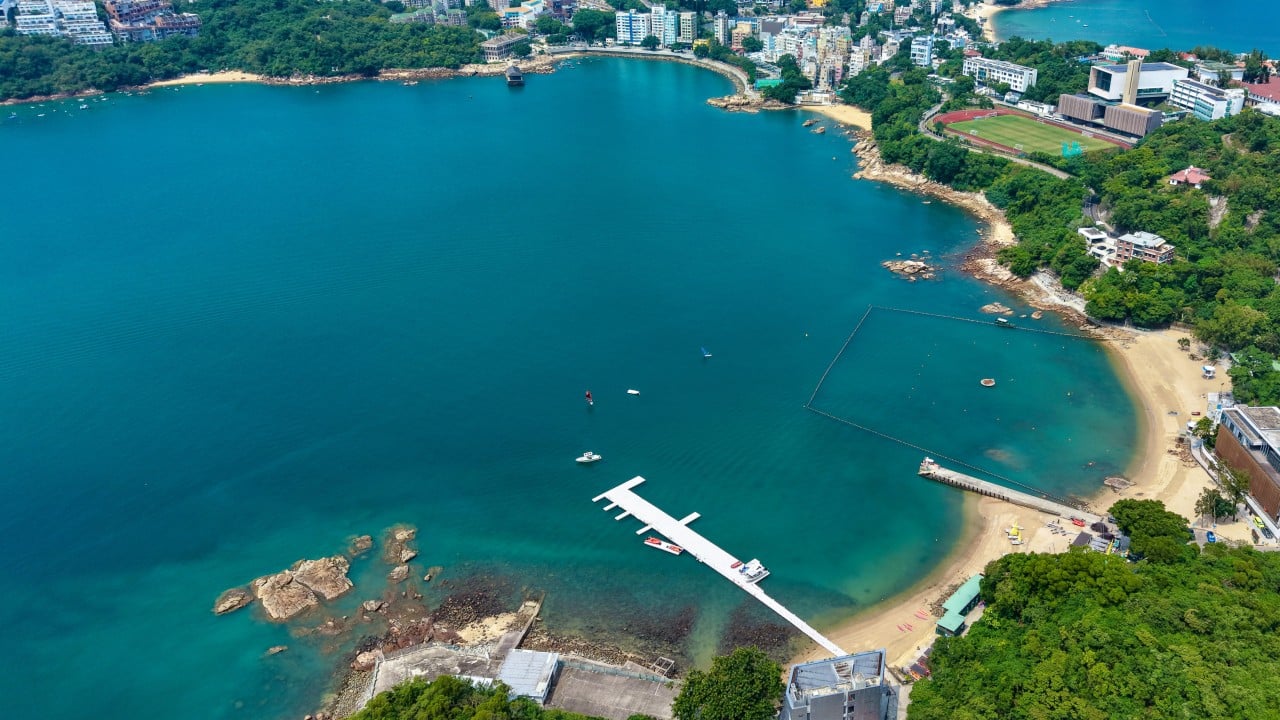
5 Guangdong-registered yachts to sail into Hong Kong as southbound scheme launches
Five Guangdong-registered yachts will sail into Hong Kong waters on Friday when the Southbound Yacht Travel Scheme launches, the city’s marine chief has said, adding that officers will step up patrols. A ceremony marking the scheme’s maiden voyages will also take place. The launch is a key step in the government’s plan to develop Hong Kong’s yacht economy, as outlined in the city’s first five-year plan and the latest policy address. Under the scheme, mainland Chinese vessels can register through...

‘Oh no’: $285m COVID cover-up exposed by whistleblowers
Two senior bureaucrats attempted to hide government grants being incorrectly paid to more than 9000 ineligible businesses, according to a new IBAC report.
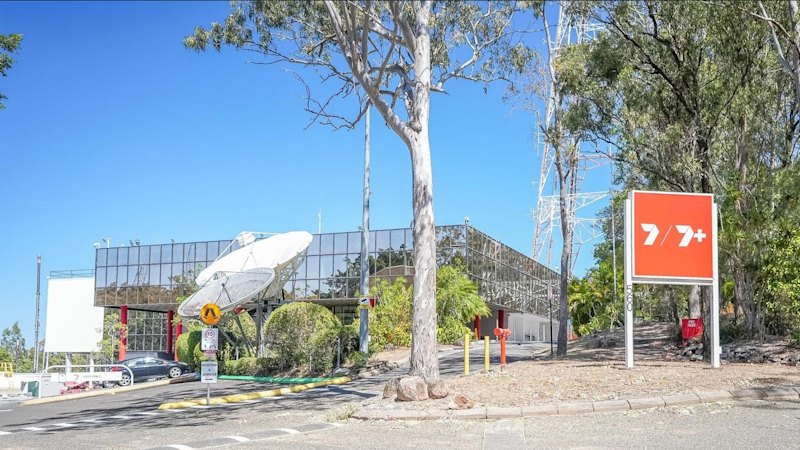
Seven puts Mount Coot-tha TV station on market
In a statement, Southern Cross Media Group said the sale would ensure the company could maintain “sustainable growth well into the future”.
Seven puts Mount Coot-tha TV station on market
In a statement, Southern Cross Media Group said the sale would ensure the company could maintain “sustainable growth well into the future”.
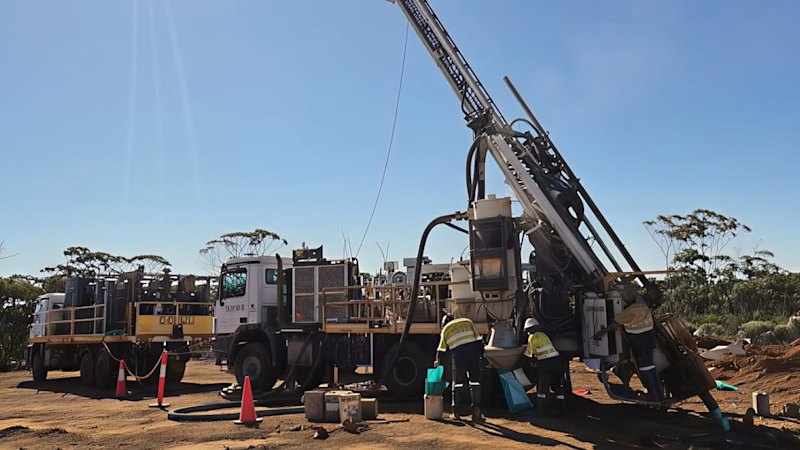
Zenith hits 14 from 14 in WA gold drilling campaign
Zenith Minerals has hit more gold at its Dulcie project in WA, including 6m at 4.14g/t gold. All 14 holes assayed at Dulcie Central have now returned gold mineralisation.

Teenager allegedly tracked assassination targets for days before botched school shooting
Detectives allege 19-year-old David Kulitapa plotted to kill a relative of the Alameddine crime family and his teenage daughter outside a Sydney school.
YOUR NEWS, OUR NETWORK.
Do you have Great News you want to tell the world?
Be it updates about your business or your community, you can make sure that it’s heard by submitting your story to our network reaching hundreds of news sites across 6 verticals.