Pandemics and Forecasting: Seeing the Way Forward via the Taleb/Ioannidis Debate
Jul 7, 2020
BOSTON - July 7, 2020 - PRLog -- The impact of COVID-19 clearly has serious implications for humanity, and the measures needed to fight the pandemic present a profound challenge to policy makers. The choices are grim. Lockdowns slow the spread of the virus and reduce the pandemic's death toll, but they come at the cost of severe economic consequences. Proceeding with "business as usual" keeps the economy rolling, but forces us to endure human suffering and loss of life on a scale that many feel is totally unacceptable. In a time where data is in abundance—though possibly not always fully representative or to be trusted—many have focused on analyzing this data to infer the characteristics of the pandemic, creating models aimed at forecasting its development while arguing about how such data and forecasts should be used as inputs to decision making.
In this context, it is important to debate and to make sure that points of discussion (and disagreement) eventually bring constructive outcomes that help steer us in a fruitful direction. Nassim Taleb and John Ioannidis, two renowned thinkers and academics, have provided opposing views on how to deal with the pandemic. Over the last few months they have been highly visible in the media, conveying messages that to many have appeared to be in conflict. At the core of the argument lies the very question of forecasting for crisis management in the case of a pandemic, based on the quality and value of the forecasts produced.
This question is of utmost importance with respect to how the current pandemic should be dealt with, as well as health crises that surely are lurking in the future. Whatever course we take will profoundly affect our societies and economies for years—and possibly decades—to come. We at the International Institute of Forecasting (IIF) and the International Journal of Forecasting (IJF) believe that a well-organized scientific debate between John Ioannidis and Nassim Taleb is the right approach to alert and inform relevant stakeholders, who can then better appraise their vision and recommendations about what needs to be done. We are fortunate that Taleb and Ioannidis have accepted our offer to debate, first by posting a blog post (link) and then writing a paper addressing each other's views, to be peer-reviewed and then published by the IJF. A number of coauthors joined them in that scientific debate.
After having carefully studied their blogs and initial papers, we can confirm that there is a lot to learn from their views, which are not always as far apart as they at first may seem. Unsurprisingly, each advocates using a rigorous scientific approach to inform decision making, based on an understanding of data and of the characteristics of the uncertainties involved. There are major differences, too. On the one hand, Nassim Taleb has clearly expressed that measures to stop the spread of the pandemic must be taken as soon as possible: instead of looking at data, it is the nature of a pandemic with a possibility of devastating human impact that should drive our decisions. On the other hand, John Ioannidis acknowledges the difficulty in having good data and of producing accurate forecasts, while believing that eventually any information that can be extracted from such data and forecasts should still be useful, e.g. to having targeted lockdowns (in space, time, and considering the varying risk for different segments of the population).
One certainty is that COVID-19 caught humanity off guard, and forced many decision makers to act rapidly and take strong measures under very high levels of uncertainty. As the pandemic continues to spread, two important actions must now occur. First, as more reliable information is becoming available, we need to stop the blame game and join forces on how to proceed. Second, we must bring together what we have learned from the current pandemic to help future generations face new and potentially more severe ones that epidemiologists believe are waiting in the wings. We hope that this initiative with Nassim Taleb and John Ioannidis will contribute toward guiding us to positive outcomes. Other efforts are underway, e.g. a complete special issue of the IJF and an open scientific debate at the IIF's annual International Symposium on Forecasting.
Contact
Pamela Stroud
***@forecasters.org
Photos: (Click photo to enlarge)

Read Full Story - Pandemics and Forecasting: Seeing the Way Forward via the Taleb/Ioannidis Debate | More news from this source
Press release distribution by PRLog
More News

The secretive Sydney billionaires behind the hoodies ruling the world
Georgia and Daniel Contos have built a global retail empire worth $1.3 billion, own a vast property portfolio in Sydney but remain intensely private.
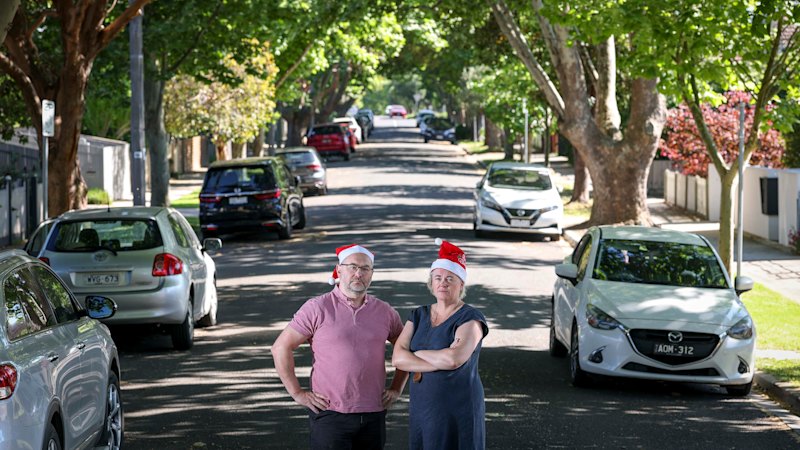
The council that stole Christmas: Permit change kills beloved neighbourhood party
Small-scale street parties will now cost close to $1000 in this inner-north council, after regulations were changed earlier this year.
Psychiatrists wanted to understand homicide patterns. They found a deadly warning
Psychiatrists warn gaps in Victoria’s mental healthcare are allowing preventable tragedies in the wake of the attack on MP Helen Haines, including a recent quintupling of homicides by people with psychosis.

Cavoodles never influenced anyone to do evil, but I’ve deleted them regardless
I executed this radical feat partly because there are so few acts of rebellion available to middle class, law-abiding working mothers.
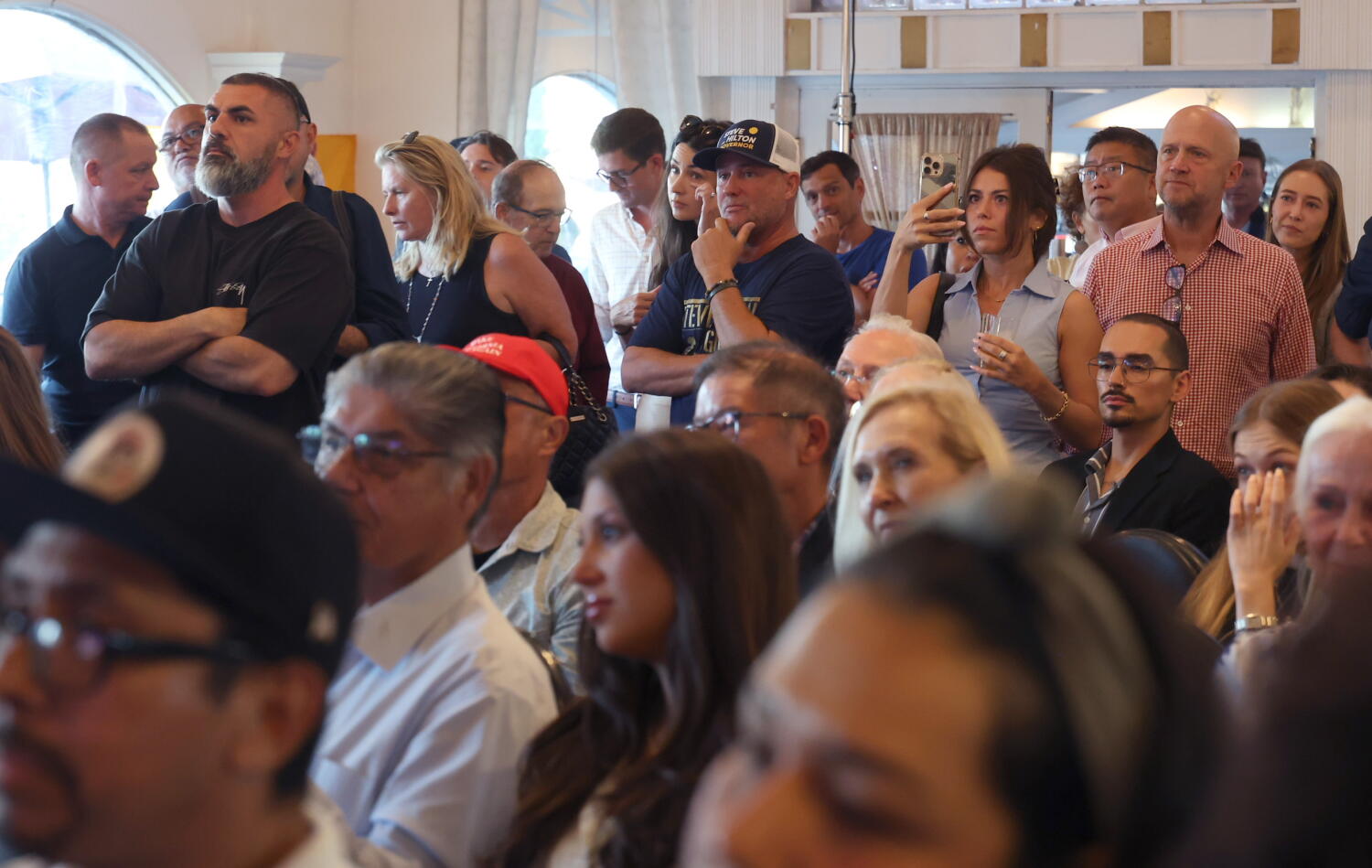
Hope and despair simmer among California Republicans ahead of election day
Hope and despair simmers among California Republicans as election day approaches.
Man arrested over suspected rat poison in stray cat food at Kowloon park
Police have arrested a 34-year-old man who allegedly mixed rat poison into food left for stray cats in a Kowloon park and was found in possession of a knife. The force said it received a report at around 3.30am on Saturday that a man was suspected of putting poison in cat food that animal welfare volunteers had placed near tennis courts in Shek Kip Mei Park. Officers arrived at the scene and seized a packet of suspected rat poison and a fruit knife measuring around 14cm (5.5 inches) in length...

2 projector stands removed from controversial Peak lighting project after outcry
Parts of two installations in a controversial lighting project along a walking trail on The Peak have been removed, days after Hong Kong’s tourism authorities pledged to balance the community’s needs and said the scheme was not “set in stone”. The removals came hours after Commissioner for Tourism Ann Chan Wai-yan inspected the site on Saturday morning with a lawmaker and a district councillor, following an outcry from residents who accused the Hong Kong Tourism Board of removing trees and...
China’s J-20 stealth jet designers plan to put powerful radar into aircraft wing
Fighter jets typically house their main radars behind a radome in the nose, while conventional airborne early-warning aircraft often carry large radar arrays in prominent structures above the fuselage. Although aircraft wings offer a large surface area, their relatively thin cross-sections leave limited internal space for radar equipment. Top Chinese military aircraft designers have now proposed a revolutionary method to integrate large antenna arrays into aircraft wings, using flight manoeuvres...

Grab deals, freebies and prizes as you upgrade your ride at The Car Expo 2026
From the latest electric vehicles and hybrids to exclusive car deals and cash prizes, The Car Expo 2026 offers plenty of reasons to head down to Singapore EXPO this weekend.

Leading Chinese economic commentator Ren Zeping’s social media account restricted
A prominent Chinese economist’s social media channel has been restricted as Beijing steps up regulatory scrutiny of financial market influencers. Chinese internet users on Saturday noticed that the WeChat account of Ren Zeping, known for his outspoken comments on investments and policies, had been stopped from gaining new followers and a member of his team said posting had been suspended. Clicking the follow button generated a message saying “this account cannot be followed due to its violation...

How Operation Santa Claus grew from Christmas donations to ‘engine’ of change
Over nearly four decades, Operation Santa Claus (OSC) has grown from a quirky holiday fundraiser into an “engine” for community change in Hong Kong. For some beneficiaries, the journey was a full circle. Rachel Chow Chiu-yan learned about the fundraising drive in Young Post when she was a student, later pitched for funds on behalf of a group helping teenage girls and later joined the charity. “Ten to 20 years ago, Operation Santa Claus disbursed some funding to charities that saw it as seed...
‘Well, I’m doomed’: How this cancer treatment can help men live longer
Howard Smith’s urologist told him his prostate cancer was not the kind you die with: “It’s the one that’s going to kill you.”
YOUR NEWS, OUR NETWORK.
Do you have Great News you want to tell the world?
Be it updates about your business or your community, you can make sure that it’s heard by submitting your story to our network reaching hundreds of news sites across 6 verticals.