Japan’s Gyms Grow by 30% in Two Years as Low Prices and Convenience Draw New Customers
Nov 9, 2026
The number of fitness facilities nationwide has risen by about 30% in two years. Low prices, 24-hour access and services beyond exercise are attracting people who have never belonged to a gym. But behind the expansion, operators face rising costs, member turnover and customer service disputes.
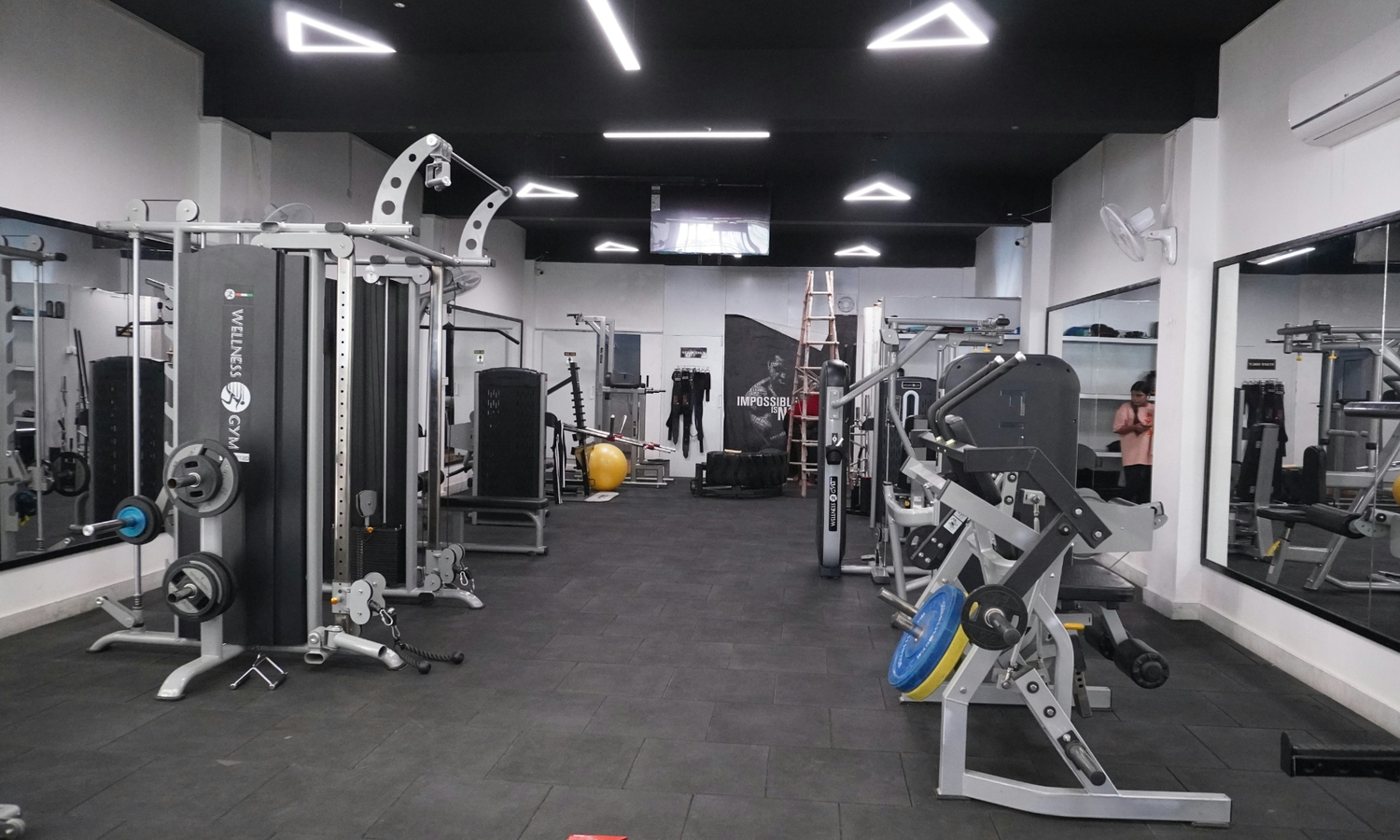
TOKYO, JAPAN (MERXWIRE) – For Mrs. Takahashi, a resident of Tokyo’s Ikebukuro area, the reason to visit the gym once or twice a week is neither weight loss nor muscle gain. It is the laundry. “Ever since I could exercise and do my laundry at the same time, I’ve come to love going to the gym. And I no longer have to worry about rainy days or pollen,” she said. Her experience reflects the kind of customer Japan’s fitness industry is seeking to attract: people without an established exercise routine who are not necessarily looking for an intense workout, but simply want a convenient place to get moving.
According to the Economic Census conducted by Japan’s Ministry of Internal Affairs and Communications and Ministry of Economy, Trade and Industry, the number of fitness club establishments nationwide rose from 3,760 in 2012 to 7,565 in 2021, roughly doubling in nine years.
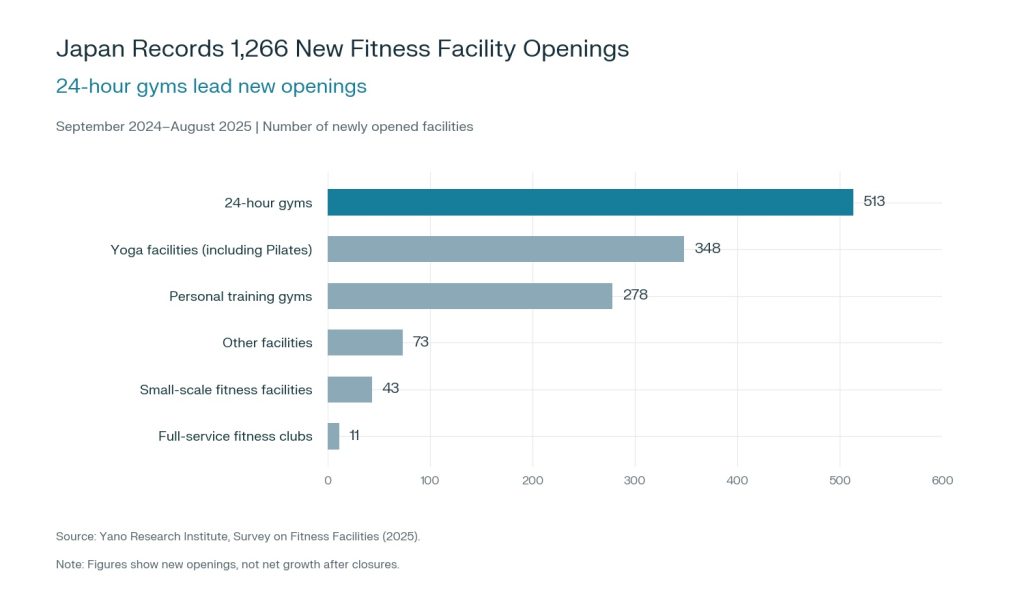
A separate survey by Yano Research Institute counted 13,876 fitness facilities in August 2025, up about 30% from 10,610 in July 2023. Between September 2024 and August 2025, 1,266 new facilities opened — an average of more than three a day. Although the government census and private survey differ in scope and cannot be compared directly, both show an increase over their respective reporting periods.
As the number of locations grows, consumers have more choices. Alongside traditional clubs with swimming pools and group classes, smaller, lower-priced gyms offering round-the-clock access have become increasingly common. Some provide laundry, massage and beauty services, allowing customers to combine exercise with everyday tasks and giving people unfamiliar with gyms another reason to try them.
Yet not every operator is benefiting from the expansion. While new locations open, others are leaving the market. Keeping members, controlling operating costs and providing sufficient assistance without on-site staff remain challenges for the industry.
Lower Prices, Closer to Daily Life
Japan’s traditional fitness clubs often include swimming pools, group classes, changing rooms and showers, with monthly fees frequently exceeding 10,000 yen. Consumers now have more affordable alternatives with a simpler range of facilities. Some memberships cost just over 3,000 yen a month, encouraging people who previously hesitated over the expense to give the gym a try.
Round-the-clock gyms are leading the expansion. Japan had 5,034 such facilities in 2025, accounting for 36.3% of all fitness facilities in Yano’s survey. They also recorded the largest number of new openings, followed by yoga facilities and personal training gyms. Some locations have no permanent on-site staff, with members using smartphone apps to enroll, enter the premises and manage their accounts rather than visiting a reception desk.
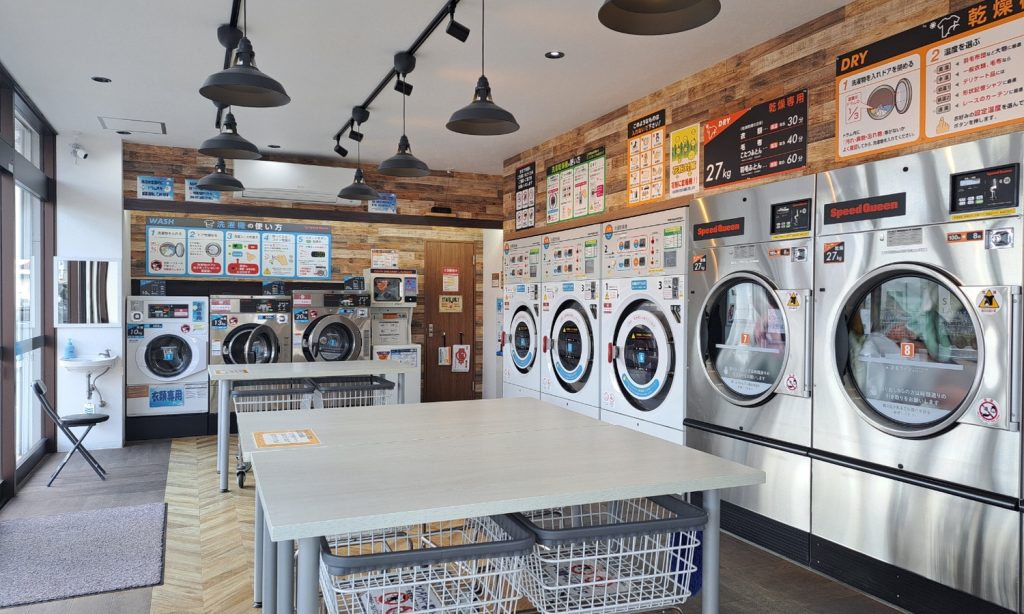
Operators are also introducing services beyond exercise equipment. Some locations combine 24-hour gym access with washing machines, dryers, massage chairs and karaoke facilities. Laundry equipment, in particular, allows customers to work out while waiting for their clothes to be washed or dried.
For Takahashi, the arrangement means housework and exercise no longer require separate outings. She can bring her laundry, exercise while it is being cleaned and take it home afterward, without having to set aside another block of time for the gym or adjust her plans because of rain or pollen.
After Retirement, a Reason to Go Out
For people reorganizing their lives after retirement, lower fees and a convenient place to exercise can make joining a gym more appealing. “After retiring, I have more time, and my old friends are all talking about getting more exercise,” said Mr. Suzuki, a recently retired resident of Osaka’s Chuo Ward. “Gym fees aren’t expensive now, and I don’t have to worry about the weather. I’m getting more and more used to exercising.”
In a 2015 analysis, the Ministry of Economy, Trade and Industry identified older adults’ growing attention to health as one factor supporting demand for fitness services. Smaller neighborhood facilities offering workouts of about 30 minutes have also emerged, allowing members to exercise without setting aside much of the day.
Expansion Does Not Guarantee Survival
According to an economy ministry survey focused mainly on larger operators, the number of fitness club locations run by surveyed businesses rose 16.4% between 2019 and 2024. Over the same period, annual revenue fell 13.1%, while membership declined 14.3%.
The survey does not cover every newer gym format and cannot describe conditions across all types of facilities. It does show, however, that expansion among the surveyed businesses was not accompanied by overall membership growth. Against the broader increase in facilities nationwide, the findings offer another view of the market: more locations do not necessarily mean more paying members.
A separate survey by Teikoku Databank recorded 23 bankruptcy cases involving fitness club operators between January and July 2026, compared with 19 in the same period a year earlier. More than 60% involved businesses established less than 10 years before. The findings show that market expansion can coexist with financial difficulties for individual operators, including newer entrants.
As competition intensifies, promotions such as waived enrollment fees have become increasingly common. Some operators lose members when promotional periods end and regular charges begin. For gyms competing on price, an offer may persuade customers to try the service without convincing them to stay. Whether members continue paying depends in part on how often they use the gym and their experience there.
The Trade-Offs of Unstaffed Service
Operating without permanent on-site staff reduces staffing needs, but it can also leave members struggling to find help when problems arise. Japan’s National Consumer Affairs Center has issued warnings about complaints involving unstaffed gyms and online exercise services. Consumers have reported being unable to complete cancellations through websites, failing to reach operators by telephone and continuing to be charged after believing they had canceled. Others discovered that trial offers had automatically converted into regular membership plans.
Such complaints do not mean every unstaffed gym has the same problems. They do highlight the importance of customer support and cancellation procedures alongside the convenience of signing up and managing an account through a phone.
Speaking outside an unstaffed gym, Mr. Nakamura, a resident of Osaka’s Kita Ward, described both the appeal of the service and his initial difficulties. “I feel comfortable working out without staff around, but at first, I felt a little lost when I didn’t know how to use the equipment,” he said. “I had to watch other people to figure out how to use it. But I gradually got used to it.”
His experience raises another question for this model: Can someone unfamiliar with gym equipment find assistance when needed? Low prices and round-the-clock access reduce cost and scheduling barriers, but equipment instruction, maintenance and emergency assistance still require arrangements. Responsive customer support and clearly written membership terms also shape the experience.
From Signing Up to Staying On
Japan’s growing number of fitness facilities is reflected in the spread of smaller gyms. But retention remains an important part of the business. Facility counts alone cannot show whether laundry, massage and other additional services encourage members to stay, or whether customers who use them ultimately spend more time exercising.
For Takahashi, laundry has become a reason to work out each week. She initially found a place where she could wash her clothes and exercise without worrying about the weather. Now, going once or twice a week has become part of her routine. What keeps her returning is less about an intensive training program or a specific physique goal than an arrangement that fits easily into daily life. “I’ve come to love going to the gym,” she said.
More News

CJ Olive Young to open 5 more US stores by mid-2027, expanding to San Diego
CJ Olive Young, Korea’s largest health and beauty store chain, will open five more stores in California by the first half of 2027, bringing its U.S. total to seven, the company said Monday. The retailer opened its first U.S. store in Pasadena in May and a second at Westfield Century City in Los Angeles in June. Four of the new stores will be in the greater Los Angeles area: Spectrum Center, a lifestyle shopping center in Irvine; Del Amo Fashion Center in the South Bay area; Bloom on 3rd, a shopping complex near the Farmers Market in central Los Angeles; and Brea Mall in Orange County. The fifth will open at Fashion Valley in San Diego, its first outside the Los Angeles area. Opening dates for each store have not been set. Three of the sites — Del Amo Fashion Center, Brea Mall and Fashion Valley — are operated by Simon Property Group, a major U.S. mall owner. The company said the expansion will help small and independent Korean cosmetics brands, collectively known as K-beauty, reach American consumers without their own distribution networks. Olive Young said its stores also introduce

Hanwha Aerospace to conduct ship-based Chunmoo missile tests in US
Hanwha Aerospace said Monday its U.S. subsidiary plans to conduct two test-firings of missiles from its Chunmoo multiple rocket launcher system in the United States as part of its effort to adapt the land-based system for naval use. The missiles will be launched from a vessel off the southern U.S. coast later this month to assess the system's suitability for shipboard deployment. The tests follow an April agreement between Hanwha Defense USA (HDUSA) and Florida-based Magnet Defense to develop a containerized Chunmoo launcher for the H38 medium unmanned surface vessel (MUSV). HDUSA has been expanding its presence in the U.S. maritime defense market. It is in talks to acquire Austal USA, the U.S. subsidiary of Australian shipbuilder Austal, with negotiations under way over key terms of the deal. Last month, HDUSA secured a $269 million contract from shipbuilding management company TOTE Services to build a medium landing ship for the U.S. Navy and Marine Corps. The deal came two years after Hanwha acquired Philly Shipyard in 2024, marking another step in its U.S. shipbuilding expansion.

Hyundai Motor's HTWO teams up with Air Liquide to expand hydrogen mobility in China
Hyundai Motor Group said Monday its hydrogen business brand HTWO will partner with French industrial gas company Air Liquide to expand hydrogen-powered mobility in China. HTWO Guangzhou, the Korean automotive group's first overseas hydrogen fuel-cell system manufacturing base, signed a cooperation agreement with Air Liquide China on the sidelines of the China International Import Expo 2026, which opened in Shanghai last week. Under the agreement, the two companies will combine HTWO Guangzhou's hydrogen fuel-cell system technology with Air Liquide's expertise in hydrogen production, storage, transportation and infrastructure development. The partnership is aimed at accelerating the adoption of hydrogen-powered vehicles in China by integrating fuel cell technology with the hydrogen supply and refueling infrastructure.

Troubled broadcaster JTBC to select preferred bidder in January
Debt-ridden Korean broadcaster JTBC plans to select a preferred bidder in January, the company said Monday, putting up its official notice for the envisioned sale. The sale will be conducted through an open competitive bidding process through the injection of external capital, EY Hanyoung, the accounting firm advising the sale, said in the notice. Potential bidders can submit their letter of intent over the next four weeks. JTBC said it will conduct the sale in a "transparent and fair" manner in accordance with relevant laws and rehabilitation court procedures. "Through the merger and acquisition, we hope to establish a sustainable base for growth and strengthen content and channel competitiveness," the broadcaster said. The sale notice came some two months after the Seoul Bankruptcy Court approved JTBC's request to begin rehabilitation proceedings in late August, allowing the company to restructure its debts under court supervision.

Lee vows to hire more firefighters, expand investment to ensure public safety
President Lee Jae Myung on Monday vowed to hire more firefighters and increase investment in strengthening their capabilities to ensure public safety amid diverse disaster risks. Lee made the pledge during a ceremony marking the 64th Day of Firefighting in the central city of Sejong, attended by government officials, firefighters, those who died while on duty and their bereaved families. The president stressed the ongoing climate crisis is increasing the diversity and scale of disasters, likely making them more complicated and difficult for firefighters to combat. "Preparing for and responding to changes a step ahead of time would be the way to protect the people's lives and ensure their safety," Lee said. He pledged to hire more firefighters, strengthen their command system and expand investment to enable them to respond more promptly and systematically to disasters and ensure public safety. Through the investment, the government plans to harness artificial intelligence (AI) and drones to identify risk factors, and undertake dangerous rescue operations while deploying cutting-edge defense

PPP leaders gather outside Cheong Wa Dae to protest special counsel bill
Leaders of the main opposition People Power Party (PPP) gathered outside Cheong Wa Dae on Monday to protest the recent passage of a bill calling for a special counsel investigation into alleged fabricated indictments targeting President Lee Jae Myung and others. The PPP leadership held a Supreme Council meeting outside the presidential office, after the ruling Democratic Party of Korea railroaded the bill through a plenary session of the National Assembly on Friday. The legislation calls for appointing an independent counsel to investigate suspicions the prosecution under former President Yoon Suk Yeol fabricated evidence or induced false testimonies to build cases against then opposition leader Lee and others. The PPP has denounced the effort as a pretext to cancel all of Lee's indictments, as his trials have been suspended under an article of the Constitution that exempts a sitting president from criminal prosecution except in cases of insurrection or treason. Lee faces charges of involvement in corrupt development schemes, illegal remittances to North Korea, and the misuse of a govern

Justice minister nominee cautious on withdrawal of indictments against Lee
Justice Minister nominee Lee Yong-cheol on Monday expressed reservations about nullifying indictments against President Lee Jae Myung following last week's passage of a special counsel bill to investigate allegations of fabricated indictments, including those that currently involve the president. The nominee, who currently serves as head of the Defense Acquisition Program Administration (DAPA), said the special counsel should focus exclusively on uncovering the truth. He was tapped Friday to become the justice minister, a post that has remained vacant for more than two months since Lee's first justice minister, Jung Sung-ho, resigned in late August. The National Assembly passed the special counsel bill on the same day amid protests from the main opposition People Power Party, which suspects the legislation is aimed at canceling all indictments against the president. "I believe it is appropriate for the special counsel to focus solely on uncovering the truth from now on, while all other matters should be handled in accordance with the law and established principles," the justice minister

Second vice minister of foreign affairs discusses role of diplomacy at HUFS lecture
Kim Jin-a, second vice minister of foreign affairs, delivered a lecture on the changing international order and the challenges facing Korean diplomacy at the Seoul campus of Hankuk University of Foreign Studies (HUFS) on Nov. 4. The university said the lecture was part of the 2026 HUFS Special Lecture program, which provides students, alumni and young people in the local community with opportunities to gain insights into the humanities and develop skills for their future careers. The program combines the university’s traditional strengths in diplomacy, international trade and the humanities with emerging issues such as artificial intelligence (AI) and big data. In her lecture, titled “Changes in the International Order and Korea’s Diplomatic Choices,” Kim discussed the role and importance of diplomacy in the evolving international environment. She also introduced various programs and initiatives pursued by the Ministry of Foreign Affairs and shared information to help students broaden their interest in international affairs and explore career opportunities in diplomacy. Kim earned

Woowa Brothers, Coupang face $465 mil. in fines for abusing delivery market dominance
Woowa Brothers and Coupang have been slapped with a combined 631.9 billion won ($465 million) in fines for abusing their dominant positions in Korea’s food delivery market by forcing affiliated restaurants to offer consumers prices and promotional terms at least as favorable as those available through competing channels. The Fair Trade Commission (FTC) said Monday it has decided to order the companies to rectify the unfair practices and impose provisional fines of 331.1 billion won on Woowa Brothers, the operator of Baemin, and 300.8 billion won on Coupang, which operates Coupang Eats. The two platforms account for more than 90 percent of the nation’s food delivery market share. According to the regulator's investigation, both companies abused their market power to impose so-called most-favored-nation (MFN) requirements on restaurants, restricting their ability to offer different prices, discounts and other terms through competing delivery platforms. The FTC said the practices made it difficult for restaurants to establish more favorable conditions on rival platforms and weakened co

KT opens coveted gold-number lottery to customers across carriers
KT is opening its latest gold-number lottery to mobile phone users across Korea, giving customers of rival carriers and budget phone services a chance to secure sought-after numbers such as 1111, 1234 and 1004. KT said Monday it would hold a drawing for mobile phone numbers considered particularly desirable because they are easy to remember or carry special meanings. The company is offering 155 categories of preferred numbers, including AAAA patterns, in which all four digits are identical, such as 1111 and 2222, and ABCD patterns featuring consecutive digits, such as 1234 and 5678. Numbers with particular meanings, including 1004 and 2580, are also included in the selection. Each applicant can enter the drawing for up to three numbers, KT said. Applications can be submitted at KT stores nationwide, through KT's website or via its My KT mobile application. Participation is not limited to KT subscribers, with customers using other mobile carriers and mobile virtual network operators, commonly known as MVNOs, also eligible to enter. The expanded eligibility gives mobile phone users across dif

KT&G targets Central Asia with launch of FLEX in Kazakhstan
KT&G, Korea’s leading tobacco maker, is expanding its next-generation product footprint in Central Asia by launching its FLEX heated tobacco device and FAIIM sticks in Kazakhstan. The Korean tobacco company said it introduced the products in October, marking its direct entry into Kazakhstan's heated tobacco market. FLEX and FAIIM are locally branded versions of KT&G's lil AIBLE device and AIIM tobacco sticks, which are already sold in Korea, adapted for the local market. The products are initially available only in Almaty, Kazakhstan's largest city, with KT&G planning to expand distribution channels gradually. The company is also operating a FLEX flagship store at Forum Mall, a major shopping center in Almaty, to strengthen its connection with local consumers. The store will offer brand information, customer consultations and other services designed to help consumers better understand the products and experience the brand. The launch forms part of KT&G's broader strategy to expand its next-generation products (NGP) business internationally after establishing an independent commercializat

Hansae Yes24 Foundation chairwoman honored for philanthropy
Cho Young-soo, chair emeritus of the Hansae Yes24 Foundation, has received a commendation from the Seoul mayor for her charitable donations and humanitarian work, the foundation said on Monday. The Korean Red Cross recommended Cho for the honor, citing her sustained support for humanitarian causes, including a donation of 100 million won ($73,000) in July, according to the foundation. The donation also brought her into the Red Cross Honors Club, a group of major donors to the organization. Beyond her work through the foundation, Cho has used personal funds to support organizations including the Community Chest of Korea, Seoul National University and the Korean Red Cross, the foundation said. Her contributions also include support for students and younger generations as a senior figure in education. The foundation said those activities, alongside her donations, formed part of the basis for the commendation. Cho served as chairwoman of the foundation for five years beginning in 2018. During her tenure, she led programs supporting academic research, scholarships for international students,
YOUR NEWS, OUR NETWORK.
Do you have Great News you want to tell the world?
Be it updates about your business or your community, you can make sure that it’s heard by submitting your story to our network reaching hundreds of news sites across 6 verticals.