Global Branding & Franchise Expert, David M. Uslan joins Planet Tota as Strategic Advisor
Feb 13, 2024
Planet Tota, an Asian entertainment IP and Web3 project, appoints David M. Uslan as Strategic Advisor. With a rich career in publishing and producing, and notable involvement in Batman's development, Uslan brings decades of IP and entertainment industry expertise to the role.
Singapore - February 13, 2024 —
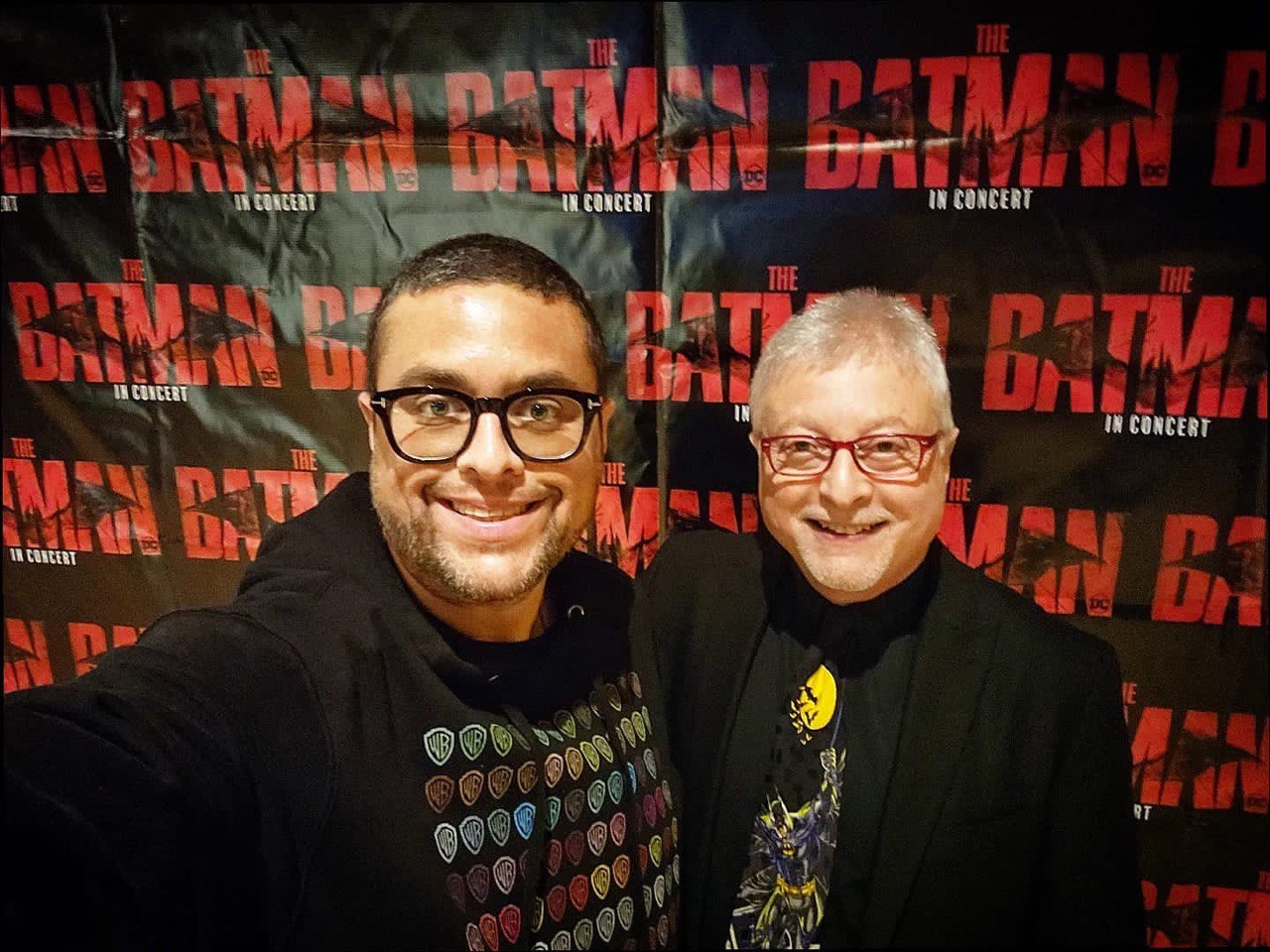
David Uslan and Michael Uslan attending the premiere of The Batman: Live in Concert at the Dolby Theatre in Los Angeles
Singapore, 12th of August, 2024 - Planet Tota, a novel entertainment IP and Web3 undertaking from Asia, has brought in David M. Uslan as a Strategic Advisor. With a long and storied career as a publisher and producer, and a legacy of involvement in the development of the Batman Franchise, Uslan brings decades of IP and entertainment industry experience through the role.
David M. Uslan, along with his father Michael E. Uslan, the ‘Originator and Executive Producer’ of the original Batman movies franchise by Tim Burton, has played a key role in every Batman production from 1989 including the Christopher Nolan Batman Trilogy, Todd Philips’s Joker, and the recent ‘The Batman’ reboot starring Robert Pattinson. The father-son duo has also been involved in Constantine, National Treasure, Emmy nominated ‘Sabrina – Secrets Of A Teenage Witch’, the upcoming Apple series on the lives of Babe Ruth and Lou Gehrig produced alongside Lorne Michaels and the Yankee organization, and a number of other revered franchises and Hollywood productions.
Planet Tota features an alternate universe populated with hundreds of Asian superhero characters. Besides games, comics and metaverse, live action/animation movies and series around the lore is a key Planet Tota ecosystem offering. With CJ CGV, the Korean Entertainment Conglomerate, and distributors of Oscar-winning Parasite as distributor, the inclusion of David Uslan’s as an advisor is another important step in leading this Southeast Asian IP undertaking to become a global entertainment IP franchise.
Besides producing, publishing, and licensing entertainment IP, David M. Uslan is also the co-founder of IP3, an ecosystem and investor network that aims to leverage Web3 inclusive IP development in the entertainment industry. A mission that is in line with Planet Tota’s vision and efforts to empower creators, brands and users with a platform, tech infrastructure and tools for IP co-creation, personal IP development and monetization.
Speaking on David’s involvement, Faisal Khan, CEO and Co-founder of Planet Tota, said, ‘Personal IP, virtual ownership, creator empowerment and co-creation are Web3 tenets which will play a pivotal role in the future of IP development and monetization. This new way to IP will build upon the prudent. David brings all of it to the table, and we are thrilled to have him involved.’
As an advisory board member of The Mob Museum in Las Vegas, a member of the Steering Committee for San Diego Comicon and its permanent museum, an advisor to Kartoon Studios and running point on their ownership of Stan Lee's brand and library, and a consultant to numerous other companies and brands, David M. Uslan sees the Planet Tota ecosystem as a novelty, and not just in the Web3 space.
Speaking on his involvement, David M. Uslan said, ‘I am thrilled to be working with the Planet Tota family. Between the development of original content, servicing global brands and corporations with our creative and marketing capabilities, and having the ability to penetrate both Asian and Western markets, I couldn’t think of a better partnership.’
About Planet Tota
Planet Tota is a Web3 entertainment ecosystem with a wide array of entertainment products ranging from games, movies, metaverse, comics, NFTs, amongst others. At the heart of Planet Tota is a universe populated with 100s of original characters from different Asian countries, amounting to an extensive lore that can be experienced through Planet Tota products.
As a brand, Planet Tota is committed to bringing the best of Web3 to everyday consumers. It aims to do so by empowering the users, creators and brands with tech infrastructure, extensive IP, cool products and innovative virtual tools, and act as a platform that enables user-involvement, personal IP development, cross-IP play and co-creation.
Media Contacts:
Website: https://planettota.com
Twitter/X: https://twitter.com/totaverse
Telegram: https://t.me/totaverse
Instagram: https://instagram.com/totaverse_official
Contact Info:
Name: Laura Lehmann
Email: Send Email
Organization: MONCCO PR
Website: https://moncco-pr.com
Disclaimer:
This press release is for informational purposes only. Information verification has been done to the best of our ability. Still, due to the speculative nature of the blockchain (cryptocurrency, NFT, mining, etc.) sector as a whole, complete accuracy cannot always be guaranteed.
You are advised to conduct your own research and exercise caution. Investments in these fields are inherently risky and should be approached with due diligence.
Release ID: 89121337
If you encounter any issues, discrepancies, or concerns regarding the content provided in this press release, or if there is a need for a press release takedown, we urge you to notify us without delay at [email protected]. Our expert team will be available to promptly respond within 8 hours – ensuring swift resolution of identified issues or offering guidance on removal procedures. Delivering accurate and reliable information is fundamental to our mission.
More News

Korea Times University Rankings focus on universities' internationalization capabilities
The Korea Times University Rankings 2027 focus on universities’ internationalization capabilities rather than their overall institutional strength. Unlike comprehensive rankings such as QS and Times Higher Education (THE), which place greater emphasis on reputation and research, The Korea Times rankings evaluate the diverse resources and achievements of universities from an internationalization perspective. Through the assessment, The Korea Times aims to help international students considering studying in Korea make informed choices and promote healthy competition among universities to strengthen their internationalization capabilities. Differences in evaluation method The Korea Times excluded the Korea Advanced Institute of Science and Technology (KAIST) and the Pohang University of Science and Technology (POSTECH) from its University Rankings, although both rank among Korea’s top universities in global rankings. The exclusion was based on a comprehensive consideration of the number of international students, institutional size and regional balance among Korean universities. In the QS

Evaluation criteria revised to better assess universities' internationalization
The Korea Times has revised the evaluation criteria for its University Rankings 2027 to provide a more comprehensive and rigorous assessment of the internationalization of Korean universities. This year’s evaluation expanded its coverage from 54 universities last year to 60, while increasing the total score from 190 points across 18 indicators to 200 points across 19 indicators. Notably, The Korea Times introduced a new indicator measuring the proportion of full-time international faculty. It also changed the calculation method for the academic retention rate of international students, focusing the measure on degree-seeking students, and refined the evaluation period for research performance. The new international faculty indicator, worth 10 points, is designed to strengthen the assessment of internationalization in the education and research environment, marking the biggest change in this year’s rankings. Accordingly, the education category’s score increased from 60 points to 70 points. The category now consists of seven indicators, including the ratio of degree-seeking internationa

New indicators sharpen focus on quality over quantity in university globalization
Academics and industry observers said revision to The Korea Times University Rankings 2027 represent a meaningful step forward, with updated indicators that offer a more comprehensive measure of university internationalization. This year’s revisions placed greater emphasis on faculty diversity, student success and sustained research collaboration. Shin Jang-sup, a professor of economics at the National University of Singapore, said the overall framework has improved from last year, highlighting the addition of an indicator measuring the proportion of international full-time faculty, as well as changes to the international student retention indicator. “Including the international student retention rate is a very desirable change,” Shin said. “It strengthens the rankings’ focus on evaluating universities from the perspective of international students.” Seo Myeong-seok, managing director of the Korea Advancing Schools Foundation, also emphasized that the revisions have strengthened the overall framework. He pointed to the introduction of the international full-time faculty ratio,

Universities need to do more to support international students
Internationalization is no longer an option for Korean universities but a necessity for their survival, as the nation’s higher education system faces an unprecedented structural transformation. Yet The Korea Times University Rankings 2027 reveal a stark reality: Korean universities still have a long way to go to achieve full-fledged internationalization. Universities have met the basic requirements for internationalization. But investment in faculty recruitment and student support has failed to keep pace with the increasing number of international students, while graduate outcomes remain weak. The Korea Times launched the university rankings last year to assess the level of internationalization among domestic universities. This year’s rankings covered 60 universities using 19 indicators in four categories: education, research, student support and graduate outcomes. Universities were assessed on a 200-point scale, with 70 points allocated to education, 50 points to research, 40 points to student support and 40 points to graduate outcomes. The education category saw the strongest overall

Top Korean universities hold firm as new contenders gain ground
Korea University retained the top spot in The Korea Times University Rankings 2027 for the second consecutive year, as the country’s leading universities largely held their ground while Sejong University emerged as the biggest mover in the top 10. First launched last year, The Korea Times University Rankings aim to look beyond the number of international students to assess how well universities are building the broader ecosystem needed for globalization. This year’s results suggest that while Korean universities have made progress in attracting and managing international students, many still lag in areas such as international faculty, financial support and post-graduation outcomes. The disparity was evident across the four evaluation areas. Universities performed strongest in education, while scores were lower in student support and lowest in graduate outcomes, underscoring the challenge of building an environment that supports international students not only upon arrival but throughout their studies and beyond graduation. Korea University topped the rankings with 149.52 points out o

Regional universities excel in student support category
Seoul-based universities dominate the top 30 of The Korea Times University Rankings 2027. Their dominance is, however, less evident in the student support category, where regional universities are investing more in helping international students find jobs and settle after graduation. Among the 60 universities evaluated nationwide, 18 of the 24 universities in Seoul made the top 30, reaffirming the capital’s long-standing dominance in internationalization. Five of nine schools in Gyeonggi Province and Incheon are included in the list, while four of 13 universities in metropolitan cities outside the capital region made the cut. Only three of the 14 universities in provincial areas made the top 30, showing that they still lag well behind major universities in Seoul and other metropolitan areas. Those figures indicate that internationalization capabilities remain concentrated in the capital region. The education, research and graduate outcomes categories showed a consistent regional pattern, with Seoul scoring highest, followed by Gyeonggi and Incheon, metropolitan cities outside the capita

Regional, smaller universities challenge hierarchy as globalization paths diverge
Some universities outside Seoul and the capital region demonstrated strong international competitiveness in specific areas in The Korea Times University Rankings 2027, despite the dominance of the country’s top-tier schools in the overall standings. This indicates that universities are strengthening their international capabilities in different ways across areas such as student recruitment, educational environments, international research, student support and graduate outcomes. Korea University, Seoul National University and Yonsei University — the country’s three leading institutions collectively known as “SKY” — held the top three spots in the overall top 30. However, regional and smaller universities including Handong Global University, Incheon National University, Woosong University and Kyungsung University performed strongly in categories such as education, student support and graduate outcomes. Handong Global University, based in Pohang, North Gyeongsang Province, stood out by ranking second in student support behind only Seoul National University, despite placing 23rd

New metrics reshuffle top 30 university rankings, expose globalization gaps
The top 30 of The Korea Times University Rankings 2027 remained largely stable — 28 of last year's 30 universities held their places — but beneath that continuity, a revised methodology reshaped individual positions and exposed widening gaps in the quality and depth of internationalization at Korean universities. Seoul-based private universities dominated the top 30, though seven universities outside the capital region also made the cut. They included regional flagship national universities — Pusan, Kyungpook, Jeonbuk and Chungnam — as well as private institutions known for their internationalization efforts, such as Woosong, Handong Global and Yeungnam universities. Yeungnam University and Kookmin University were the only newcomers, climbing three and four spots from 32nd and 34th last year to 29th and 30th, respectively. Yeungnam's rise was driven largely by its strong performance in international research. The private university in Gyeongsan, North Gyeongsang Province, ranked ninth among the 60 institutions in the research category with 30.95 points, placing first in the shar

Seoul's Jongno 3-ga rises to world's coolest neighborhood
Seoul’s Jongno 3-ga has gone from cool to coolest, taking the No. 1 spot on Time Out’s list of the world’s coolest neighborhoods in 2026 after ranking third five years ago. The historic downtown neighborhood was praised for its mix of old Seoul and new energy, from late-night food stalls, or "pocha," to independent businesses and traditional Korean houses, or "hanok." Time Out said Jongno 3-ga has only grown cooler since its previous appearance, citing the rise of late-evening outdoor dining, independent businesses and shops. The neighborhood’s appeal increasingly stretches across generations. Today, younger crowds are flocking to the area, drawn by its affordable food and relaxed, open-air atmosphere. "Jongno 3-ga thrives as a social intersection," Time Out wrote, describing a neighborhood where different generations and communities have long crossed paths. Nearby Ikseon-dong has become a magnet for cafes and boutiques tucked into century-old hanok, while Seosulla-gil offers another side of the neighborhood, with craft workshops, jewelry studios and bars. The ranking has put Jongn

Gov't to closely monitor energy price volatility, vows diversification
The finance minister on Friday vowed to make diplomatic efforts and diversify import sources to address recent energy price volatility amid geopolitical uncertainties in the Middle East. Finance Minister Koo Yun-cheol made the remarks during a meeting of economy-related ministers in the central city of Sejong, pointing out that global oil prices have recently risen sharply amid geopolitical tensions. "The government intends to remain vigilant and maintain an emergency response system to stably manage the supply of energy sources and their prices," Koo said during the meeting. Koo added that the energy supply is expected to remain stable for the time being due to the government's proactive diplomatic efforts, diversification of import sources and a strategic swap of oil reserves. "We will operate a monitoring team with the oil refining industry to check the supply of crude oil on a daily basis and take necessary measures promptly," the finance minister said. During the meeting, the government said the country will extend its fuel tax cut scheme by another two months through November to eas

Lee set for press conference amid falling approval ratings
President Lee Jae Myung was set to hold a press conference Friday to address pending issues in an apparent attempt to resuscitate his approval ratings that have fallen to their lowest level amid controversies surrounding government policies. The press conference, to be held under the slogan of "people's wishes and lives will be more closely heeded," is scheduled to run for 90 minutes from 10:30 a.m. It will mark the seventh press conference by the president since he took office in June 2025 but a rare one, given that most of his previous pressers were held in and around special occasions, such as the first year anniversary of his administration. The event, announced three days earlier, comes after Lee saw his approval ratings decline to the lowest levels in the mid-30 percent range in recent weeks, especially among young voters. During the conference, Lee is expected to face media questions about his and his ruling party's push for a constitutional revision, as well as issues involving his suspended trials. The president and the ruling Democratic Party have been calling for a constitution

Korea to extend fuel tax cut through November amid price burdens
Korea will extend its fuel tax cut scheme by another two months through November to ease price burdens on the public amid protracted tensions in the Middle East, the finance ministry said Friday. The Ministry of Finance and Economy said the decision was made during an economy-related ministers' meeting chaired by Finance Minister Koo Yun-cheol, citing the need to ease the public's burden from fuel costs. Under the measure, the current tax reductions of 15 percent for gasoline and 25 percent for diesel and butane, originally set to expire at the end of this month, will remain in place through the end of November. "We have decided to maintain the current tax cut scheme, considering the country's capacity to address a possible increase in oil price volatility," the finance ministry said in a release. The country has decided to maintain larger tax cuts for diesel, which is essential for industrial and logistics activities, and butane, which is widely used as fuel for small trucks, it added.
YOUR NEWS, OUR NETWORK.
Do you have Great News you want to tell the world?
Be it updates about your business or your community, you can make sure that it’s heard by submitting your story to our network reaching hundreds of news sites across 6 verticals.