Clinic Appointment System Philippines: ClinicOS Pricing Guide Released
Oct 11, 2026
ClinicOS by ACS releases a pricing guide for its Philippine clinic appointment and EMR system, detailing plans from a free tier to a multi-branch Professional option for clinic owners and administrators.

Cebu City, Philippines, October 11, 2026 /NewsNetwork/ -- ClinicOS by ACS has published a pricing guide for its clinic appointment and EMR system, giving clinic owners across the Philippines a clearer view of available plans before they choose a digital scheduling platform. The guide lays out costs and features for each tier, from an entry-level option to a plan built for multi-branch operations, and is intended as a reference for clinics comparing their options as they move away from paper charts and manual booking logs.
More information is available at https://clinicos.ph/clinic-appointment-system-philippines
Scheduling decisions touch nearly every part of a clinic's daily operation, which is why clear pricing matters: front-desk staff rely on organized booking to avoid overlapping appointments, while doctors depend on accurate calendars to manage patient flow throughout the day. ClinicOS by ACS combines appointment scheduling with billing, patient records, and clinical documentation within a single browser-based system, so clinics are not juggling separate tools for each task.
The Free Plan, detailed in the guide, gives solo doctors a way to test the platform at no cost. It supports up to 10 patients per day and includes appointment scheduling, basic consultation notes, and 2 GB of secure file storage, offering independent practitioners a low-risk starting point as they consider moving away from paper-based systems.
Clinics ready to expand can choose from several paid plans. The Solo and Starter plans begin at $32 per month, the Growth plan is priced at $57 per month, and the Professional plan runs $162 per month, with each tier adding capabilities such as full EMR access, SOAP notes, and billing tools. A 30-day free trial applies to all paid plans, giving clinic administrators time to evaluate the system against their daily workflow before subscribing.
At the top of the lineup, the Professional Plan is built for clinics managing multiple locations or facing heavier compliance demands. According to the guide, it includes a PhilHealth coding module, data export and compliance tools, and RA 10173 audit logging. Clinics that need more capacity beyond the included allowance can add branches for ₱800 per month each and additional staff seats for ₱300 per month each, allowing the plan to scale alongside a growing practice.
The guide reflects ACS's aim of making practical digital tools available to private clinics regardless of size. By setting out each plan's inclusions and costs in one place, the company hopes to help owners and administrators match a plan to their patient volume, staffing, and compliance needs.
Clinic owners and administrators evaluating scheduling and EMR options can review the full plan breakdown and compare features directly. The pricing guide is available now for clinics researching their next system.
Learn more about ClinicOS by ACS at https://clinicos.ph
Contact Info:
Name: Janrus Abello
Email: Send Email
Organization: ClinicOS by ACS
Address: Unit 4, Terryville 2, Freedom St., Peace Valley, Lahug, Cebu City, Cebu 6000, Philippines
Phone: +63-999-097-6323
Website: https://clinicos.ph
Source: NewsNetwork
Release ID: 89205807
If there are any errors, inconsistencies, or queries arising from the content contained within this press release that require attention or if you need assistance with a press release takedown, we kindly request that you inform us immediately by contacting [email protected] (it is important to note that this email is the authorized channel for such matters, sending multiple emails to multiple addresses does not necessarily help expedite your request). Our reliable team will be available to promptly respond within 8 hours, taking proactive measures to rectify any identified issues or providing guidance on the removal process. Ensuring accurate and dependable information is our top priority.
More News

Cheong Wa Dae makes rare disclosure of Lee's golf outing ahead of opposition attack
Cheong Wa Dae on Sunday took the unusual step of disclosing information on President Lee Jae Myung’s private golf schedule, shortly before an opposition lawmaker held a news conference questioning his whereabouts when a ceiling collapsed at a supermarket in Daegu. The office confirmed that Lee visited Taereung Golf Club with his family Saturday, about the time reports that the ceiling of a commercial building collapsed in Daegu, injuring dozens of people. Lee was briefed on the accident at the course and called acting National Police Agency chief Kim Jong-chul to check on casualties and injuries, Cheong Wa Dae said. He then ordered authorities to focus on rescue efforts and ensure a swift, safe response. “We normally do not confirm the president’s undisclosed schedule or private holiday activities,” the presidential office said, explaining that it made an exception “to prevent unnecessary controversy.” “We regret that the president’s private, undisclosed schedule is being used for political disputes,” it added. The announcement came shortly before Rep. Joo Jin-woo of the

Rights groups call for release of 3 detained activists in Hong Kong, Thailand
Two human rights groups called Sunday for the immediate release of three detained Gwangju Prize laureates in Hong Kong and Thailand. The May 18 Memorial Foundation and the Network of Laureates of the Gwangju Prize for Human Rights said the detentions of Chow Hang-tung of Hong Kong and Thai activists Arnon Nampa and Jatupat Boonpattararaksa "reflect a crisis of democracy in Asia." Jatupat, a Thai activist and the 2017 recipient of the Gwangju Prize for Human Rights, and Arnon, a Thai human rights lawyer who won the prize in 2021, are detained in Thailand. Chow, a Hong Kong human rights lawyer and the 2023 laureate, is detained in Hong Kong. "We stand in solidarity with activists striving to defend democracy and human rights in Thailand, Hong Kong and Myanmar despite violence, imprisonment and restrictions on basic rights," the groups said in a joint statement. The prize was established in 2000 to promote the spirit of the May 18 pro-democracy uprising in the southwestern Korean city of Gwangju in 1980, during which a military crackdown on demonstrators left more than 200 civilians dead an

7 in 10 workers get no extra pay for covering parental leave: survey
Most Korean workers who took on additional duties while colleagues were on parental leave or working reduced hours for childcare received no extra compensation, with 7 in 10 going unpaid for the added workload. According to a survey released by workplace advocacy group Gabjil 119 on Sunday, 47.8 percent of 1,000 workers said their workloads had increased due to colleagues taking maternity or parental leave. The survey was conducted nationwide from Sept. 1 to 7. The results suggest that employers are shifting the burden of staffing shortages caused by parental leave or reduced working hours onto existing employees rather than hiring replacements or adjusting workloads. Of the 478 respondents who reported taking on additional duties, just 29.5 percent said they had received extra compensation, such as allowances, while the remaining 70.5 percent received no additional pay. Awareness of government subsidies aimed at compensating workers who take on extra duties was also limited. Only 37 percent of respondents were aware of the government’s workload-sharing subsidy for parental leave, while

Korea's role in combined command set to grow after OPCON transfer
As Korea prepares to regain wartime operational control (OPCON) from the United States, questions remain over how the leadership and organization of their combined military command will change. The Korea-U.S. Combined Forces Command (CFC) is expected to retain its integrated command structure, with Korean officers potentially taking more senior staff positions, military experts said. The outlook comes after Seoul and Washington disclosed that they have agreed on a provisional organizational plan for the post-transfer command. While the two countries have already agreed to put a Korean general in charge, the division of responsibilities beneath the commander has yet to be made public. Gen. Kim Seong-min, the CFC’s deputy commander, told a parliamentary audit Wednesday that the provisional arrangement would be finalized during the Full Mission Capability (FMC) assessment, the final stage of the three-phase evaluation process for OPCON transfer. He described the plan as a draft and dismissed suggestions that the combined command would be dissolved after the handover. Kim Jung-sup, directo

Starbucks Korea reclaims coffee market lead after 5-month slump
Starbucks Korea reclaimed its lead among coffee chains in September, five months after a marketing controversy sparked consumer backlash. According to data from market tracker IGAWorks on Sunday, the coffee chain recorded 121.08 billion won ($90.1 million) in estimated credit and debit card spending last month, up 4.3 percent from August, overtaking rival Twosome Place to reclaim the top spot. Starbucks trailed its rival for four consecutive months as its estimated card spending dropped by 13.13 billion won to 121.19 billion won from April to May, before bottoming out at 100.39 billion won in June. The coffee chain's estimated card spending then rose for three consecutive months, reaching 110.06 billion won in July, 116.12 billion won in August and climbing back above 120 billion won in September for the first time since the downturn. Twosome's estimated card spending fell 6.4 percent from August to 110.5 billion won in September, about 10.58 billion won below Starbucks. The recovery follows nationwide backlash over a Starbucks promotion that dubbed May 18, the anniversary of the 1980 Gwa

Cyber risk gains ground in Korean financial firms' credit ratings
Cyberattacks are becoming a more consequential credit risk for financial firms, as the damage can extend beyond data theft to operational disruptions and higher funding costs. Korea Ratings is considering more objective ways to measure firms’ exposure to cyber threats, industry officials said Sunday. In a recent report, the ratings agency said cyber risk can weaken both a financial institution’s business prospects and its financial health. International rating agencies have already downgraded companies after cyberattacks disrupted operations or exposed weaknesses in internal controls. In 2019, S&P Global Ratings cut Bank of Valletta’s rating to BBB- from BBB following a cyberattack, citing operational risks and governance weaknesses that hurt its creditworthiness. Korea Ratings has also recently incorporated cyber-related concerns into its assessment of a domestic financial firm. In March, it lowered Lotte Card’s score for the “risk management” factor in its regular credit assessment. Lotte Card disclosed a data breach in August last year that exposed information belonging t

Banks race to ramp up AI defenses as deposits fall after cyberattacks
A wave of recent data breaches at major Korean banks is putting pressure on both customer confidence and the industry’s defenses, with deposits at these lenders declining by more than 20 trillion won ($15 billion) in just 11 days, according to industry officials, Sunday. They are now stepping up security spending and hiring specialists to keep pace with increasingly sophisticated artificial intelligence (AI)-driven attacks. Demand deposits at the country’s five largest lenders — KB Kookmin, Shinhan, Hana, Woori and NH NongHyup — totaled 675.5 trillion won on Sept. 30, but dropped to 655.4 trillion won as of Sunday. Fixed-term deposits, which had risen for five consecutive months, also fell by more than 2.7 trillion won to slightly more than 1 quadrillion won. On Oct. 1, Shinhan Bank first reported that about 25,000 customers were affected, with names, phone numbers, annual income and loan limits exposed. The following day, KB Kookmin reported 119 affected customers, while Hana Bank said personal information belonging to 89 customers was exposed. Lenders are responding with bigge

Experts see no quick fix for Korea-US intelligence rift
Although the South Korean government insists its alliance with the United States remains strong despite six months of restrictions on North Korea-related intelligence sharing, experts see little prospect of a quick resolution, warning that Washington’s mistrust runs deep and the dispute reflects broader structural strains in the alliance. Nam Sung-wook, a chair professor at Sookmyung Women’s University, said the restrictions reflect strong U.S. mistrust of specific figures in the current administration and warned the situation was unlikely to improve soon. “The U.S. is showing a deep-seated distrust toward key figures such as Unification Minister Chung Dong-young and National Intelligence Service (NIS) chief Lee Jong-seok in the Lee Jae Myung administration and claiming that they cannot have high-level intelligence sharing meetings. It is worrisome, as it is also fundamentally hurting the allies,” he said. He said Seoul has strong reasons to resolve the restrictions quickly but warned that Washington’s concerns may be difficult to overcome in the short term. “It will not be b
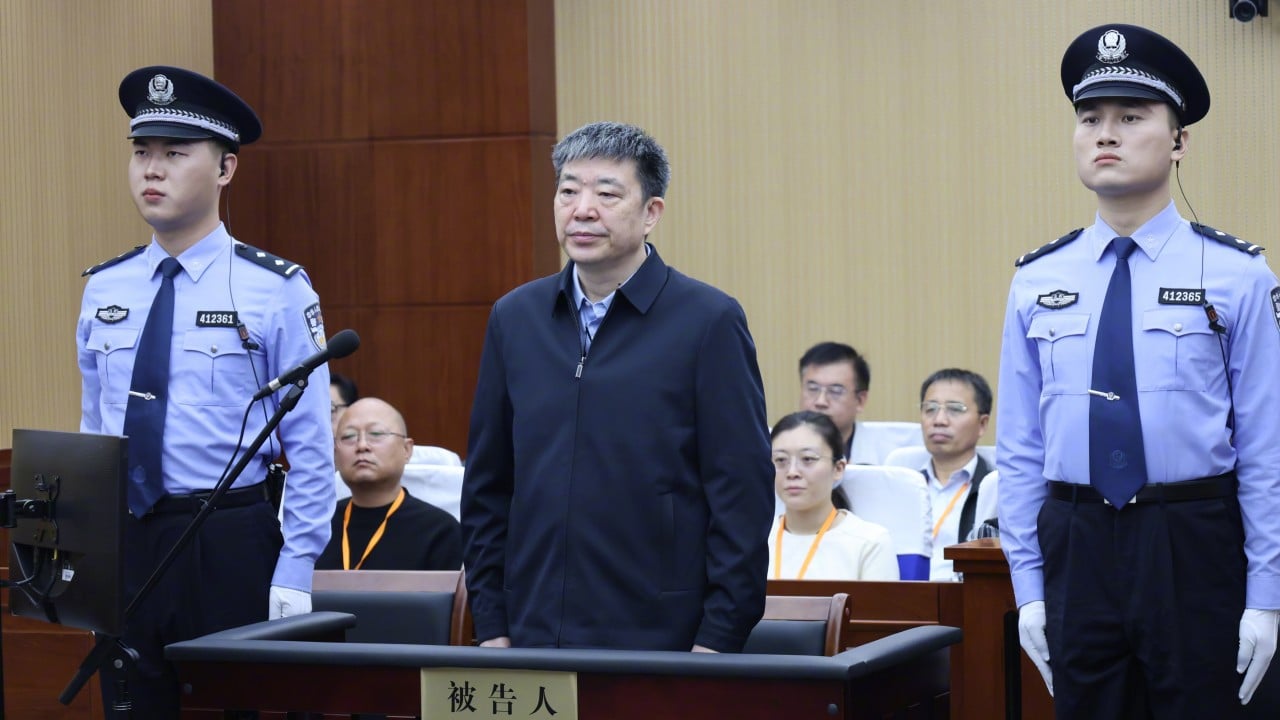
Wuhan’s Covid mayor Zhou Xianwang jailed for 14 years for corruption
Zhou Xianwang, the former mayor of Wuhan widely criticised for the initial handling of the Covid-19 outbreak, has been sentenced to 14 years in prison for corruption. Zhou used various positions he held between 2003 and 2025 – including party secretary of Huangshi, mayor of Wuhan and vice-governor of Hubei province – to “provide assistance to companies and individuals in contracting projects, business operations and administrative approvals”, Shangqiu Intermediate People’s Court in Henan...
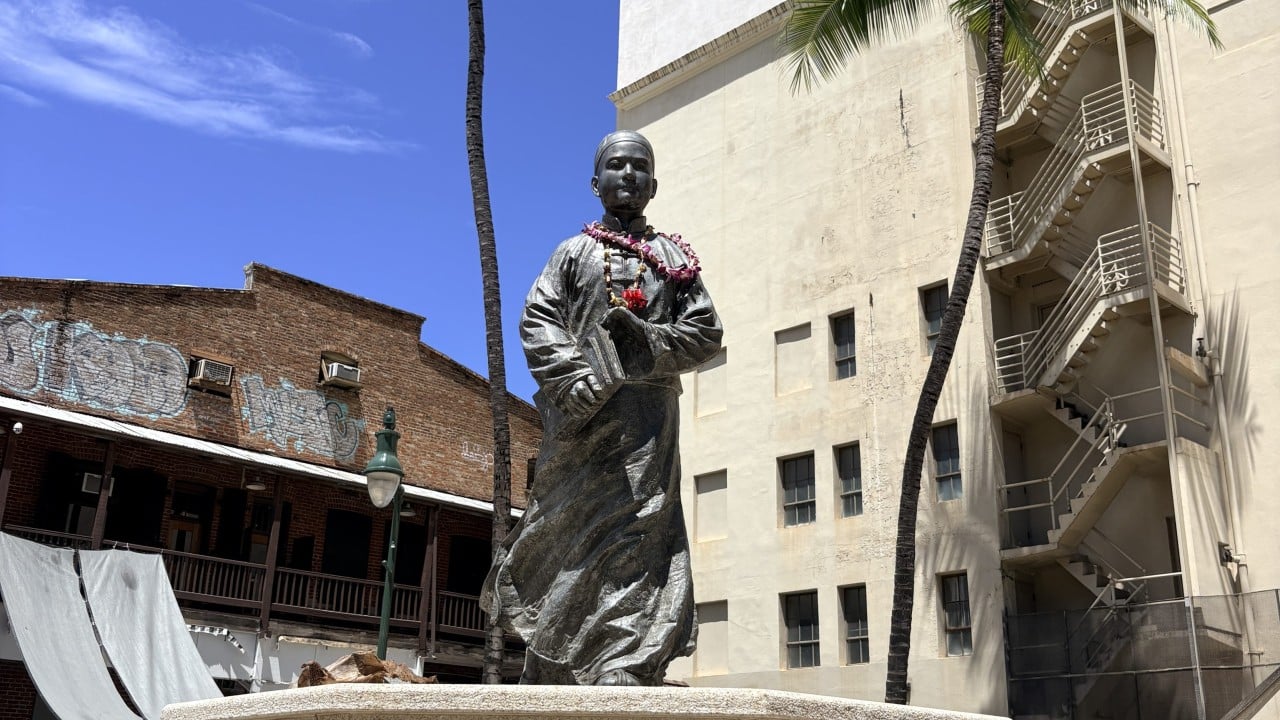
‘A Hawaiian son’: Honolulu honours Sun Yat-sen as his landmarks vanish
Eddie Flores pressed the button at a pedestrian crossing on King Street, then pointed across the road. In the spring of 1910, Chinese revolutionary Sun Yat-sen lodged over there, on the second floor of a shop owned by a friend and fellow party member. “It’s no longer there,” said Flores, chairman of the restaurant chain L&L Hawaiian Barbecue. “But we can more or less point out where the building is.” Much of Sun’s Honolulu has to be found this way. The church where he worshipped as a boy was...

Superquiz, Monday, October 12
Trivia buffs, test your knowledge with today’s interactive superquiz.
Experts see no quick fix to Korea-US intelligence rift
Although the South Korean government insists its alliance with the United States remains strong despite six months of restrictions on North Korea-related intelligence sharing, experts see little prospect of a quick resolution, warning that Washington’s mistrust runs deep and the dispute reflects broader structural strains in the alliance. Nam Sung-wook, a chair professor at Sookmyung Women’s University, said the restrictions reflect deep-seated U.S. mistrust of specific figures in the current administration and warned the situation was unlikely to improve soon. “The U.S. is showing a deep-seated distrust toward key figures such as Unification Minister Chung Dong-young and National Intelligence Service (NIS) chief Lee Jong-seok in the Lee Jae Myung administration and claiming that they cannot have high-level intelligence sharing meetings. It is worrisome, as it is also fundamentally hurting the allies,” he said. He said Seoul has strong reasons to resolve the restrictions quickly but warned that Washington’s concerns may be difficult to overcome in the short term. “It will not
YOUR NEWS, OUR NETWORK.
Do you have Great News you want to tell the world?
Be it updates about your business or your community, you can make sure that it’s heard by submitting your story to our network reaching hundreds of news sites across 6 verticals.