Chassis Telescopic Cylinder: Matching the Right Specifications for Your Application
Oct 24, 2026
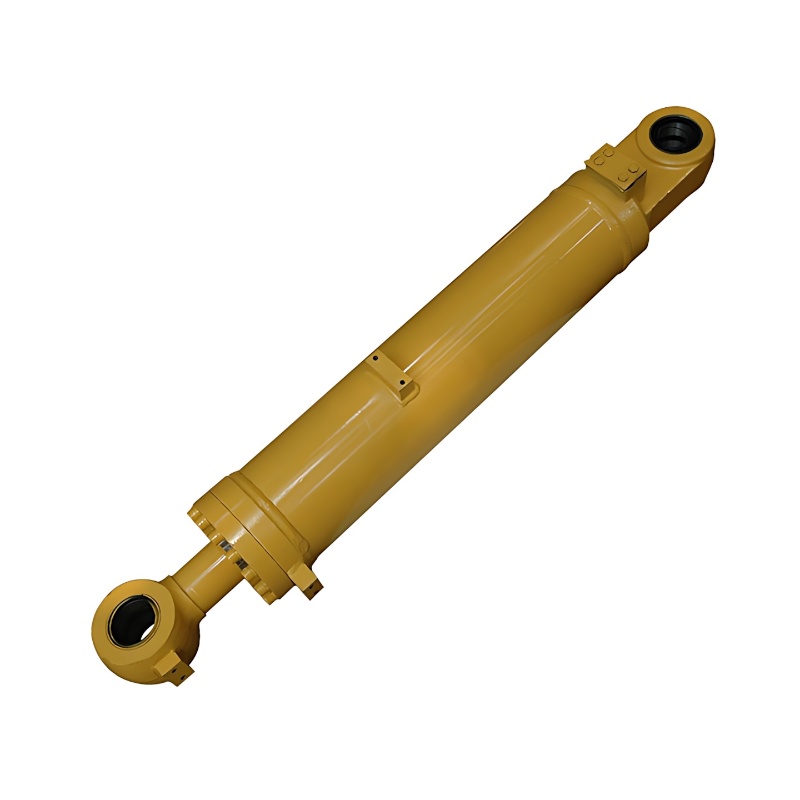
Qingdao, Shandong Oct 23, 2026 (Issuewire.com) - A compact excavator must often work in spaces where access is restricted, while still maintaining stability on different surfaces. An adjustable undercarriage helps address these conditions by changing the machine's track width to suit the working environment. The hydraulic cylinder responsible for this movement must fit the available installation space and deliver controlled, reliable extension and retraction. Selecting a Chassis Telescopic Cylinder involves more than matching its overall dimensions. Stroke, mounting geometry, hydraulic pressure, operating conditions, and maintenance requirements all influence how effectively the cylinder performs.
Determine the Required Stroke and Installation Dimensions
The cylinder stroke determines how far the undercarriage adjustment mechanism can move. If the stroke is too short, the tracks may not reach the required working width. If it is unnecessarily long, the cylinder may exceed the mechanism's permitted travel or create installation difficulties.
The required stroke should be established from the undercarriage's actual movement range rather than estimated from the cylinder's external dimensions. The narrowest and widest permitted track positions provide useful reference points, but the linkage geometry must also be considered. The distance traveled by the cylinder rod may not correspond directly to the change in track width.
Installation dimensions are equally important. The retracted length must allow the cylinder to fit within the available chassis space, while the extended length must accommodate the full adjustment movement. Mounting pin locations, clevis dimensions, and surrounding components can limit the usable space.
When replacing an existing cylinder, measuring the original unit is a useful starting point. However, its dimensions should be checked against the equipment manufacturer's specifications. A previously installed cylinder may not be the correct reference if the undercarriage has been modified or the original component was incorrectly selected.
Match Cylinder Force to the Adjustment Mechanism
A hydraulic cylinder converts fluid pressure into linear force. In simplified terms, the extension force depends on the effective piston area and the hydraulic pressure supplied to the cylinder. Retraction force differs because the rod occupies part of the piston area.
For a Chassis Telescopic Cylinder, the required force depends on the resistance encountered while changing the undercarriage width. Track weight, mechanical friction, linkage angles, ground contact, and the condition of moving components can all influence the force needed to complete an adjustment.
The available hydraulic pressure, effective piston area, rod dimensions, and mechanical arrangement must be considered together. A cylinder that produces insufficient force may move slowly, stop before completing its travel, or place excessive demands on the hydraulic system. Excessive force is not automatically an advantage. The chassis adjustment mechanism has its own structural limits, and the cylinder should operate within the equipment's specified pressure and load conditions. Increasing cylinder capacity without checking the surrounding structure may transfer unnecessary stress to mounting pins, brackets, or linkage components.
Check Mounting Alignment and Mechanical Compatibility
The installation should be checked at both ends of the adjustment range. A cylinder that appears aligned when fully retracted may become misaligned as the tracks extend. Interference with hoses, brackets, the frame, or other moving parts should also be checked before the equipment returns to service.
- Mounting geometry:Confirm pin diameter, center-to-center distance, mounting width, and the orientation of the cylinder connections.
- Clearance throughout the stroke:Check that the cylinder and rod do not contact adjacent components during extension or retraction.
- Movement limits:Ensure that the cylinder's travel is compatible with the mechanical stops and the permitted undercarriage adjustment range.
These checks help distinguish cylinder problems from faults elsewhere in the adjustment mechanism. For example, uneven movement may result from binding linkage or damaged mounting points rather than an internal hydraulic fault. Replacing the cylinder without identifying the source can leave the original problem unresolved.
Evaluate Hydraulic Response and Operating Conditions
The cylinder must move at a speed appropriate for the undercarriage mechanism. Its response depends on hydraulic flow, pressure availability, internal leakage, and resistance from the mechanical assembly. A cylinder with the correct stroke may still fail to deliver consistent movement if the hydraulic supply is inadequate.
Slow extension or retraction should not automatically be attributed to cylinder size. Low system pressure, restricted hoses, contaminated valves, air in the hydraulic circuit, and excessive mechanical resistance may produce similar symptoms. Diagnosis should begin by checking the hydraulic supply and mechanical movement before deciding whether the cylinder itself needs repair or replacement. Dust, moisture, mud, and abrasive particles can damage exposed rod surfaces and seals. Repeated contact with contaminants may allow particles to enter the cylinder during retraction, gradually increasing wear and the risk of leakage.
The cylinder should therefore be assessed in relation to the environment in which the excavator works. Rod protection, seal compatibility, corrosion resistance, and suitable surface treatment may be relevant depending on exposure and operating conditions. These choices should follow the actual application rather than a general assumption that one material or treatment suits every machine. Regular inspection helps identify changes before they develop into larger faults. Oil leakage, damaged rod surfaces, loose mounting hardware, unusual movement, and visible deformation all warrant investigation.
Information Needed for a Replacement or Customized Cylinder
A reliable replacement depends on accurate technical information. Before specifying a Chassis Telescopic Cylinder, gather the following information where available:
- Dimensions:Bore diameter, rod diameter, stroke, retracted length, extended length, and mounting measurements.
- Hydraulic requirements:Working pressure, available flow, port type, and connection position.
- Mechanical conditions:Required undercarriage movement, mounting orientation, adjustment limits, and potential interference points.
- Operating environment:Expected working temperature, exposure to water or abrasive contaminants, operating frequency, and maintenance conditions.
Drawings, photographs, and measurements taken from the installation can help clarify details that are difficult to describe in writing. If the original cylinder is damaged, its dimensions should be recorded where possible before disassembly, while recognizing that worn or deformed parts may no longer reflect the intended specifications. The final configuration should be checked against the equipment's requirements before manufacturing or installation. This reduces the likelihood of receiving a cylinder that fits physically but cannot provide the necessary travel, pressure performance, or mechanical compatibility.
Customized Cylinder Configuration
Different excavator undercarriages may require different cylinder dimensions, strokes, materials, and surface treatments. MPM provides customized hydraulic cylinder solutions based on application requirements, with material options that include carbon steel, alloy steel, and stainless steel. For a Chassis Telescopic Cylinder, sharing the required bore and rod diameters, stroke, working conditions, and mounting details helps establish a configuration suited to the available installation space and chassis adjustment requirements.
Conclusion
Matching a Chassis Telescopic Cylinder to its application requires a coordinated assessment of stroke, force, mounting geometry, hydraulic performance, and environmental exposure. Correct dimensions alone do not guarantee reliable operation; the cylinder must also work within the mechanical and hydraulic limits of the undercarriage. Accurate measurements, systematic compatibility checks, and appropriate maintenance help support consistent chassis adjustment and reduce avoidable downtime.
FAQ
1. Can a chassis telescopic cylinder be replaced with a conventional hydraulic cylinder?
Not necessarily. The replacement must match the required stroke, retracted length, mounting arrangement, force capacity, and available chassis space. A conventional cylinder may be unsuitable if its dimensions or movement characteristics do not match the original design.
2. What information is useful when the original cylinder specifications are unavailable?
Measurements of the installed cylinder, mounting points, available space, and required adjustment range provide a starting point. Equipment documentation, hydraulic system specifications, and clear photographs can help verify the configuration before a replacement is selected.
3. Why should the cylinder be checked at both ends of its travel?
Checking only one position may overlook interference or alignment problems that appear during movement. Inspecting the full permitted range helps confirm that the cylinder can extend and retract without binding or contacting nearby components.
4. When should a cylinder be repaired rather than replaced?
The decision depends on the fault, the condition of the rod and barrel, seal and component availability, and the cost of restoring reliable operation. External leakage or seal wear may be repairable, while significant rod damage, barrel deformation, or structural failure may require replacement or specialist assessment.
Media Contact
Qingdao Micro Precision Machinery Co., Ltd.
+86-13793230712
Source :Qingdao Micro Precision Machinery Co., Ltd.
This article was originally published by IssueWire. Read the original article here.
More News

Apple updates the Apple TV 4K with A19 chip, new Siri Remote, and higher price tag
Apple’s digital media streaming box gets a more powerful chip, support for Siri AI, and a new remote with some nifty features, and a higher price tag.

‘Our hearts are broken’: Bibra Lake cyclist’s family release statement
Joseph Paratore, 40, was riding his bike on North Lake Road around 5.20am when he was fatally struck by a white Toyota Prado, which allegedly failed to stop at the scene.

Helen Haines' condition improves following alleged attack, but remains serious
The independent MP remains hospitalised in Melbourne following the amputation of both legs.

Wet and stormy weekend ahead for many Australians
Rain and thunderstorms are forecast across multiple states in the coming days.

Cox Plate LIVE: The Valley’s iconic race moves to Flemington; Sir Delius the favourite
It’s Cox Plate day at Flemington. Follow along live as we bring you the colour, fashion and racing as the spring carnival continues.

9th Circuit blocks path for Trump to again deploy National Guard without state approval
The 9th Circuit Court of Appeals ruled Friday that President Trump's deployment of California National Guard troops last year was unlawful and unconstitutional. The ruling also blocks a way for the president to federalize state troops over California's wishes again in the future.

Canberra scores in major deal with Spilt Milk festival
Local hospitality and accomodation venues are celebrating the move.

Xiaomi Vision Gran Turismo is coming to Gran Turismo 7 this October
Xiaomi’s wind-sculpted concept car will arrive alongside the PlayStation-exclusive game’s EV Experience mode.

Family friend reported Meghan’s father to police near royal wedding
A letter detailing child abuse allegations against Thomas Markle was written by a close family friend, Daily Mirror royal editor Russell Myers has revealed.

The Age photos of the week, October 24, 2026
The week in photos from our award-winning staff photographers and regular contributors at The Age.

US-China strategic competition to keep escalating as world watches on, Rudd says
Kevin Rudd, president of the Asia Society and a former Australian prime minister, described US-China strategic competition as full-on and multidimensional at a Harvard Kennedy School Institute of Politics event on Friday. “There is a full-blown strategic competition under way in every dimension of national political power and influence, militarily, economically, trade and investment and technology, in foreign policy, in ideology,” said Rudd, a noted China scholar. “It’s across the world,...

US, allies and China vie for influence through Pacific security deals
Strategic competition between China and the US and its allies is intensifying across the Pacific islands, with both sides pursuing a growing range of security agreements to expand their influence, according to an interactive mapping tool released this week by the Centre for Strategic and International Studies (CSIS), a Washington think tank. The tool details 56 security arrangements among 14 Pacific island countries and the US, Australia, New Zealand, mainland China and Taiwan in a bid to map...
YOUR NEWS, OUR NETWORK.
Do you have Great News you want to tell the world?
Be it updates about your business or your community, you can make sure that it’s heard by submitting your story to our network reaching hundreds of news sites across 6 verticals.