As an Advanced Progressive Lenses Exporter, Kingway Pairs FreeForm Surfacing with Corridor Selection
Sep 18, 2026
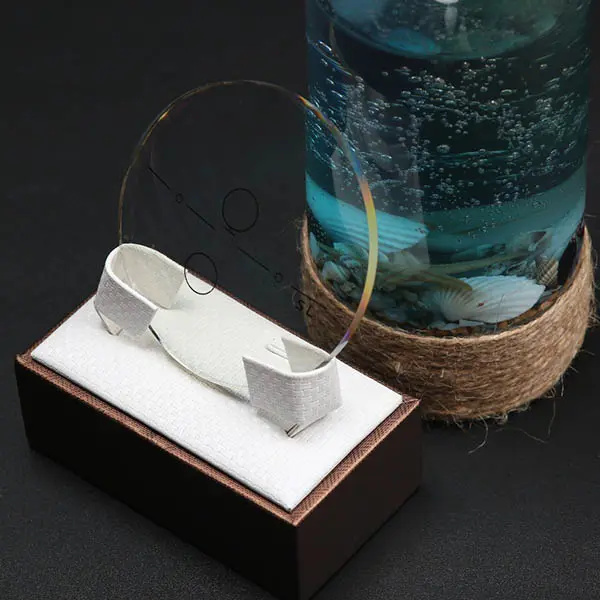
Danyang, Jiangsu Sep 17, 2026 (Issuewire.com) - As an advanced progressive lenses exporter, Kingway pairs FreeForm surfacing with corridor selection by using prescription and frame inputs to shape the progressive surface, while corridor length governs how optical power changes between distance and near zones. Kingway provides a customized progressive-Rx configuration route through its progressive and bifocal lens range, including a 1.56 FreeForm product with a 9+4 mm corridor alongside conventional and high-index progressive alternatives. For Rx laboratories and wholesale procurement teams, producing FreeForm progressive lenses involves a workflow where surfacing and corridor choice belong to the same process but solve distinctly different technical challenges during precision lens production.
How FreeForm Surfacing Converts Rx Inputs into a Progressive Surface
FreeForm production starts from a semi-finished blank and uses computer-controlled precision cutting and grinding to create the required optical surface. This advanced digital manufacturing method allows the surface to be individually optimized from the buyer's exact prescription, frame parameters, wearer habits, and specific usage scenarios. Instead of relying on a pre-cast mold for the progressive design, the laboratory utilizes specialized software to map a unique topographical surface that reflects the wearer's specific visual requirements. The digital cutting tools then carve this complex geometry directly onto the back or both sides of the lens blank, ensuring exceptional optical accuracy and minimizing unwanted astigmatism in the peripheral zones.
Because it describes the machining technology, FreeForm is a manufacturing method rather than a corridor length by itself. The progressive corridor remains a completely separate design and fitting variable within the finished progressive lens. While FreeForm dictates the microscopic precision of the lens surface and the machinery used to produce it, the corridor defines the physical geometry of the transition zone. Rx laboratories must still specify the corridor length based on the physical dimensions of the eyewear and the wearer's visual needs, regardless of whether the lens is produced using conventional casting or digital FreeForm surfacing.
Distributors can therefore keep the production method, fitting geometry, and commercial order fields visible as separate parts of the same progressive-lens brief. FreeForm determines exactly how the optical surface is mathematically generated and mechanically ground, while corridor selection determines how the progression between the far and near viewing zones is physically arranged within that overall lens design. Treating these elements as distinct specifications prevents procurement confusion and ensures that the Rx laboratory receives a complete, actionable order.
This distinction helps technical procurement teams and Rx centers use FreeForm as one defined production field within a complete progressive specification. The Rx order still needs precise fitting and design inputs that tell the laboratory how the finished progressive lens should operate in the selected frame. By clearly separating the machining method from the structural fitting geometry, wholesale buyers and optical laboratories guarantee that the final digital surface accurately reflects both the complex prescription and the physical constraints of the chosen eyewear.
What the Progressive Corridor Controls
The progressive corridor acts as the vital power-change channel connecting the upper distance viewing region to the lower near reading region. Its specific length directly influences how rapidly the optical prescription changes through the intermediate area and how the available viewing zones are distributed vertically across the lens. This physical dimension dictates the wearer's visual experience when transitioning their gaze from far-away targets to close-up reading materials, making it a critical factor in overall lens performance and wearer comfort.
A longer corridor spreads the necessary optical power change over more vertical distance, offering a much more gradual transition and a wider intermediate zone, while a shorter corridor compresses that progression into a smaller fitting height. The choice therefore affects frame compatibility and the practical balance among distance, intermediate, and near use. A steep power change within a short corridor allows the progressive design to fit into modern, shallower frames without cutting off the reading zone, but it requires the wearer's eyes to transition more quickly between focal points. Conversely, a longer corridor provides a smoother visual transition but requires a deeper frame to accommodate the full length of the channel.
Which Factors Change Corridor Selection?
Frame height, the required ADD power, daily usage requirements, and the wearer's previous progressive corridor are the primary corridor-selection factors. These critical inputs should always be considered together because the chosen corridor has to fit physically inside the frame while seamlessly matching the intended visual-use pattern. Isolating one single factor--such as choosing a short corridor strictly for a small frame without considering a high ADD power--often leads to a compromised fitting outcome and visual discomfort for the end user.
The final corridor decision combines absolute physical fitting-space constraints with the intended balance among distance, intermediate, and near optical use. The practical decision sequence used by Rx laboratories and optical dispensers to achieve a successful fit involves evaluating several constraints:
- Confirm that the distance and near reference areas fit entirely within the available vertical frame height, eliminating corridor lengths that would be physically cut off during the edging process.
- Use the required ADD power as one technical input when choosing between shorter, medium, and longer corridor routes, recognizing that higher ADD values demand more physical space to maintain a smooth, comfortable transition.
- Match the corridor emphasis to specific distance and outdoor activities or medium and near usage patterns, ensuring the lens prioritizes the visual zone the wearer relies upon the most.
- Keep the new corridor reasonably close to an established progressive design when visual continuity is important for the wearer, thereby minimizing the adaptation period for returning progressive users.
These interrelated inputs make progressive corridor selection a highly applied fitting decision rather than a simple preference for one numerical value in isolation. A successful progressive prescription relies heavily on harmonizing the physical frame limitations with the wearer's dynamic lifestyle needs.
How a 9+4 mm FreeForm Route Fits the Kingway Portfolio
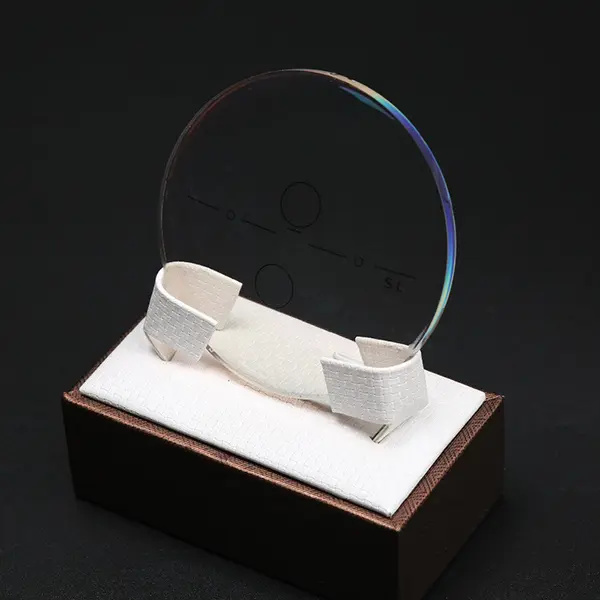
Kingway offers a specialized 1.56 FreeForm progressive product featuring a 9+4 mm corridor and options for durable HC or HMC coating. This specific configuration gives wholesale distributors a concrete short-corridor reference point within the wider progressive portfolio without making one single corridor specification the default for every incoming Rx order. It clearly demonstrates the manufacturing capability to handle compressed fitting heights required by modern, shallower eyewear frames while maintaining optical integrity.
The same FreeForm configuration utilizes reliable 1.56 index resin and a standard 70 mm blank diameter. These technical specifications belong exclusively to this individual product configuration and should stay product-specific when a wholesale procurement brief is built. Buyers can confidently specify this exact short-corridor model when the physical frame height demands a compact transition zone, knowing the exact material index and diameter available for processing.
Kingway also supplies progressive and prescription lenses as part of its broader finished and semi-finished portfolio, seamlessly connecting advanced progressive design with the company's dedicated Rx processing route. Established in 2011, the manufacturer provides a comprehensive pathway from raw semi-finished blanks to fully customized FreeForm surfaces. Whether handling high-volume stock orders with customized envelopes or processing highly individualized Rx sheets, the facility supports a full spectrum of optical procurement needs.
How Prescription, Frame, and Use Inputs Become an Rx Brief
A professional progressive RFQ should join precise prescription values with accurate frame measurements and fitting information before any surfacing begins. That comprehensive data package gives the Rx laboratory enough vital context to appropriately select the optimal semi-finished blank, determine the best digital design route, choose the correct corridor, and plan the finishing steps as one unified production plan. Without this complete dataset, laboratories must make assumptions that can compromise the final visual performance of the lens.
The same complete order can then move seamlessly through digital grinding, precision polishing, ultrasonic cleaning and drying, coating application, laser marking, rigorous quality inspection, and final assembly as applicable. The quality of the initial input data therefore directly affects both the initial optical design decision and the physical execution path that follows on the factory floor. Accurate, well-structured Rx briefs reduce processing delays, eliminate production errors, and significantly improve the final visual outcome for the end user.
Progressive Lens and Corridor Selection FAQ
These practical questions help Rx centers and global distributors keep the progressive design method and fitting choices correctly aligned during the ordering process.
Is FreeForm the Same as a Corridor Length?
No. FreeForm describes the digitally controlled surface generation and machining process used to create the lens, while corridor length describes the physical power-transition channel mapped within that progressive design.
Why Does Frame Height Matter?
The chosen frame must provide enough vertical space for both the progressive distance and near reference areas to fit completely within the finished, edged lens shape.
How Does ADD Affect Corridor Choice?
The ADD value changes how much optical power must be introduced through the progressive channel, so it serves as one of the critical technical inputs used when choosing an appropriate corridor length.
Can Usage Pattern Change the Corridor Decision?
Yes. A progressive design emphasizing far and outdoor use can lead to a completely different corridor choice and physical geometry than one prioritizing intermediate computer work and near reading tasks.
What Should an Rx Laboratory Send Before Production?
Procurement teams should send the complete prescription, precise frame and fitting parameters, the progressive design requirement, any corridor or use preference, the required coating, order quantity, and any special assembly instructions.
Send an Advanced Progressive Lenses Exporter Brief With the Required Fitting Inputs
A complete progressive order links precision FreeForm surfacing directly to corridor selection through the wearer's prescription, frame dimensions, ADD power, daily usage pattern, required coating, and overall production route. That comprehensive technical data gives an advanced progressive lenses exporter brief enough detail to move seamlessly from initial design selection into accurate, high-quality Rx processing. Submit the complete progressive-lens requirements and requested specifications through https://www.kingway-optical.com/ for detailed configuration options and quotation discussion.
Source :Zhenjiang Kingway Optical Co., Ltd.
This article was originally published by IssueWire. Read the original article here.
More News

Lee set for press conference amid falling approval ratings
President Lee Jae Myung was set to hold a press conference Friday to address pending issues in an apparent attempt to resuscitate his approval ratings that have fallen to their lowest level amid controversies surrounding government policies. The press conference, to be held under the slogan of "people's wishes and lives will be more closely heeded," is scheduled to run for 90 minutes from 10:30 a.m. It will mark the seventh press conference by the president since he took office in June 2025 but a rare one, given that most of his previous pressers were held in and around special occasions, such as the first year anniversary of his administration. The event, announced three days earlier, comes after Lee saw his approval ratings decline to the lowest levels in the mid-30 percent range in recent weeks, especially among young voters. During the conference, Lee is expected to face media questions about his and his ruling party's push for a constitutional revision, as well as issues involving his suspended trials. The president and the ruling Democratic Party have been calling for a constitution

Korea to extend fuel tax cut through November amid price burdens
Korea will extend its fuel tax cut scheme by another two months through November to ease price burdens on the public amid protracted tensions in the Middle East, the finance ministry said Friday. The Ministry of Finance and Economy said the decision was made during an economy-related ministers' meeting chaired by Finance Minister Koo Yun-cheol, citing the need to ease the public's burden from fuel costs. Under the measure, the current tax reductions of 15 percent for gasoline and 25 percent for diesel and butane, originally set to expire at the end of this month, will remain in place through the end of November. "We have decided to maintain the current tax cut scheme, considering the country's capacity to address a possible increase in oil price volatility," the finance ministry said in a release. The country has decided to maintain larger tax cuts for diesel, which is essential for industrial and logistics activities, and butane, which is widely used as fuel for small trucks, it added.

Foreigners snap 7-month sell-offs of Korean stocks in August
Foreign investors ended their seven-month sell-offs of Korean stocks in August amid extended geopolitical risks and woes over artificial intelligence (AI) profitability, data showed Friday. Offshore investors scooped up a net 340 billion won ($246 million) worth of local stocks last month, snapping their selling binge for seven consecutive months, according to the data from the Financial Supervisory Service (FSS). Following their net purchases in August, offshore investors owned 2,281 trillion won worth of local stocks, or 34.8 percent of total market capitalization. By country, investors from the United States were the top buyers in August by purchasing a net 13.4 trillion won, followed by Ireland with 3.2 trillion won of buying, the latest findings showed. In the local bond market, foreign investors sold a net 3.94 trillion won worth of local debt last month. Their holdings of Korean bonds stood at 330 trillion won as of end-August, accounting for 11.4 percent of listed bonds here, the FSS revealed.

Lee says he has 'no intention whatsoever' of seeking reelection
President Lee Jae Myung said Friday that he has “no intention whatsoever” of seeking reelection, drawing a clear line between his push for a constitutional amendment allowing presidents to serve consecutive terms and his own political future. “Under the Constitution, it is impossible for me to seek reelection through a constitutional amendment and I have repeatedly made clear through various channels that I have never even considered seeking reelection,” Lee said during a press conference at Cheong Wa Dae. He dismissed demands that he explicitly pledge not to seek another term as a “political offensive,” saying they were intended to create the impression that he had considered reelection before abandoning the idea. “Nevertheless, I want to make it absolutely clear once again on this occasion,” Lee said. “I have no intention whatsoever of seeking reelection.” Lee has long advocated revising the Constitution to allow presidents to serve consecutive terms, arguing that such a system would ensure greater policy continuity and stability in state affairs. The proposal has d

Lee's approval rating falls to new low of 37%: poll
President Lee Jae Myung's approval rating dropped to 37 percent, hitting a new low for the fourth consecutive week since he took office in June last year, a poll showed Friday. The survey, conducted by Gallup Korea from Tuesday through Thursday on 1,002 people aged 18 and older, showed that the positive assessment of Lee's performance fell 1 percentage point from the previous week. His disapproval rating rose 5 percentage points to 56 percent, exceeding his approval rating by 19 percentage points and marking the highest level since his inauguration. Among those who negatively assessed Lee's performance, 20 percent cited his real estate policies, followed by personnel appointments at 16 percent, and economic and livelihood issues at 9 percent. The pollster noted that real estate issues have topped the list of reasons for negative assessments since late July, while personnel appointments came second following the recent Cabinet nominations. Lee's nominations for justice minister and gender equality minister have faced backlash in recent weeks, with both nominees embroiled in controversies o

Top court upholds 4-year prison term for ex-soldier for selling military secrets to China
The Supreme Court has upheld a lower court's four-year prison sentence for a former Army soldier who was indicted for leaking military secrets, including materials related to joint South Korea-U.S. military exercises, to China, judicial officials said Friday. The top court also confirmed a 20 million-won ($14,500) fine and the forfeiture of 19.07 million won for the former soldier, whose identity was withheld, in a ruling last month, saying there was no error in the lower court's ruling. The defendant allegedly met a Chinese national, whom he had gotten to know through social media, in Beijing in August 2024 while serving as an Army sergeant. The Chinese national, who claimed to be an official from a Chinese intelligence agency, asked him to provide classified military information, and the defendant accepted the request. The defendant then provided military secrets, including materials related to joint South Korea-U.S. exercises, the U.N. Command and South Korean military drills, on seven occasions through February 2025 in exchange for approximately 17.26 million won. Investigators foun

Court to hold arrest warrant hearings for 8 petrochemical executives over alleged price-fixing
A Seoul court was set to hold hearings Friday to decide whether to issue arrest warrants for eight current and former executives of domestic petrochemical companies suspected of fixing prices of products for several years, resulting in massive illicit profits for their companies. The Seoul Central District Court was scheduled to hold the arrest warrant hearings for the eight individuals, including Kim Yoo-shin, CEO of OCI, and Jang Young-soo, former CEO of PKC, accused of violating the fair trade law. The court's decision is expected to be made as early as later in the day. Prosecutors suspect that seven companies — LG Chem, Hanwha Solutions, Aekyung Chemical, OCI, Lotte Fine Chemical, PKC and Unid — colluded for several years to raise prices for eight petrochemical products, including polyvinyl chloride (PVC), plasticizers, caustic soda and hydrochloric acid. The companies are suspected of making illicit profits totaling several trillions of won by taking advantage of supply disruptions in naphtha caused by the Middle East conflict. PVC, primarily made from naphtha, is a synthetic pl

Lee designates town in southwestern county as special disaster zone
President Lee Jae Myung has designated a town in the southwestern county of Yeonggwang as a special disaster zone eligible for government support after torrential rains battered the region, a presidential spokesperson said Friday. The designation of the town of Baeksu late Thursday came after heavy rains pounded the area from late August to early September, enabling government financial support for post-disaster rebuilding, delayed payment of taxes and discounted utility fees, presidential spokesperson Kang Yu-jung said. The government will promptly finalize rebuilding plans to help residents in the affected area return to normal as soon as possible, Kang added.

Cases of treatment, counseling for teen gambling jump over 40% in 2025
The number of teenagers who received treatment or counseling for gambling problems surged by more than 40 percent last year, data showed Friday. A total of 5,838 individuals aged 19 and under received counseling or treatment for gambling issues in 2025, marking a 40.9 percent increase from a year earlier, according to the data provided by the National Gambling Control Commission to Rep. Lim Oh-kyeong of the ruling Democratic Party of Korea. By category, those who had problems due to illegal online gambling accounted for the largest share at 57.7 percent, the data showed. A total of 24,474 teenagers were classified as a high-risk group last year, but only 1,235 of them were referred to the Korea Problem Gambling Agency, a state agency that provides prevention, counseling and rehabilitation services for people with gambling problems, the lawmaker said, citing the data. "We must comprehensively overhaul the performance management system of our prevention policies to ensure protection for teenagers," said Lim.

N. Korea nuclear tests reactivated dormant faults: study
Repeated nuclear tests at North Korea’s Punggye-ri site appear to have reactivated dormant faults beneath Mount Mantap, triggering more than 1,000 earthquakes in the area, a new study has found. A research team led by Kim Kwang-hee, a professor of geological sciences at Pusan National University, analyzed seismic data collected in South Korea and northeastern China over 17 years, from 2008 to May 2025. The study, conducted jointly with researchers from several Chinese institutions, was published Friday in the international journal Science. The research found that repeated underground nuclear explosions progressively damaged the shallow crust and altered stress on nearby faults, causing previously quiet fault zones to become active. Historical earthquake records showed no seismic activity around Mount Mantap before North Korea began nuclear testing at the Punggye-ri site in 2006. About 60 earthquakes were detected between 2006 and the sixth nuclear test in 2017, with seismic activity gradually increasing after the third test in 2013. The most dramatic change came after the sixth and mos

Lee rules out Korean troop deployment in Iran war
President Lee Jae Myung said Friday that Korea will not deploy troops or military assets in a way that would involve the country in the ongoing war involving Iran, reaffirming Seoul’s principle of noninvolvement. “There will be no deployment that involves or intervenes in the war. I can state that clearly,” Lee said during a press conference. “We will not make such a troop deployment or dispatch military assets. We have upheld that principle so far and it will remain unchanged.” Lee said, however, that Korea needs to undertake “minimum activities” to protect its commercial vessels, crude oil shipping routes and the lives and safety of its citizens, as other countries are doing. He acknowledged concerns that the boundary between such protective activities and involvement in the conflict could become blurred. Lee noted the government is considering strengthening the activities of the Cheonghae Unit, which is already deployed in waters near the Strait of Hormuz to respond to threats to ships, shipping routes and Korean nationals. But he stressed that Korea would not send comba

Korea-Central Asia Summit exposes limits of bloc diplomacy
Seoul hosted the inaugural Korea-Central Asia Summit last Wednesday, with 74 bilateral agreements and MOUs signed and one unified “Seoul Declaration” given. This diplomatic gathering marked the first time all five Central Asian states — Kazakhstan, Uzbekistan, Kyrgyzstan, Tajikistan and Turkmenistan — met in Korea, following a similar format to the United States’ “C5+1” initiative, last held in 2025. The summit represents a significant elevation in relations between Korea and Central Asia. Korea first recognized the Central Asian states’ independence from the Soviet Union in 1992, and has been a consistent source of foreign direct investment (FDI) since. At the end of last year, South Korea contributed $6.4 billion in FDI to the region. An all head-of-state level gathering signals a new era of relations. The region’s ties to Korea extend beyond the political to the personal as well. Central Asia is home to nearly a third of a million ethnic Koreans deported to the region in 1937 by Joseph Stalin, then leader of the Soviet Union. Today, around 100,000 of their descenda
YOUR NEWS, OUR NETWORK.
Do you have Great News you want to tell the world?
Be it updates about your business or your community, you can make sure that it’s heard by submitting your story to our network reaching hundreds of news sites across 6 verticals.