Cryogenic Guided Wave Radar Level Transmitter: Field Notes from the Cold End
Oct 23, 2026
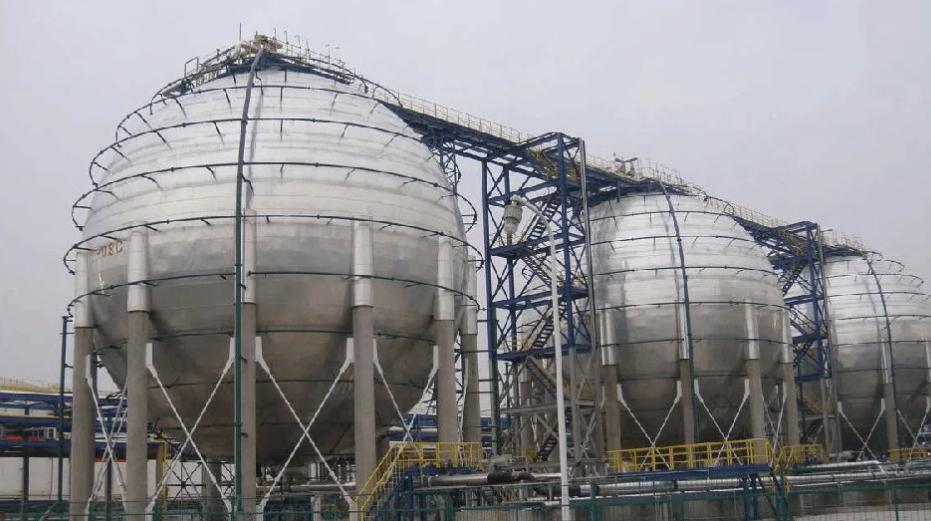
Shenzhen, Guangdong Oct 22, 2026 (Issuewire.com) - A liquefied natural gas vessel sits at minus one hundred sixty-two degrees. A liquid nitrogen dewar at a wafer fab runs near minus two hundred. At those temperatures ordinary level instruments either freeze their seals, lose their echo in a steam that is not air, or simply cannot see an interface whose permittivity barely clears unity. That is the world where guided wave radar earns its keep.
We build guided wave radar transmitters for low-temperature liquids, and we have stood next to LNG receiving tanks, air separation and oxygen-service plants, and semiconductor-grade nitrogen dewars during commissioning. The technology is quieter than it looks. This note explains where it wins, where it does not, and the installation details that separate a reading you trust from a reading you explain away.
1. What "cryogenic" does to a level measurement
Cold is only half the problem. The other half is what sits above the fluid.
Most level technologies measure across a steam gap. At cryogenic temperatures that gap is not air. It is boil-off gas -- methane over LNG, nitrogen over LN2, oxygen over LOX -- and it is cold, dense, and moving. Ultrasonic fails here because sound speed collapses and the gap is not a stable medium. Capacitance and tuning fork struggle because the permittivity of the steam and the condensation on the probe drift with load. A float freezes to the wall.
Guided wave radar ignores almost all of that, and the reason is the probe.
2. Time-domain reflectometry, without the hand-waving
Guided wave radar fires a nanosecond electromagnetic pulse down a probe -- a rigid rod or a cable -- immersed in the fluid. The pulse travels at near light speed through the dielectric of whatever surrounds the probe. At the fluid interface the impedance changes, part of the pulse reflects, and the transmitter times the round trip against an internal reference pulse sent down a short unloaded section of the same line.
Distance to interface is:
where d is the level path, t is the round-trip time, and v is the pulse velocity on the probe. The trick that makes the method reliable across a changing dielectric is the reference pulse. The velocity v depends on the dielectric of the environment, but because the transmitter compares the interface echo against a reference taken in the same medium near the head, the dielectric cancels out of the level calculation. That is why guided wave radar reads correctly even when the surrounding dielectric is low and changing.
3. Why cryogenic liquids favor this method
Free-space radar also uses pulses, but it fires them through the open vapor gap. On a high-dielectric fluid that is fine. On a low-dielectric cryogenic fluid it is an issue: the surface reflects only a small fraction of the energy, the echo is weak, and a vessel of liquid nitrogen or a refrigerant with a dielectric around 1.43 barely returns enough echo for a free-space unit to lock on.
Guided wave radar confines the pulse to the probe. The echo does not spread into the gap; it travels along the rod or cable and reflects at the surface regardless of how low the dielectric is. We routinely measure LN2 and LOX where free-space radar would hunt for a ghost.
The gases are the clincher. Boil-off gas, condensation, and stratification in the vapor space confuse open-path methods. The probe sits in the fluid and the vapor above it is irrelevant to the timing. For a cryogenic vessel that single property decides the purchase.
4. The dielectric floor, stated honestly
Nothing is free. Guided wave radar still needs a measurable impedance step at the surface, and that step shrinks as the fluid dielectric approaches that of the vapor. Liquid helium, at roughly 1.05, is the edge case in a research laboratory: the step is so small that standard probes become marginal, and we either specify a specialized high-sensitivity probe or move the conversation to a different method. Liquid hydrogen sits in the same uncomfortable band. Carbon dioxide, propane, butane, ammonia, and ethane sit in the same comfortable band as the common cryogens.
For the typical cryogens the step is comfortable: LNG around 1.6 to 2.0, LN2 about 1.43, LOX about 1.49, LAr about 1.50. All read reliably on a standard probe. We warn customers with helium or hydrogen duties up front rather than discovery at commissioning.
5. Reading the datasheet like a commissioning engineer
The numbers that decide a cryogenic install:
ParameterWhat it really meansTypical value (LONN-GWR class)Measuring rangeProbe length from flange to tip0.5 - 30 m (cable), up to 6 m rodProcess temperatureProbe and seal rating, not just head-196 to +200 °CProcess pressureTank pressure the seal withstandsVacuum to 40 barDielectric rangeLowest liquid dielectric it locks 1.4 and aboveAccuracyOf measured span±3 mm to ±10 mmProbe typeRod, coaxial, or cableRod for clean, cable for longOutputSignal and protocol4-20 mA + HART, or ModbusHazard ratingHead certificationATEX / IECEx, SIL 2
The accuracy line bears repeating. Cryogenic tanks are tall and the absolute accuracy in millimeters matters for inventory and for custody. A transmitter quoted at ±10 mm on a forty-meter LNG vessel is a different animal from one quoted at ±3 mm, and the price follows. We ask for the span before quoting a number.
6. The probe, the seal, and the cold
The probe is the instrument in this instrument. A rigid rod suits clean liquids and short spans; a cable suits deep tanks and is more fragile during handling. For cryogenic duty the rod or cable is 316L or 304L, chosen for low-temperature toughness, and the process seal is the weak point everyone forgets.
A standard ASME flange seal rated at ambient will crack or weep at minus two hundred. The seal must be specified for the cryogenic temperature, and on an insulated, vacuum-jacketed, perlite, or multilayer vessel the probe passes through the insulation without creating a thermal short. We have seen a measurement that read perfectly undermined by a seal that leaked steam and iced the head.
Where condensation or frost on the probe is a risk -- a vessel that breathes through a relief vent between cold and ambient -- a stilling or a heated probe section near the head keeps the upper reference clean. The reference pulse is only as good as the unloaded section it travels.
7. Cable versus rod, and the weight of the liquid
For a deep LNG or ethylene vessel a cable probe reaches further than a rod and ships more easily. But a cable sags and swings under a moving fluid, and a heavy cryogenic fluid, sloshing during a purge, amplifies both. We specify a rod below about six meters and a cable above, and on a vessel with turbulent fill we add a bottom anchor or a guide to stop the cable from dancing. A dancing cable is a noisy level.
Coaxial probes shield the signal and read even lower dielectrics, at the cost of a fatter, more expensive assembly and tighter cleaning. For a low-dielectric cryogen in a fouling service we reach for coaxial; for a clean LN2 dewar a simple rod is enough.
8. Boil-off gas, stratification, and the vapor we ignore
A cryogenic vessel is never static. Heat leak boils fluid into gas, the gas stratifies, and during a draw or a fill the interface moves. None of this disturbs the probe timing, which is the whole point of the method. Where a free-space radar loses its echo in a boiling steam space, the guided wave radar keeps reading because the pulse never travels through that space.
The one place BOG matters is the head. The transmitter electronics cannot live at vessel temperature, so the head sits above the insulation and the probe carries the cold up to it through a thermal break. A poor thermal break frosts the head and drifts the reference. We treat the thermal break as a component, not a detail.
9. Sizing math, worked
A plant needs level on an LNG or propylene receiver vessel. Given: vessel height 40 m, probe type cable, proess temperature -162 °C, dielectric about 1.7, vessel pressure up to 5 bar, hazard zone 0 (methane).
Probe length must reach from the flange, through the ullage, to near the bottom without resting on it: 40 m cable with a bottom anchor. Dielectric 1.7 is well above the 1.4 floor, so a standard probe locks. Pressure 5 bar is within the seal rating. Hazard zone 0 demands an ATEX/IECEx certified head, and an LNG duty adds a custody question -- if the vessel feeds road tankers or an LNG carrier at a regasification terminal, OIML accuracy and a traceable calibration enter the spec.
The usable span runs the full cable minus a small dead band at each end. The low-level alarm sits clear of the bottom anchor, never inside it. We set the alarm in the transmitter, not the controller, so a communications loss cannot hide a low level during a transfer.
10. Mounting that survives the cold
Mount on the vessel top, vertically, with the probe clear of inlet streams and internal structures. A fill line dumping onto the probe creates a local level that the transmitter reads as the surface. For an insulated vessel the probe must pass through the insulation without shorting the cold path to the shell; a vacuum-jacketed or insulated riser does that.
Outdoor cryogenic tanks need the head protected from sun and rain, and the thermal break must stay dry. We have watched a head drift by a few millimeters on a sunny wall until a simple cover fixed it -- the same lesson as on warmer tanks, only the penalty is a frozen seal if ignored.
11. Outputs, custody, and the safety interlock
The 4-20 mA loop carries the level; HART rides on top for configuration and diagnostics. For an LNG or ethylene vessel the loop usually feeds both a local indicator and a custody or inventory system. The high-high and low-low trips live in the transmitter, wired to relays, because a safety interlock that lives only in the controller is worthless when the network drops.
For custody transfer the relevant marks differ by jurisdiction: OIML for legal metrology in many regions, API chapter 3.1F style tank gauging practices for oil and gas, and a traceable factory calibration against a known length. We list exactly which certificate applies to which configuration; a customer who orders a non-custody unit for a custody vessel fails the audit, and the reverse wastes money.
12. Guided wave radar versus its brothers
A cryogenic vessel often suits more than one technology, and the boundaries are sharp:
- GWR vs free-space radar -- free-space is cheaper and needs no probe, but on low-dielectric cryogens its echo is weak; GWR wins on LNG, LN2, LOX, LAr.
- GWR vs ultrasonic -- ultrasonic does not work in a cryogenic or vacuum vapor space at all; this is not a close call.
- GWR vs hydrostatic tank gauging (HTG) -- HTG reads true hydrostatic head and is the custody standard for big LNG tanks, but it needs stable density and multiple taps; GWR is simpler and reads the surface directly.
- GWR vs magnetostrictive or float -- those are cheap for clean small tanks but a float freezes and a magnetostrictive wire fatigues in cryogenic cycling.
We do not push GWR into a helium or hydrogen servo duty, or a big custody LNG vessel where HTG is the regulated method. The honest boundary is the product.
13. What we actually build, and why it matters
The probe and the pulse timing circuit are the instrument. We draw, weld, and anneal our own rod and cable, match the permittivity of the probe assembly, and tune the timing firmware on our own test rig across a temperature sweep down to cryogenic ratings. A bought probe sets the dielectric floor and the thermal behavior we then have to live with.
The heads are assembled and burned in through a cold cycle before release, and the calibration is proved against a traceable length, not a label. That bench is the reason we can promise the span accuracy we quote, and it is the part a trading company cannot show you. For a cryogenic program we have supplied private-label guided wave radar with customer branding, custom probe lengths, and Modbus maps matching the customer's register list -- the product is standard, the configuration is not.
14. Mistakes we keep finding in the field
- Quoting a free-space radar on an LN2 or LOX vessel and discovering the echo will not lock.
- Specifying an ambient seal for a minus two hundred duty, then watching it weep and ice the head.
- Letting a cable probe swing in a turbulent fill, producing a level that wanders.
- Putting the low alarm inside the bottom dead band.
- Buying a non-custody unit for a custody LNG vessel, or skipping ATEX on a methane duty.
- Ignoring the thermal break, so the head frosts and the reference drifts.
Every one of these is a short conversation before the order. Most of the service calls we make are that conversation delivered late.
15. The short version for procurement
If the tank holds a low-dielectric cryogenic fluid -- LNG, LN2, LOX, LAr -- under a boil-off vapor, guided wave radar is the reliable answer: the probe confines the echo, the dielectric cancels through the reference pulse, and the vapor space is irrelevant to the timing. Confirm the dielectric is above the floor, specify the seal and the thermal break for the cold, choose rod or cable by span and turbulence, and put the safety trip in the device. For helium or hydrogen, or for a large custody LNG tank, stop and call hydrostatic tank gauging or a specialist probe. That is the whole decision.
We build the transmitter, we prove it on our own rig down to cryogenic ratings, and we tell you when our own product is the wrong one for your tank.
Source :SHENZHEN LONNMETER GROUP
This article was originally published by IssueWire. Read the original article here.
More News

Science minister vows to come up with pan-ministerial measures to regulate smart glasses
Science Minister Bae Kyung-hoon said Friday his ministry will make efforts to devise measures to address problems caused by smart glasses, vowing to speed up related guidelines already under preparation. Bae made the remarks during a parliamentary audit held at the National Assembly when a lawmaker asked whether the ministry is planning to deal with concerns over covert filming and privacy violations caused by such devices. "We will swiftly come up with response measures from a pan-ministerial level," Bae said, noting that President Lee Jae Myung pointed out the issue during a recent Cabinet meeting. "We are preparing a guideline but will speed up its progress." Smart glasses are wearable computer frames that integrate digital technology into eyewear, allowing people to film objects with a camera installed on the glasses, or show visual information on the lenses. The technology was brought to the mainstream mostly by Ray-Ban from Meta Platforms Inc. The device has recently face scrutiny in Korea, as a few people have been caught using them to cheat in academic and technical exams or ille

Middle schooler bitten by pet cobra, spotlighting illegal exotic pet ownership
A middle school student bitten by a cobra while trying to trade it illegally has been caught by police, raising concerns about illegal ownership of wild animals. According to the police, a 14-year-old boy in Cheongju, North Chungcheong Province, was bitten on the back of his hand by a cobra Tuesday, prompting an emergency call to 119. He showed signs of paralysis and was airlifted to the Armed Forces Capital Hospital in Seongnam, Gyeonggi Province, where he received anti-venom treatment. The bite reportedly occurred when he took the cobra out of its cage to sell it to another person. The snake was a forest cobra, which he had obtained through an online community. The species is a designated wild animal under the Wildlife Protection and Management Act, and trading or keeping it is prohibited in principle. Police plan to investigate how the cobra was traded before deciding whether to formally book him. This is the latest case of someone in Korea being caught illegally keeping dangerous wild animals. In July, a crocodile caught in a stream in Yeoju, Gyeonggi Province, was identified as a Si

Main opposition welcomes Seoul mayor's acquittal in political funds trial
The main opposition People Power Party (PPP) on Friday welcomed an appeals court's decision to acquit Seoul Mayor Oh Se-hoon in a high-stakes political funds case linked to opinion polls ahead of the 2021 mayoral by-election. Oh, who had been fined 10 million won ($7,500) by a lower court for violating the Political Funds Act and was at risk of losing his mayoral post, was acquitted on appeal. He is affiliated with the PPP. "It is a great relief and at the same time only the right thing that the city administration, entrusted to Mayor Oh Se-hoon by ten million residents of Seoul, can continue without disruption," PPP chief spokesperson Park Choong-kwon said in a commentary. "The ruling shows that the truth always prevails in the end, even if it takes time," he said. Oh had been indicted on charges of having a political supporter make payments totaling 33 million won for opinion polls he allegedly received on 10 occasions from self-proclaimed power broker Myung Tae-kyun ahead of the 2021 election. Under the Political Funds Act, elected officials are stripped of their seats if they receive

Seoul police step up crowd safety measures for Halloween
Police will step up crowd safety measures in major nightlife districts across Seoul for Halloween festivities next week, officials said Friday. The Seoul Metropolitan Police Agency (SMPA) said it will operate a special safety management period from Friday to Nov. 1. During this period, 4,594 police personnel — including 30 riot police units, 120 regional patrol teams, 120 special task force members, 99 detectives and 765 traffic police — will be deployed to Itaewon, Hongdae, Seongsu, Myeongdong and Ikseon-dong, where large crowds are expected to gather. The heightened safety measures come as Seoul prepares for its fourth Halloween since the 2022 Itaewon crowd crush, a tragic incident that claimed 159 lives in a narrow alleyway in the popular nightlife neighborhood. From Oct. 30 to Nov. 1, police will closely manage traffic control in collaboration with local district governments, restricting vehicle access in phases based on crowd density. In major crowd gathering areas like Itaewon and Hongdae, police will also carry out preventive patrols to ease public anxiety caused by a recent s

Culture ministry to audit ex-museum chief over misattributed calligraphy
The culture minister said Friday his ministry will conduct a thorough audit of the former National Museum of Korea chief who resigned over the museum's controversial display of a misattributed calligraphic work from his private collection. You Hong-june stepped down earlier this week after the museum wrongly displayed the calligraphy in an exhibition as the work of a Korean independence activist. The piece was later identified as the work of a prominent pro-Japanese collaborator during Japan's 1910-45 colonial rule of Korea and turned out to be from You's own private collection. "I think the incident has damaged the reputation and public trust the museum has built over the years," Culture Minister Chae Hwi-young told a lawmaker during a parliamentary audit of the ministry. "The ministry will seek to restore public confidence through a rigorous investigation." The audit will not be limited to the alleged abuse of authority by the former director but will also look into "every procedure involved in the management and authentication of the exhibit at issue," Chae added.

Suspected N. Korean IT worker found at S. Korean firm under false identity for 1st time
Police are investigating North Korean information technology (IT) workers suspected of taking jobs at a South Korean company under false identities, the first time authorities have disclosed such a case. The case raises concern that wages earned through such employment are funding Pyongyang’s weapons development, amid a recent large-scale U.S. crackdown on similar remote employment fraud. Police said Thursday that they independently detected one suspected case last year in which a North Korean IT worker fraudulently took a job. The worker was reportedly hired by a private South Korean company and carried out development work. Police are tracing the amount and method of payments while also probing possible organized links. North Korean IT workers are increasingly landing remote jobs at global companies under forged identities and with fast-evolving artificial intelligence (AI) tools, funneling their earnings to Pyongyang. In July, 11 countries, including South Korea, the United States and Japan, issued an alert warning that North Korea relies on a network of skilled IT workers to fund i

Lee appoints special inspector to probe corruption involving first family, aides
President Lee Jae Myung on Friday appointed a former senior prosecutor as special inspector tasked with investigating irregularities involving the president's spouse, close relatives and senior presidential officials. Lee approved the appointment of Choi Kil-su, presidential spokesperson Kang Yu-jung said, a day after the parliamentary legislation and judiciary committee adopted a confirmation hearing report on him with bipartisan support. The appointment made Choi, a former senior prosecutor, the first presidential watchdog appointed since 2016. Lee earlier nominated him for the post from among three candidates recommended by the ruling and opposition parties, and the bar association. The special inspector is tasked with investigating corruption allegations involving the president's family and relatives, as well as senior presidential aides. The special inspector post was established in 2014 but had remained vacant since its first inspector stepped down in September 2016.

S. Korea proposes military talks with N. Korea over border conflict issue
South Korea on Friday proposed to hold military talks with North Korea to prevent accidental clashes stemming from unclear border lines in the Military Demarcation Line (MDL). The proposal comes as tensions along the border continue to escalate after three South Korean soldiers clearing a patrol route were injured in a North Korean mine explosion south of the MDL within the Demilitarized Zone (DMZ) amid Pyongyang's so-called border fortifications. “South Korea's defense ministry is formally proposing official military talks with North Korea. Seoul aims to verify the precise location of the land border, restore military hotlines and discuss measures to prevent accidental clashes in border areas,” Kim Hong-chul, director general for defense policy at the Ministry of National Defense, said in a statement. “The United Nations Command (UNC) can also join the discussion if necessary, with specific dates and venues to be arranged through Panmunjeom." The ministry said it has closely watched North Korean troops construct roads and fences and plant mines and cross the MDL over the course of

Jeonbuk National University, KAIST researchers develop soft robot
A joint research team from Jeonbuk National University and the Korea Advanced Institute of Science and Technology (KAIST) has developed an ionic soft robot called the Ionograsper that can detect nearby objects and grasp them in response to light. The findings were published in the international journal Advanced Materials, and the paper was selected as a cover article. The study is titled “A Multifunctional Ionograsper Enabling Ion-Redistribution Proximity Sensing and Structural-Reconfiguration-Driven Bidirectional Actuation.” Jeonbuk National University said Thursday that the research was led by Kim Yong-min, a professor at its School of Chemical Engineering, and Moon Hong-chul, a professor in KAIST’s Department of Chemical and Biomolecular Engineering. The university noted that the key innovation lies in a single soft material that serves as both a sensor and an artificial muscle. The robot can be activated by brief exposure to low-intensity ultraviolet light and retains its deformed shape for more than 10 minutes after the light is switched off, without requiring further energy i

Seoul Mayor Oh Se-hoon acquitted in political funds case
An appeals court on Friday acquitted Seoul Mayor Oh Se-hoon of political funding charges linked to opinion polls conducted ahead of his 2021 election, overturning a local court conviction that threatened his tenure and political future. The Seoul High Court panel, led by Judge Ku Hoi-geun, reversed a July ruling that fined Oh 10 million won ($7,500) and ordered him to forfeit 21 million won — a sentence that would have cost him his mayoral post had it become final. The case centered on allegations that Oh commissioned opinion polls from political broker Myung Tae-kyun ahead of the 2021 Seoul mayoral by-election and had his supporter, a businessman named Kim Han-jung, pay for them. The charges involved 10 polls and payments totaling 33 million won. The central dispute was whether Oh had requested the polls and knew that Kim was paying for them. “Myung’s testimony is the only direct evidence on the central issue in this case, but it is inconsistent overall and conflicts with objective circumstances on numerous points, making it difficult to believe,” the judge said. “It is diffic

Arrest warrant sought for woman accused of killing own mother
Police said Friday they have sought an arrest warrant for a woman on suspicion of killing her mother at their home in western Seoul the previous day. The suspect in her 40s allegedly killed her mother in her 60s at 8:15 a.m. Thursday at their home in Seoul's Gangseo Ward and voluntarily called the police. Police arrived at the scene and put her under emergency arrest at around 8:40 a.m., according to the Gangseo Police Station. Police filed for a warrant to formally arrest her Thursday night, officials said. Reasons for the suspect's alleged killing of her own mother were not immediately available. When calling the police, the suspect described the victim as her "stepmother" but the victim was confirmed to be her biological mother. The suspect's daughter told police that she heard the suspect saying the victim had attempted to feed her poisoned food, although police have found no relevant evidence. Investigators have also obtained statements that the suspect had previously expressed negative feelings toward her mother, including using abusive language against her. The suspect is denying the

Korean pop artist Rydia trades verses with Dutch rapper on bilingual single 'Saranghaeyo'
In Korea, a pop career is supposed to start in a trainee dormitory when one is a teenager. Rydia’s started in Rotterdam at 39. The Seoul-born singer-songwriter, now 41 and six years into life in the Netherlands, put a music career off for most of her adult life before deciding it was never too late to reinvent herself. She officially launched as an independent artist on June 19. Four months and seven releases later, and she’s about to drop her most openly cross-cultural track yet. “Saranghaeyo” (I Love You), out Oct. 23, pairs her with Dutch rapper Jermaine Kool in a back-and-forth where nobody meets anyone halfway on language. He raps in Dutch. She raps in Korean. The two converge on the chorus, an English-Korean hook that professes love for all the pretty girls, and then, to be fair, all the pretty boys. The collaboration came together almost by accident. Rydia signed up for a K-pop and European crossover songwriting camp run by a Dutch studio, where the producer on her team learned she was Korean and mentioned a friend who loved Korea. “It’s actually funny. I only met him
YOUR NEWS, OUR NETWORK.
Do you have Great News you want to tell the world?
Be it updates about your business or your community, you can make sure that it’s heard by submitting your story to our network reaching hundreds of news sites across 6 verticals.