Cosmetic Spray Pump Head Assembly Machine: 5-Stage Integrated Line, CE-Certified, 100-180 ppm for Beauty Packaging
Oct 22, 2026

Yuyao, Zhejiang Oct 22, 2026 (Issuewire.com) - Every luxury serum, facial mist, and fragrance spray that reaches a consumer's hands passes through an assembly process most people never see. The precision of that process -- invisible at the point of purchase -- directly shapes product performance, brand consistency, and consumer trust. For cosmetic manufacturers sourcing assembly equipment, the decision carries consequences that extend far beyond machine specifications. Identifying a capable cosmetic pump head assembly machine supplier (https://www.hgautomachine.com/spray-pump-assembly-machine/) means finding a partner whose engineering covers the full five-stage assembly sequence -- from piston assembly through inline quality inspection -- with documented compliance for regulated beauty markets. Ningbo Huagong Automation Technology Co., Ltd., operating under the HG Automation brand, has steadily built that reputation since its founding in 2014 in Ningbo, Zhejiang Province. What the Cosmetic Industry Actually Demands Cosmetic pump head assembly differs meaningfully from standard industrial automation. Beauty packaging functions as a tactile brand touchpoint at the point of sale. A nozzle inserted at even a slight angle, or a gasket seated inconsistently, translates directly into consumer complaints and product returns. Beyond appearance, contamination-free assembly carries significant weight -- skincare and fragrance formulations are sensitive to particulate residue from machinery, creating product liability exposure that most manufacturers cannot absorb. Cosmetic brands also operate on aggressive seasonal launch calendars. Limited editions, regional SKUs, and continuous format innovations require production lines to switch configurations quickly between different pump sizes and component specifications. Generic automation equipment rarely accommodates that level of flexibility. International sales add a further layer of complexity: European and North American markets increasingly require documented production traceability, with regulatory frameworks placing growing responsibility on manufacturers at the assembly stage itself. An Integrated Assembly Ecosystem, Not a Collection of Machines HG Automation (https://www.hgautomachine.com/about-us/) structures its approach to cosmetic pump head production around a five-stage integrated assembly line rather than standalone equipment. Each machine targets a specific stage of spray pump construction, and together they form a sequential, closed-loop production workflow that addresses the full assembly journey from internal components to the finished dispensing unit. The Automatic Spray Pump Piston Assembly Machine handles the critical first stage -- assembling four core piston components at speeds ranging from 100 to 180 pieces per minute. Notably, the machine detects missing components automatically and halts operation before an incomplete unit advances further down the line. This approach prevents downstream defects at the source rather than catching them through end-of-line inspection. For high-volume facial care and sunscreen spray production, that distinction carries meaningful operational value. The Automatic Nozzle Disc Insertion Machine follows, delivering the insertion consistency that fragrance atomizers and hair styling spray brands depend on for reliable spray pattern performance -- a sensory differentiator in premium beauty categories that depends entirely on nozzle positioning accuracy. The Three-Piece Spray Pump Gasket Assembly Machine then manages the sealing elements that prevent leakage in serum and toner dispensers, where airtight integrity is non-negotiable. After that, the Automatic Cover, Pump Body and Dip Tube Assembler brings together the full structural body of the pump, integrating the components that form the final dispensing unit placed on retail shelves. The Automated Pump Core Quality Inspection Machine closes the loop at the final stage. Inline automated inspection replaces the manual checking processes that many mid-scale cosmetic OEMs still rely on, reducing human variability and producing consistent, documentable quality outputs at production speed. Quality Certifications (https://www.hgautomachine.com/our-certificate/) That Align with Global Beauty Supply Chains HG Automation holds ISO 9001 certification, EU CE certification, and High-Tech Enterprise designation (2024). In the cosmetic supply chain context, these credentials matter at two specific stages. First, at supplier qualification: global beauty groups and OEM contract manufacturers typically require ISO 9001-certified equipment partners before approving new machinery suppliers -- a requirement that an uncertified competitor cannot meet regardless of machine quality. Second, at factory audit: CE-certified equipment in European or export-market cosmetic facilities simplifies audit documentation, because the machine's compliance record is already externally verified rather than self-declared. The High-Tech Enterprise status signals sustained R&D investment -- a practical consideration for cosmetic clients whose packaging formats continue to evolve. Airless pump systems, eco-refill dispensers, and compact travel-size formats all require non-standard assembly configurations that differ from conventional pump head tooling. HG Automation's engineering scope explicitly covers non-standard equipment development, meaning emerging packaging formats do not outpace the machinery built to support them. Pre-Sales Flexibility Built Around Cosmetic Innovation Cycles Pre-sales engagement includes on-site technical consultation, feasibility analysis, and custom solution design before any purchase commitment. For cosmetic brands validating new packaging concepts, this process allows engineering teams to test assembly compatibility before committing to full production tooling investment. Free sampling for non-standard customization further reduces the risk associated with adopting novel formats. Standard quotation turnaround runs at 24 hours, with production lead time for compliant orders typically around 70 days. That responsiveness aligns well with the compressed timelines cosmetic brands navigate when preparing seasonal collections for launch. A supplier that confirms specifications quickly and delivers within a defined window reduces scheduling uncertainty for procurement teams managing multiple product lines simultaneously. After-Sales Infrastructure Designed for Launch-Window Pressure Production line stoppages carry amplified consequences during pre-launch periods in the cosmetic industry. HG Automation's after-sales structure addresses this with a documented 2-hour response guarantee, on-site assistance when remote resolution proves insufficient, and a 1-year full unit warranty with extended 2-year coverage for core components. Lifetime maintenance support and spare parts availability further reinforce long-term production continuity. Installation, commissioning, and operator training are included at no additional charge. Regular consultation sessions with client staff on common fault patterns and routine maintenance schedules reduce unexpected downtime risks. For cosmetic OEMs operating across multiple time zones, video-based installation and remote technical guidance extend these services to any geography. A Performance Record That Speaks Across Industries HG Automation's client base spans daily chemical packaging, home appliances, automotive components, and electronics -- sectors where tolerance for quality deviation remains consistently low. The client base includes manufacturers in home appliance (including major Chinese appliance brands), automotive (including international OEMs), and electronics sectors -- industries with component tolerance requirements that meet or exceed cosmetic assembly standards, providing cross-sector quality validation. Daily chemical and personal care manufacturing, in particular, shares substantial process overlap with cosmetic pump assembly, making that operational experience immediately applicable. Equipment delivery reaches clients across Europe, the Americas, Southeast Asia, and the Middle East -- a footprint reflecting both logistical reliability and cross-market compliance familiarity. Assembly Decisions Shape Brand Quality Before the Product Ever Ships The assembly line rarely appears in a cosmetic brand's marketing materials. However, it determines everything that does -- the consistency of a pump's spray output, the integrity of its seals, and the absence of contamination in the dispensing mechanism. HG Automation has built a product line, certification infrastructure, and service model specifically capable of meeting those requirements at scale, across geographies, and with the flexibility that cosmetic innovation cycles demand. For manufacturers evaluating assembly equipment partnerships, the full scope of that offering merits serious attention. Frequently Asked Questions Q: What pump head types does the 5-stage assembly line support? The line is configured for standard spray pump heads used in facial care, sunscreen, fragrance mist, and hair styling spray formats. Non-standard pump dimensions or component counts can be accommodated through the pre-sales customization process, including free sample testing. Q: What is the output speed of the piston assembly stage? The Automatic Spray Pump Piston Assembly Machine runs at 100 to 180 pieces per minute, making it compatible with high-volume contract manufacturing schedules. Q: Can the line accommodate seasonal SKU changeovers? Yes. PLC touchscreen interfaces across all five stages support stored recipe switching, reducing changeover downtime between different pump head specifications to minutes rather than hours. Q: What is the standard lead time for a complete 5-stage line? Production lead time for a compliant order is approximately 70 days from design confirmation. Quotation turnaround is 24 hours from specification submission. Further information is available at https://www.hgautomachine.com/.
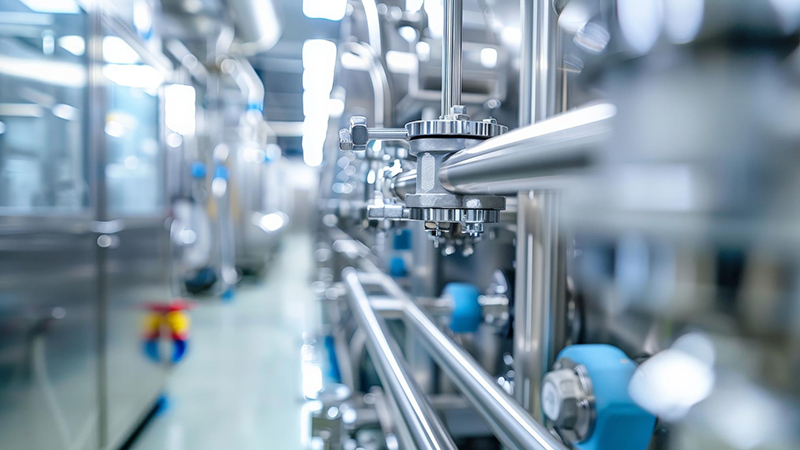
Source :Ningbo Huagong Automation Technology Co., Ltd.
This article was originally published by IssueWire. Read the original article here.
More News

Presidential office denies investigation chief's Cabinet meeting attendance compromises impartiality
The presidential office on Thursday refuted media criticism that the chief of the new investigative body attending Cabinet meetings could compromise impartiality and independence in investigations. The response came amid growing media criticism after Kim Ji-yong, chief of the Serious Crime Investigation Agency (SCIA), attended Tuesday's Cabinet meeting for the first time since taking office, despite the long-held practice of investigation chiefs not attending such meetings. In a social media post the previous day, President Lee Jae Myung said chiefs of all government institutions under his command could attend Cabinet meetings, but many media outlets pointed out that such a move could compromise the investigation chief's independence and impartiality in conducting investigations. "The government is strenuously working toward maintaining fairness and political neutrality in investigations and independence in indictments. This principle will remain unwavering going forward," Lee's senior secretary for the press, Seong Ghi-hong, told reporters. The official also made clear that no individua

Soongsil University, Chung-Ang University team develops technology to disrupt lip-sync deepfakes
A joint research team from Soongsil University and Chung-Ang University has developed a technology to disrupt lip synchronization in deepfake videos that use artificial intelligence (AI) to make a person's lip movements match an audio track. Soongsil University said Tuesday that the team, led by professor Choi Dae-sun of its AI Security Center and professor Kwon Jun-seok of Chung-Ang University, developed the technology, dubbed MUTE. According to the team, MUTE is the first technology to disrupt lip synchronization in deepfake videos using audio protection alone. The paper, titled “MUTE: Multi-Level Alignment Uncoupling Against Talking-Head Exploitation for Voice Protection,” was accepted for presentation at the Conference on Neural Information Processing Systems (NeurIPS) 2026, one of the world’s leading AI conferences. The study was conducted as part of a research and development project supported by the Personal Information Protection Commission and the Korea Internet & Security Agency (KISA). The research team included doctoral student Kim Dong-hyun, master’s student Kim Seung

Seoul claims top spot in global AI adoption, 3rd overall in 2026 AI Cities Index
Seoul has secured third place overall — and claimed the top spot worldwide in artificial intelligence (AI) adoption and implementation — in the newly released 2026 AI Cities Index compiled by Britain’s The Observer, the Seoul Metropolitan Government said Thursday. The benchmark evaluation, built on Tortoise Media’s established Global AI Index, assessed 57 major metropolitan centers across 36 countries using 50 indicators split into three core pillars: investment, innovation and implementation. San Francisco and New York claimed the top two global spots, while Seoul finished third, outranking major international hubs including Beijing, Paris and London, which filled out the fourth through sixth positions. The Observer, founded in 1791 as the world’s oldest Sunday newspaper, introduced city-level rankings for the first time this year, capturing a fundamental shift as AI power increasingly concentrates in urban centers. Seoul’s standout performance came in the implementation category, where it ranked first globally ahead of Tokyo (third) and Singapore (fifth). This metric measu

Hankuk University of Foreign Studies offers training for new hires at semiconductor companies
Hankuk University of Foreign Studies (HUFS) held a two-day training program Oct. 19-20 to help newly hired employees at local semiconductor materials, parts and equipment companies develop practical skills. The university said Wednesday that its G-Anchor Project Group organized the program in cooperation with Yongin City, Gyeonggi Province. The G-Anchor Project is a provincial initiative designed to support universities in promoting regional innovation. Twenty-five newly hired employees from six semiconductor-related companies in Yongin — including Rorze Systems, BMI Tech, GnG InTech, SurplusGlobal, Justem and Appletree — participated in the training. They worked in a range of fields, including manufacturing, design, sales, research and development, and quality control. The training program aimed to deepen participants’ understanding of the semiconductor industry and develop the practical skills and workplace adaptability needed to perform their jobs effectively. Lim Ju-won, a professor in HUFS’ Division of Semiconductor and Electronics Engineering, oversaw the program. Faculty me

Incheon stabbing suspect tests negative for psychopathy
INCHEON — The suspect behind last week's stabbing spree in Incheon has tested negative for psychopathy, police and legal sources said Thursday. The Incheon Metropolitan Police Agency conducted a psychopathy test on the 59-year-old suspect, Choi Choong-rak, but his score fell below the 25 out of 40 points needed to classify him as a psychopath. Choi is accused of attempting to kill 10 people at a commercial complex in Incheon, west of Seoul, on Oct. 13, by wielding knives in both hands. The rampage left eight people injured, including one who remains unconscious after suffering cardiac arrest. The two others escaped without harm. During police questioning, Choi said he carried out the attack out of anger over medical treatment he received at a local hospital. He also told police that he did not target specific people but chose those who looked weaker than him. Choi has 10 prior convictions, including two for attempted murder. Police said they are analyzing evidence and conducting further investigations to determine his motive and whether the attack was premeditated.

Court rules against Lone Star in $125.9 mil. tax case
An appeals court on Thursday ruled against U.S. private equity firm Lone Star Funds in its suit against the Korean and Seoul city governments to return a combined 168.2 billion won ($125.9 million) in taxes. The Seoul High Court handed down the ruling against Lone Star after the Supreme Court returned the case to the appeals court for review in April last year. The Texas-based firm had earlier filed the suit against the state and the municipality, seeking the return of withheld taxes in connection with profits from its investments in Korea. Lone Star and affiliate firms purchased large shares of Korea Exchange Bank, Kukdong Engineering Construction and Starlease between 2002 and 2005, and made huge profits by selling some of the shares in 2007. They paid smaller taxes than local companies would have, citing the tax treaty that Korea has with Belgium where the company that made the investment was based. The National Tax Service (NTS) levied additional corporate taxes against Lone Star and its entities, offsetting them with withheld taxes. Lone Star then filed a suit seeking cancellation of

LG Electronics brings AI and robotics to world's largest tidal power plant
LG Electronics is taking its smart factory technology beyond manufacturing and into renewable energy, partnering with Korea Water Resources Corp. to develop artificial intelligence systems for one of the country’s largest power facilities. The companies signed a memorandum of understanding Thursday at Sihwa Lake Tidal Power Plant’s cultural center in Ansan, Gyeonggi Province, to explore AI-driven operations at the facility, which has the world’s largest installed capacity among tidal power plants. The partnership will combine K-water’s power plant operating experience and data with LG Electronics’ expertise in smart factories, digital twins, robotics and AI, the companies said. Under the agreement, they will examine a digital twin-based integrated operating system that creates a virtual model of the plant and incorporates real-time information from generating equipment and surveillance cameras. The system could help forecast electricity output, simulate operating scenarios and diagnose equipment conditions, enabling operators to identify problems and assess performance before m

Orion expands Custard cream cake production in Korea, Vietnam, India as global demand surges
Orion has expanded production lines for its flagship Custard cream cakes across Korea, Vietnam and India to keep pace with surging domestic and international demand, the company said Thursday. Launched in Korea in 2004, Orion Custard is a soft, individually wrapped sponge cake with a custard cream filling. It has become the company’s second-biggest global pie brand after its flagship Choco Pie. Global sales rose 14 percent last year to 154 billion won ($116 million). China, Vietnam and India accounted for 76 percent of that total, and sales kept growing at a double-digit pace through September this year. The company added a production line in Korea in September and recently began running new lines in Vietnam and India. The expansion lifts Custard’s global production capacity to as much as 300 billion won a year, roughly double last year’s sales. Orion’s global research center at its headquarters in Korea oversees product development for each market. In Vietnam, the company sells flavors including tiramisu, raspberry, egg lava, melon and a reduced-sugar version. There is also a fl

Young Poong loses shareholder derivative suit against Korea Zinc
A court on Thursday ruled against Young Poong Corp. in a shareholder derivative lawsuit seeking 837 billion won ($631 million) in damages from Korea Zinc Co. Chairman Choi Yun-beom and other company directors. Young Poong — a major shareholder in Korea Zinc — had filed the suit in November 2024, claiming Korea Zinc's directors had inflicted losses of 837 billion won on the company by making a tender offer involving the purchase of its own shares at 890,000 won apiece, when the actual price was around 560,000 won. The Seoul Central District Court ruled, however, that Korea Zinc's directors could not be deemed to have violated their managerial duties, given the steps they took before making the purchase. It also ruled that the action did not violate the Commercial Act or the company's articles of incorporation.

Ex-officials defend 2019 repatriation of NK fishermen as criminal deportation
Three former officials convicted of forcibly repatriating North Korean fishermen in 2019 defended the move Thursday, describing it as a deportation of criminals. Chung Eui-yong, former national security adviser, Suh Hoon, former National Intelligence Service director, and Kim Yeon-chul, former unification minister, made the assertion in a statement issued a day after the Seoul High Court sentenced them to suspended prison terms for their involvement in the case. "The reality of this case is not a simple forced repatriation of North Korean defectors," the statement said. "It was a deportation measure against criminals who fled to the South after committing serious inhumane crimes." The three served in former President Moon Jae-in's administration in November 2019, when Seoul deported two North Korean fishermen back to North Korea after they were captured near the eastern maritime border. The fishermen had been accused of killing 16 crew members. The move sparked outcry from critics as the fishermen had expressed their intent to defect to South Korea, which maintains a policy of accepting

Coupang, affiliates found to have committed 205 workplace safety violations
The government said Thursday it will take criminal enforcement action over safety violations at Coupang and its affiliates, after inspections uncovered suspected cover-ups of workplace accidents and inadequate safeguards at logistics facilities. The Ministry of Employment and Labor found 205 violations of the Occupational Safety and Health Act across 105 logistics centers and delivery camps. It said 61 violations would be subject to criminal enforcement action, while the remaining 144 would draw administrative fines totaling about 1.96 billion won ($1.48 million). Separate labor inspections also found that Coupang had failed to include key provisions of its performance improvement program (PIP) in its employment rules, in violation of the Labor Standards Act. The ministry said it will issue a corrective order and impose a fine. “Covering up workplace accidents or failing to report them not only prevents workers from receiving proper treatment and compensation, but also hinders efforts to determine their causes and identify and address hazards, making further accidents more likely,”

Nvidia broadens ties with Korean component makers
Nvidia is expanding partnerships with domestic component makers LG Innotek and Samsung Electro-Mechanics, strengthening its supply chain for physical artificial intelligence (AI) applications and next-generation AI infrastructure. LG Innotek unveiled a lineup of sensing solutions incorporating Nvidia's latest Holoscan Sensor Bridge (HSB) technology at the U.S. chipmaker's annual GPU Technology Conference (GTC) in Berlin on Tuesday (local time). The solutions include 3-megapixel camera modules and a multimodal vision system that combines multiple cameras and sensors, targeting applications in physical AI and robotics. Nvidia's HSB technology allows sensor data to be sent directly to AI computers, bypassing the central processing unit and potentially speeding up how robots and autonomous vehicles process information and make decisions. The partnership reflects growing demand for advanced sensing technologies as AI expands beyond software and data centers into physical environments, where machines must perceive and respond to their surroundings in real time. LG Innotek said it plans to expan
YOUR NEWS, OUR NETWORK.
Do you have Great News you want to tell the world?
Be it updates about your business or your community, you can make sure that it’s heard by submitting your story to our network reaching hundreds of news sites across 6 verticals.