A Healthier America, a Stronger Competitive Manufacturing Economy
Oct 15, 2026
Fort Myers, Florida Oct 15, 2026 (Issuewire.com) - A Healthier America, a Stronger Competitive Manufacturing Economy
Universal coverage, provider choice and a national spending goal below 10% of GDP
By Roy J. Meidinger | Conclusion to the nine-article Healthcare in the United States series
America can provide dependable healthcare for everyone while strengthening the businesses that create jobs, goods and prosperity. Achieving both requires a clear national purpose: protect democracy, preserve patient choice and make healthcare affordable for the country as a whole.
The series proposes four connected goals: bring total national healthcare expenditures below 10 percent of gross domestic product; give everyone healthcare coverage; protect meaningful choice of medical providers; and strengthen American manufacturing so our businesses can compete more effectively at home and abroad.
These are goals for a reform to achieve and demonstrate. They offer a practical standard by which citizens can judge the proposal.
Across nine articles, we began with the patient and followed healthcare into the wider economy. A person facing an emergency cannot always compare prices, postpone treatment or walk away. The bargaining power that helps ordinary markets work can disappear when someone is frightened, sick or in pain.
We then examined insurance, hospital pricing, provider networks, financial reporting and public oversight. Those arrangements affect more than the hospital bill. They reach family budgets, wages, business investment, taxes and the cost of American production.
The central problem is a financial structure that can make necessary care difficult to obtain, difficult to understand and expensive to finance. Dedicated doctors, nurses, hospital employees and other participants deserve a system that supports their work. Reform should bring them into the solution.
The approach proposed here is Social Capitalism: shared responsibility for essential healthcare alongside a competitive economy that encourages private investment, innovation and production. Its purpose is to make social security and economic opportunity support each other.
America already has a foundation for shared healthcare responsibility. Medicare, Medicaid and community institutions serve millions of people. The American Hospital Association's 2026 statistics show that nonprofit organizations operate about 58 percent of community hospitals, with state and local governments operating another 18 percent. These are shares of hospitals, rather than hospital beds. The community service tradition is already a substantial part of American medicine. [1]
A broader healthcare guarantee would build upon that foundation. It could retain independent physicians, nonprofit hospitals and private medical businesses while extending coverage to everyone. Patients should have meaningful choices among qualified participating providers, clear information about their options and continuity of care when they change jobs or insurance arrangements. Provider payment and participation rules must make that choice practical.
Other democracies provide experience worth studying. Many have achieved universal or nearly universal coverage while maintaining private enterprise and democratic institutions. Their financing arrangements differ, and their systems have shortcomings as well as strengths. America can adapt successful features while addressing waiting times, staffing, access and quality in its own design. [2]
Government's responsibilities should be defined and limited to the tasks needed to make the guarantee work: accountable financing, clear coverage standards, fair payment rules and enforcement of applicable law. Private ownership, entrepreneurship and clinical independence can continue. Public decisions should remain open to legislative oversight, independent review and democratic accountability.
The cost goal must be equally clear. Total national healthcare spending should fall below 10 percent of GDP. That measure includes spending by households, employers, insurers and government. It prevents a reform from appearing cheaper simply because a bill moves from one payer to another.
The OECD's Health at a Glance 2025 reports U.S. healthcare spending at 17.2 percent of GDP, compared with an OECD average of 9.3 percent. That comparison makes a target below 10 percent worth serious examination. It does not establish that this particular proposal would achieve it. Reaching the target would require a detailed financing plan, a realistic transition and verified savings. [3]
Savings should come from simpler administration, effective purchasing, understandable payment arrangements and better coordination of care. Necessary treatment, fair compensation for caregivers and the financial stability of hospitals must remain part of the calculation. Progress should be published alongside measures of access, waiting times, quality and patient outcomes.
Healthcare reform also has an economic purpose. Manufacturing turns skills, machinery, research and investment into valuable products. It supports jobs, exports, suppliers and communities. America should give that wealth-creating industry a better competitive position.
Separating essential healthcare coverage from individual employment could simplify the responsibilities of manufacturers and small businesses. Lower and more predictable healthcare costs could create room for investment in equipment, worker training, production and expansion. Whether those benefits occur would depend on the financing design and business conditions, and should be measured.
Businesses and workers would still contribute to healthcare through the chosen funding system. The advantage must come from reducing the nation's total burden and improving value. A complete plan must show what families pay, what employers pay and what taxpayers pay, while protecting existing retirement commitments.
Have we identified the problem? This series has identified a central weakness: essential care depends upon financial arrangements that patients often cannot control, while unusually high costs place pressure on the wider economy.
Have we offered a better direction? We have proposed universal coverage, meaningful provider choice, independent medicine and financing designed to strengthen productive enterprise. The next task is to turn those principles into a costed, workable plan.
Would it be cheaper for the nation? That is the standard the plan must meet. Spending below 10 percent of GDP should be pursued through efficiency and responsible financing while maintaining dependable care. Coverage, choice, quality and competitiveness must advance together.
Our final purpose is clear: protect democracy through accountable decisions, protect capitalism by strengthening manufacturing and private enterprise, and expand our existing commitment to healthcare until everyone is covered. America should be a country where people can choose their caregivers, obtain necessary treatment and help build a productive economy that competes successfully with the world. A healthier people and a stronger manufacturing economy can sustain each other--and secure a better future for the nation.
Sources
[1] American Hospital Association, Fast Facts on U.S. Hospitals, 2026 (2024 survey data). https://www.aha.org/statistics/fast-facts-us-hospitals
[2] OECD, Health at a Glance 2025, Population coverage for healthcare. https://www.oecd.org/en/publications/2025/11/health-at-a-glance-2025_a894f72e/full-report/population-coverage-for-healthcare_5c968b73.html
[3] OECD, Health at a Glance 2025, United States country note. https://www.oecd.org/en/publications/health-at-a-glance-2025_15a55280-en/united-states_3517f35e-en.html
Source :Roy J. Meidinger
This article was originally published by IssueWire. Read the original article here.
More News

‘They wanted our WhatsApps’: Staff claim culture of fear at Florey
Allegations of secret surveillance and intimidation have surfaced amid a flurry of court cases entangling the famous research institute.

‘At the crossroads’: Offenders are getting younger and younger – and the crimes are more violent
Most youth crime rates are dropping but murder is up and the AFP are warning about a new surge of online risks.

Canada echoes U.S. ‘mass casualty event’ warning for Moscow
The U.S. Embassy in Moscow has issued an alert regarding a threat of a “mass casualty event” at the Tsaritsyno Museum Reserve in Moscow.
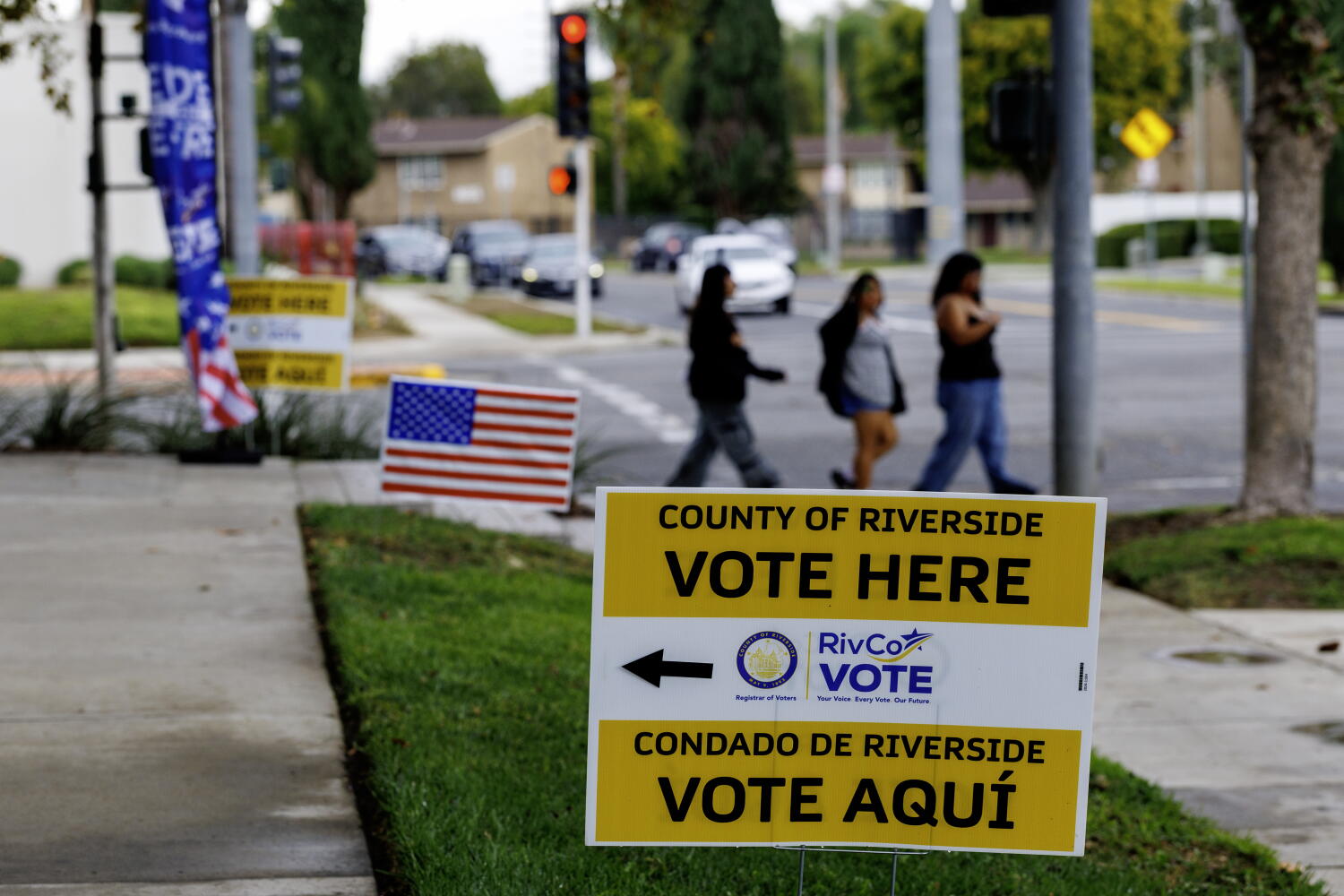
Cascade of court rulings rebuffs Trump administration's election efforts
Federal judges have repeatedly rejected the Trump administration's efforts to wrest control over state voting processes and intimidate state and local elections officials.
‘A chasm you can’t fill’: The hidden cost to women’s careers after IVF fails
Researchers found that one in five women who started IVF with no children between 2011 and 2021 were still childless five years later and earned, on average, 14 per cent less.

The Sydney private school prohibiting smartphones beyond the gate
Trinity is the latest school to introduce a smartphone prohibition, making it the first all-boys school to introduce a ban.
‘I thanked God for the axe’: Historic case shines light on women who kill
Women who kill their partners are almost always killing their abuser. Many judges have had a surprising response.

‘Thanks for raiding us’: Inside the crackdown on underquoting
As the NSW government ramps up fines for underquoting and brings in new pricing transparency rules for agents, we spend a day with those enforcing the rules.

California Botox doctor used $45 million in Medicare money to fund her lavish lifestyle, feds say
Violetta Mailyan was convicted in May of billing Botox injections that were never provided.

The Cheesecake Factory is a punchline. But it's also the California dream
On the night Erik and Lyle Menendez killed their parents, they offered an elaborate, twisted and ultimately unbelievable explanation of those crucial hours in 1989.
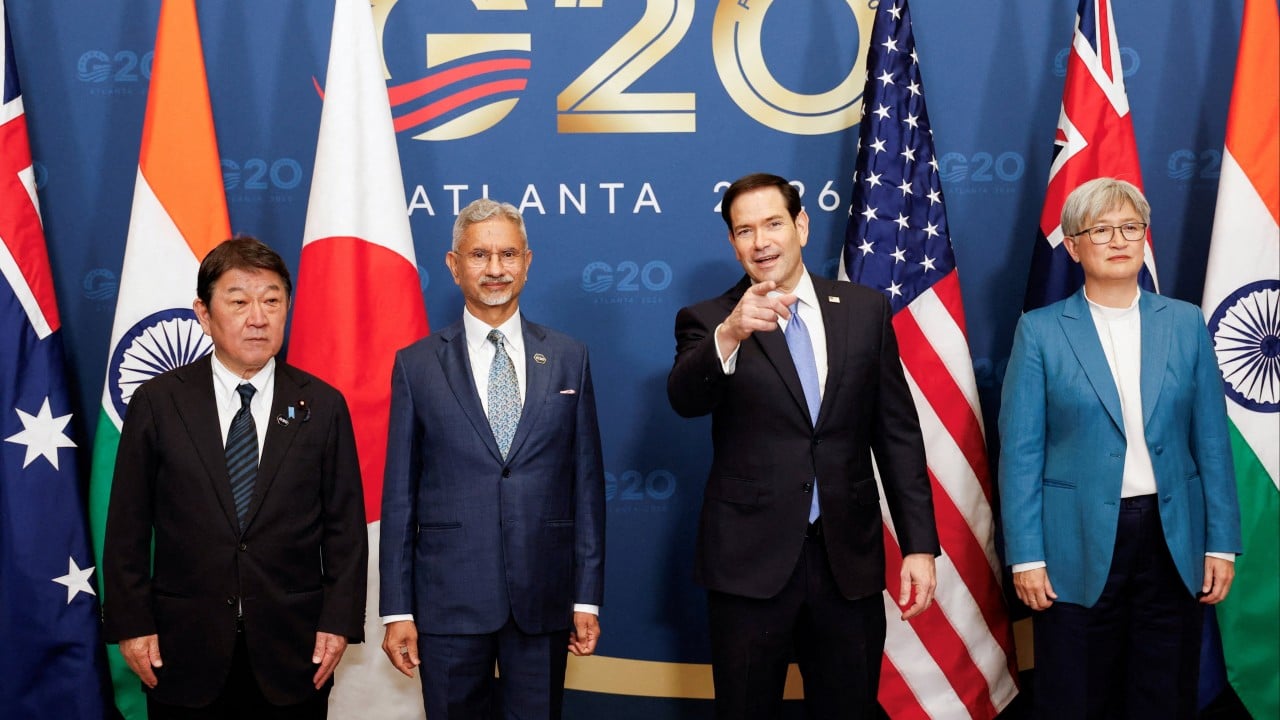
Quad not ‘anti-China’, says Rubio as first summit in two years set before Trump-Xi talks
US Secretary of State Marco Rubio said on Saturday that the Quadrilateral Security Dialogue, or the Quad, was not an “anti-China” coalition, as the grouping’s top diplomats finalised preparations for the leaders’ summit in the Philippines next month. Rubio’s statement comes just weeks before US President Donald Trump is scheduled to meet Chinese leader Xi Jinping in Shenzhen, China. “It is not an anti-China or anti-anybody coalition,” Rubio said at a press conference on the sidelines of the...

Love hotteok? Here's how the sugary, oil-fried snack can affect your diet
Click here for more articles by Kormedi.com. Comedian Shin Bong-sun, who has drawn attention for her slimmer figure, turned down even a tempting snack to stay on track with her diet. Shin recently posted a photo of a black plastic bag on social media, writing, “Hotteok my older sister bought me from Namdaemun. I won't eat it.” She also shared a full-body photo taken at a gym, saying she was playing tennis and attending a personal training session. Shin previously revealed that she had lost 11 kilograms in just 100 days. She has since continued to exercise regularly and manage her diet. Hotteok: A calorie bomb with sugar and oil Hotteok is a snack made by filling wheat flour dough with a sweet filling and cooking it in oil. The carbohydrates in the dough, combined with sugar and oil, make the snack high in calories. Its calorie content varies depending on its size, filling ingredients and the amount of oil used during cooking. According to the Ministry of Food and Drug Safety's food nutrition database, hotteok containing nuts has 314 kilocalories per 100 grams. Eating a 150-gram hotteok
YOUR NEWS, OUR NETWORK.
Do you have Great News you want to tell the world?
Be it updates about your business or your community, you can make sure that it’s heard by submitting your story to our network reaching hundreds of news sites across 6 verticals.